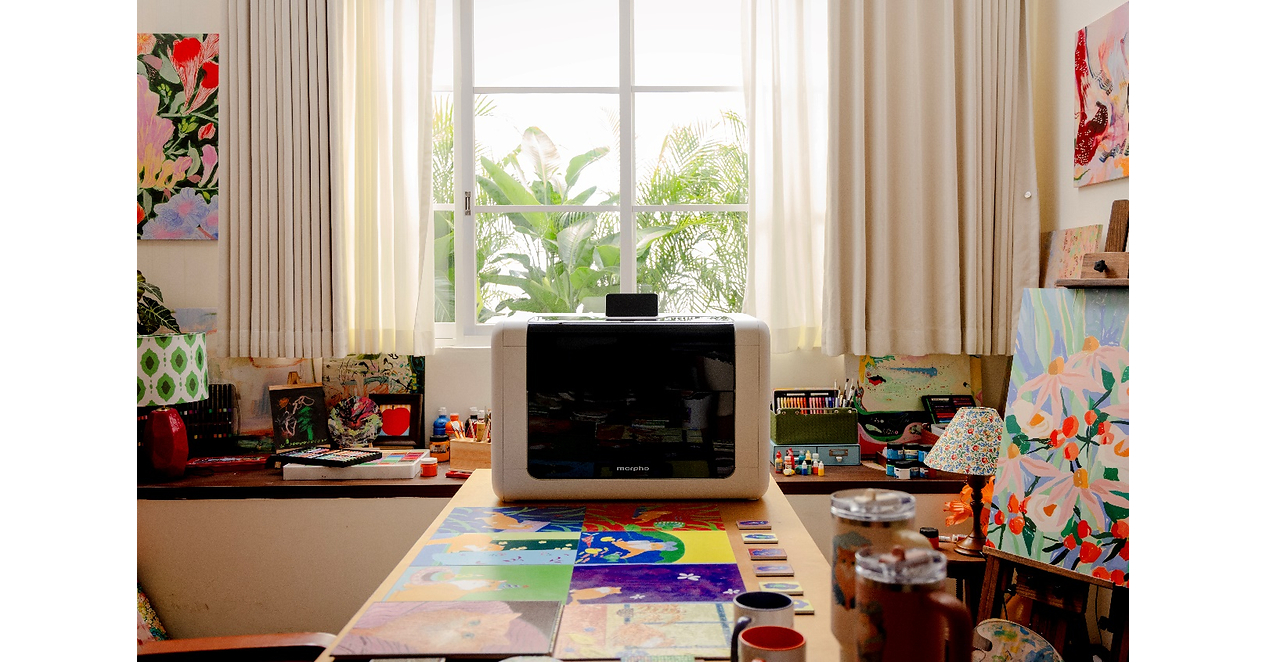
Morpho a lancé son imprimante UV de bureau sur Kickstarter et a levé plus de 7 M$ en 16 heures auprès de près de 2 000 contributeurs. La machine cible artistes et petites entreprises avec plus de 1 000 textures/effets intégrés et une hauteur d’assemblage pouvant aller jusqu’à 60 mm, via une approche d’impression UV sur objets existants. En plus de l’EcoInk™ à faibles odeurs et du Smart Alignment pour réduire les erreurs, la campagne reste à un tarif préférentiel en précommande.
The market read-through is less about a single product than about the economics of short-run customization. If this category works, the first beneficiaries are small creators and micro-merchants who can internalize production economics and defend margins against outsourcing and minimum-order friction; the second-order losers are local print shops, promotional-product brokers, and low-end contract manufacturers that live on small-batch jobs. The key question is whether this is a real cost curve break or just a well-packaged demo of expensive hardware.
For public equities, the closest adjacent read-through is not a direct comps move but a sentiment signal for consumer/prosumer fabrication. Any benefit to listed names would likely show up in consumables and accessory attachment rates before hardware unit growth, while pure-play printers could see multiple expansion only if the company converts crowdfunding into shipped units with low return rates. The initial enthusiasm is not a revenue forecast; it is a validation of willingness to pay from an early-adopter cohort.
The risk is execution, not demand: color fidelity, uptime, support burden, and consumable economics tend to surface only after the launch spike. Over 1-3 months, watch whether preorder momentum translates into funded shipments and whether gross margin survives fulfillment and warranty costs. Over 6-18 months, the contrarian possibility is that this becomes a niche professional tool rather than a mass-market platform, leaving the category interesting but financially immaterial.
Consensus is likely overreading the launch as proof of a broad creator-economy shift. The more probable outcome is a narrow adoption curve with strong unit economics only in specific use cases. I would wait for verified shipment data and repeat-order evidence before assigning any durable multiple uplift.
AI-powered research, real-time alerts, and portfolio analytics for institutional investors.
Request DemoOverall Sentiment
mildly positive
Sentiment Score
0.35
