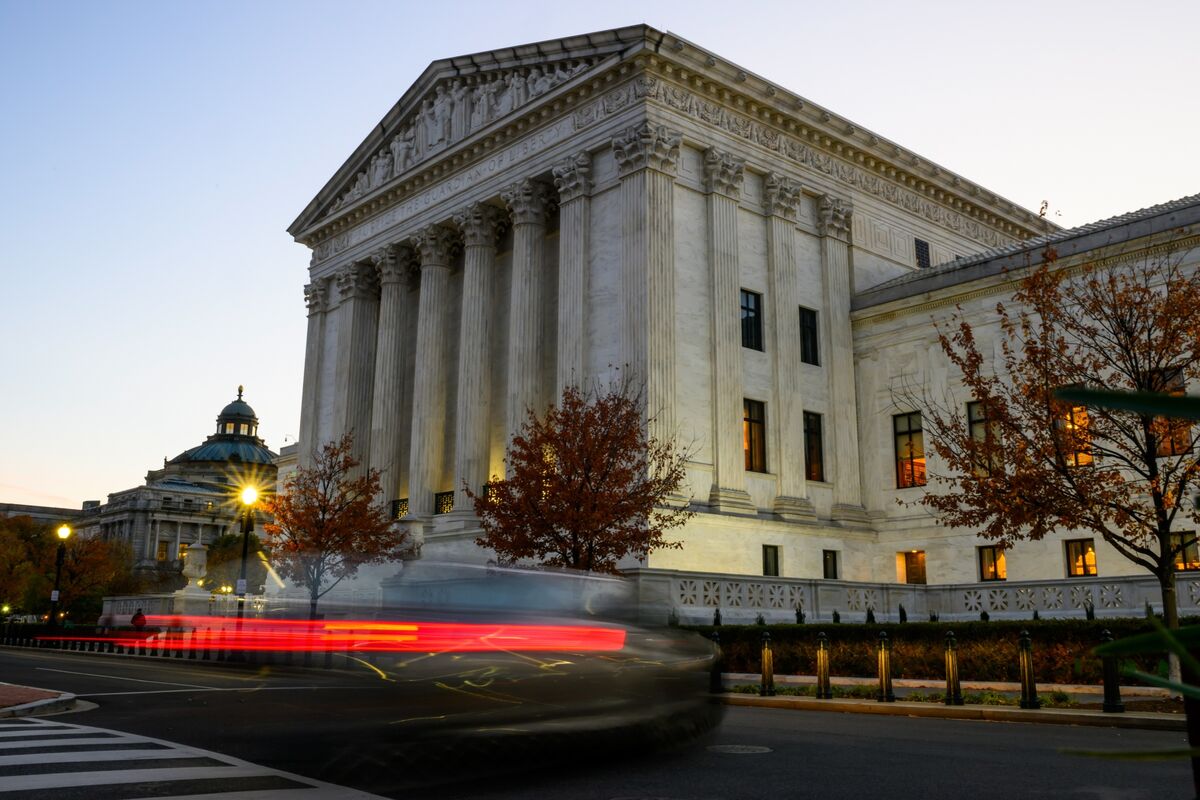
The US Supreme Court has temporarily blocked the Trump administration’s effort to remove Shira Perlmutter as director of the US Copyright Office, deferring a decision until it addresses two related presidential-firing cases. The justices said they will wait to act on the bid to oust Perlmutter until they consider other clashes, including a case involving Federal Reserve Governor Lisa Cook, which the Court will hear on Jan. 21. The ruling preserves the status quo at the Copyright Office for now and signals the Court may issue broader precedent on executive removal powers that could affect agency independence.
Market structure: Maintaining the Copyright Office director preserves the regulatory status quo, favoring rights-holders and legacy content owners (WMG, SONY, DIS) who capture licensing rents; large platforms (META, GOOGL, AMZN) face modest enforcement and compliance cost pressure that could compress ad/content margins by an estimated 1–3% over 6–12 months if rule changes accelerate. Competitive dynamics: continuity reduces immediate policy tailwinds for platform self‑help (aggressive licensing/avoidance) and preserves incumbents’ bargaining power with platforms; mid‑cap media companies can reprice revenues higher if enforcement favors takedowns/licensing. Supply/demand: no short‑run supply shock to content, but increased regulatory enforcement raises demand for licensed content and legal services, potentially lifting music/publishing revenue growth by 3–7% annualized in favorable rulings.
Risk assessment: Tail risks include a Supreme Court precedent that broadens or curtails presidential firing power, creating governance uncertainty across independent agencies and spiking political-risk premia; low‑probability systemic shock could widen media stock dispersion by >15% in days. Time horizons: immediate (days) — negligible market moves; short (weeks–months) — event‑driven volatility into Jan 21, 2026; long (quarters–years) — precedent affects IP rulemaking and licensing markets for 2–5 years. Hidden dependencies: outcomes interact with pending DMCA/section 512 rulemakings and big licensing deals (Spotify/major labels), creating non‑linear impacts on mid‑cap content names.
Trade implications: Implement event‑driven, asymmetric exposure: favor content owners and legal‑services beneficiaries, hedge with selective platform shorts or options into the Jan 2026 SCOTUS window. Direct plays: small long weights in WMG/SONY/DIS (2–3% combined) financed by modest shorts in META/GOOGL (1–2% net). Options: buy Jan 2026 calls on WMG or Jan 2026 puts on META sized to 0.5–1% portfolio risk; scale into positions if implied vol >25% or media stocks move ±8%.
Contrarian angles: Consensus underestimates how a rights‑friendly outcome can reallocate 3–5% of streaming economics back to labels/publishers, meaning mid‑caps could outperform mega‑caps by 8–12% over 6–12 months — a mispricing to exploit. Historical parallel: net‑neutrality debates moved niche content and distribution stocks materially while leaving FAANG muted; similar dispersion can be exploited with pair trades. Unintended consequence: aggressive shorting of platforms risks sudden re‑rating if platforms secure expedited licensing deals; cap upside/stop losses at 8–12% to control asymmetric outcomes.
AI-powered research, real-time alerts, and portfolio analytics for institutional investors.
Request DemoOverall Sentiment
neutral
Sentiment Score
0.00
