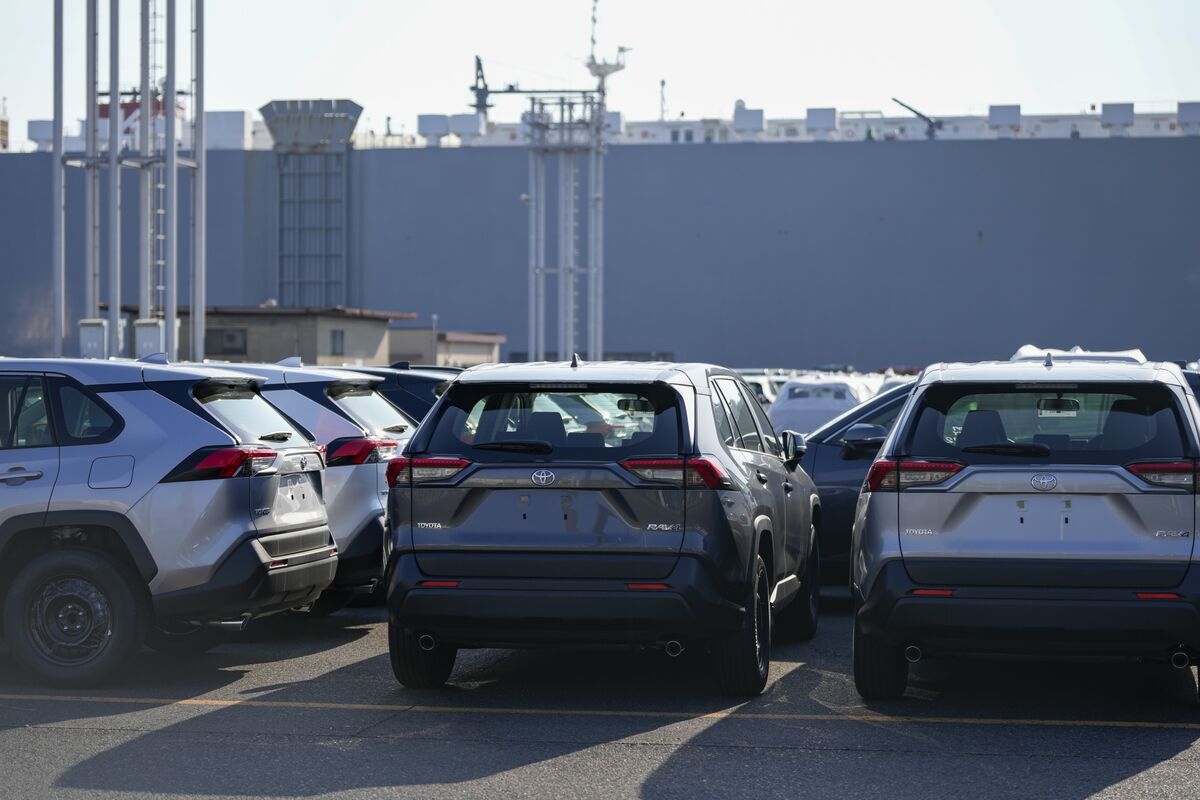
Toyota’s global sales fell 7.4% year over year in May to 885,207 units, marking a fourth straight month of declines, while production slipped 5.8% to 857,765 units. The company cited Middle East disruptions tied to the Iran conflict and tougher competition in China as key headwinds. The report is negative for Toyota fundamentals and highlights ongoing supply-chain and geopolitical pressure, though the broad market impact should be limited.
TM is not just facing a soft demand patch; the more important issue is operational fragility when the supply chain is shocked. A geopolitically-driven production hit in a company that still trades on reliability and inventory discipline can create a second-order margin problem: under-absorbed fixed costs, freight inefficiencies, and higher expedite expenses tend to show up before any visible pricing relief. That matters because auto investors often underwrite Toyota as a quality compounder rather than a cyclical with meaningful execution beta.
The competitive read-through is asymmetric. In China, persistent weakness gives domestic EV makers and low-cost hybrids another window to take share, while global OEMs with more flexible regional sourcing can outperform on mix and uptime. If Toyota’s disruptions persist into the next 1-2 quarters, suppliers with concentrated exposure to Toyota-linked volumes will see order volatility, but diversified tier-1s may actually gain share if OEMs re-source toward more resilient platforms.
The market may be underappreciating the time horizon: a few weeks of production noise is manageable, but repeated monthly declines can force a broader reset of FY volume assumptions and inventory strategy. The key catalyst is whether management treats this as temporary disruption or starts guiding more conservatively on production cadence; the latter would pressure consensus multiple expansion. The contrarian view is that some of this weakness is already visible in the tape, so the better trade may be against near-term recovery optimism rather than a structural short yet unless the conflict escalates or China sales deteriorate further.
For risk/reward, the cleanest setup is to express relative weakness rather than outright bearishness on autos, since Toyota’s balance sheet and brand can absorb short shocks better than most. The bigger downside would come if supply disruptions hit both production and logistics simultaneously, extending the earnings impact beyond the current quarter and into the next reporting cycle.
AI-powered research, real-time alerts, and portfolio analytics for institutional investors.
Request DemoOverall Sentiment
mildly negative
Sentiment Score
-0.35
Ticker Sentiment
