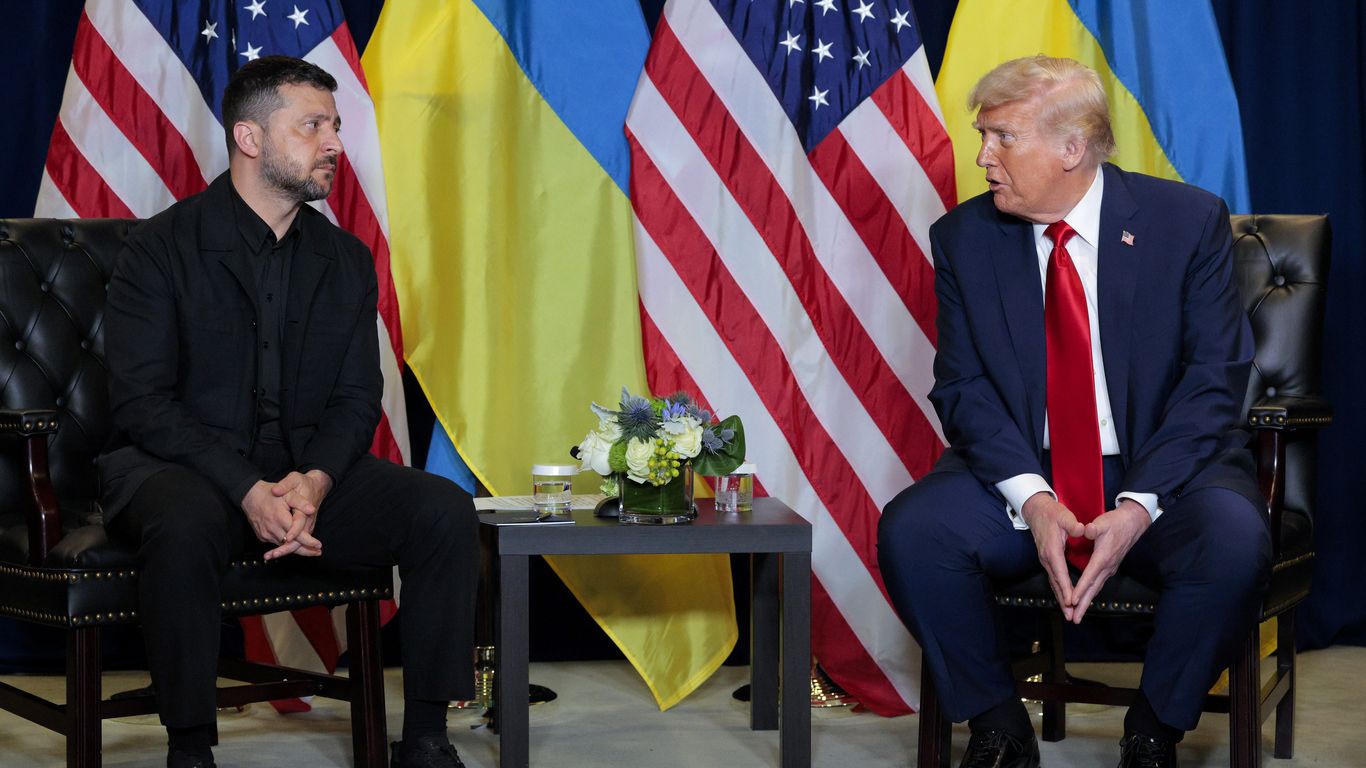
Former President Trump has significantly altered his position on the Ukraine war, now advocating for Ukraine to reclaim all lost territory and potentially more, a stark contrast to his prior calls for territorial concessions. This shift, which also links tariffs on Moscow to European energy policy and suggests indirect U.S. military aid through NATO allies, has been met with unexpected indifference within his political base, attributed to war fatigue and skepticism about deeper U.S. involvement. This development highlights an evolving, albeit complex, geopolitical stance from a prominent U.S. political figure regarding the conflict's resolution.
Former President Trump has executed a significant pivot in his stance on the Russia-Ukraine war, now articulating a position where Ukraine could reclaim all its territory and potentially seize Russian land. This marks a sharp departure from his previous alignment with his base, which favored a quick peace deal involving territorial concessions by Kyiv. The new posture also introduces specific economic and military policy levers: proposing indirect U.S. military support by selling weapons to NATO allies for their discretionary use, and linking potential tariffs on Moscow to Europe's reduction of its reliance on Russian energy. Despite the magnitude of this policy shift, the reaction from his core political supporters has been notably muted, characterized by what sources describe as 'apathy' and 'fatigue' after eight months of intractable conflict. Key figures within the movement suggest this indifference stems from a belief that the rhetoric will not translate into deeper U.S. military involvement. This development introduces a new layer of unpredictability into the long-term U.S. foreign policy outlook concerning the conflict, signaling a potential, albeit complex, strategic recalculation.
AI-powered research, real-time alerts, and portfolio analytics for institutional investors.
Overall Sentiment
neutral
Sentiment Score
0.00
