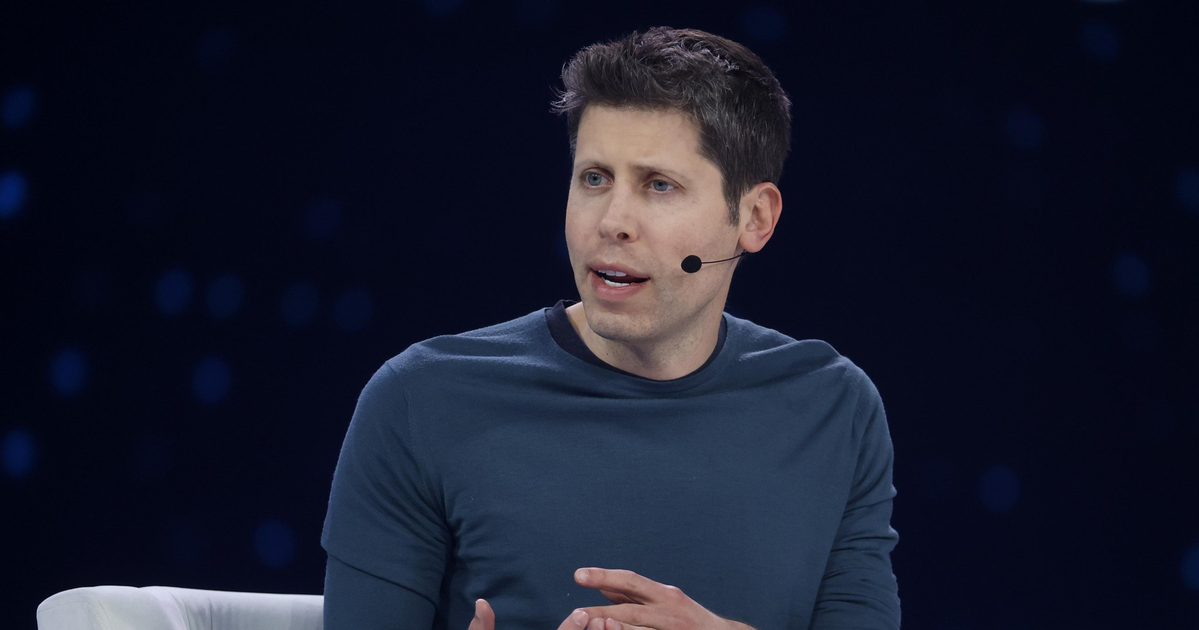
OpenAI CEO Sam Altman’s home was reportedly targeted in a second attack within two days, following an alleged Molotov cocktail incident on Friday and a possible gunshot fired from a car on Sunday. No injuries were reported, and no arrest has been made in the second incident. The story is primarily a personal security and legal matter, with limited direct market impact beyond headline risk for OpenAI leadership.
The immediate market read is not about OpenAI’s core product demand, but about the acceleration of a governance and security overhang around founder-led AI platforms. That matters because the premium multiple on frontier AI assets is partly a “talent concentration” premium; repeated personal-security incidents force spend into physical protection, legal hardening, and executive risk management, all of which are deadweight costs that scale with visibility rather than revenue. The second-order risk is distraction: any time leadership time shifts from model cadence and enterprise rollout to personal safety and legal coordination, execution slippage becomes harder to dismiss.
The bigger implication is for the broader AI ecosystem’s narrative durability. Competitive positioning in frontier AI is increasingly a function of trust, reliability, and institutional access; recurring headline risk around one of the category’s most important leaders can amplify enterprise procurement caution, especially in regulated verticals that already scrutinize vendor stability. In the near term, this is mostly sentiment-driven, but over months it can modestly benefit companies framed as lower-drama, more operationally conservative alternatives in enterprise software and cloud AI distribution.
The contrarian view is that the market may overstate business impact relative to the operational reality: physical security incidents rarely impair product economics unless they persist or trigger leadership turnover. The real tail risk is not revenue loss; it is a security spiral that prompts tighter access controls, reduced public-facing activity, and a more defensive posture that slows partnership velocity. If the incident fades quickly, the tradeable effect should reverse within days; if it recurs, the issue becomes a governance discount on the broader AI complex rather than a one-off headline.
AI-powered research, real-time alerts, and portfolio analytics for institutional investors.
Request DemoOverall Sentiment
moderately negative
Sentiment Score
-0.20
