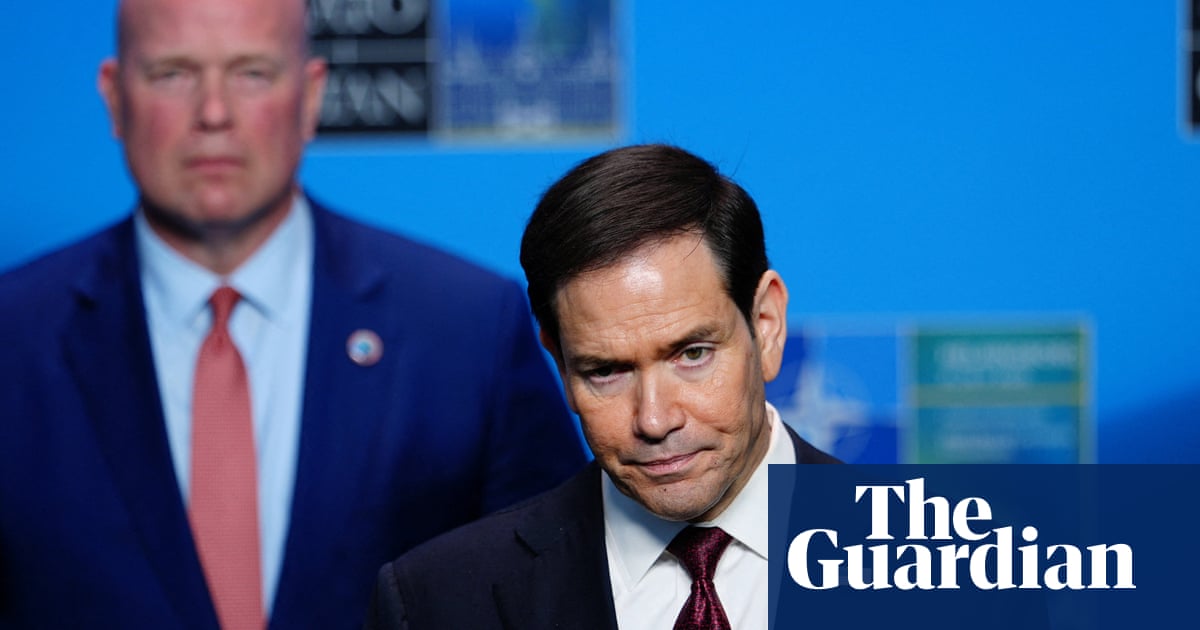
Trump’s refusal to win broader NATO support for operations against Iran is creating a July summit flashpoint, with allies expected to debate military support and reopening the Strait of Hormuz if talks fail. The article also points to possible US troop reductions in Europe from 80,000, including a 5,000-troop withdrawal from Germany and a disputed 4,000-troop rotation into Poland. The risk is elevated for shipping, energy transit, and broader NATO cohesion, making this a potentially market-moving geopolitical development.
This is less about one-off NATO friction and more about a creeping repricing of the Western security backstop. If Washington is openly conditioning alliance support on help in a Middle East confrontation, Europe has to assume higher self-funded defense and maritime-security burden, which should structurally widen the spread between US-funded defense primes and European procurement laggards over the next 6-18 months. The first-order market read is “geopolitical noise,” but the second-order effect is a higher probability of faster defense budget approvals, accelerated munitions replenishment, and more urgent maritime/airlift procurement cycles.
The most immediate equity beneficiaries are companies exposed to air defense, naval systems, ISR, and logistics enablement rather than legacy ground platforms. A Hormuz contingency is especially supportive for firms tied to escort, mine countermeasure, anti-drone, and secure communications capacity; the bottleneck is not hardware availability alone but command-and-control interoperability across allied fleets. That favors US prime contractors and select European names with NATO-standard systems, while commercial shipping, tanker insurance, and Europe-dependent industrials face an earnings overhang if the rhetoric turns into even a partial closure risk premium.
The key catalyst window is the July summit, but the positioning opportunity starts now because procurement lead times are long and budget language can move before headlines do. Near-term, the market may underprice the probability of a temporary Strait of Hormuz disruption because the base case assumes de-escalation; that makes optionality attractive versus outright beta. Conversely, the troop redeployment noise should be treated as a signal of strategic prioritization, not just bilateral irritation: it implies Europe must self-insure more of its frontier risk, which is positive for defense demand but negative for transatlantic confidence-sensitive assets.
The contrarian view is that repeated brinkmanship may still resolve into a more formalized burden-sharing arrangement, which would cap the downside for NATO cohesion and reduce the tail risk premium faster than expected. If so, defense multiples could compress after the summit if investors have chased the headline too aggressively. But in the interim, the asymmetry is skewed toward higher spending, more inventory restocking, and elevated security premiums across shipping and energy logistics.
AI-powered research, real-time alerts, and portfolio analytics for institutional investors.
Request DemoOverall Sentiment
mildly negative
Sentiment Score
-0.35
