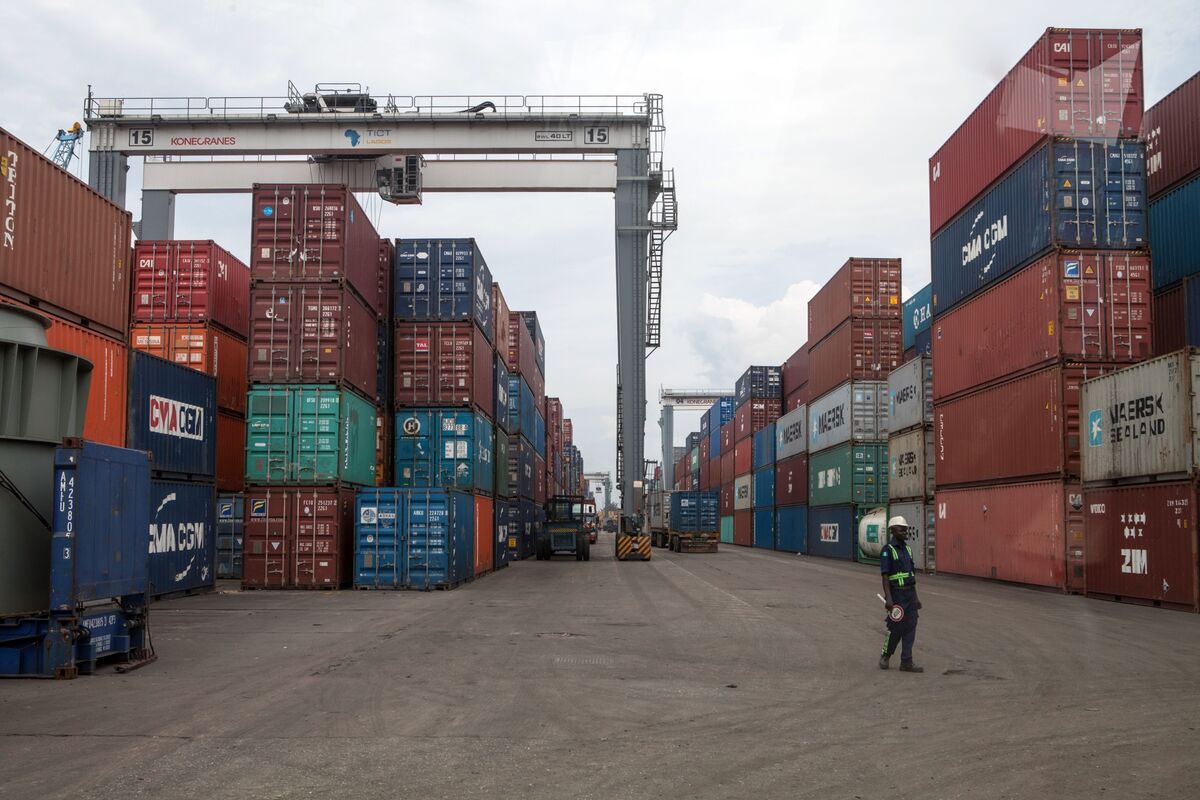
£746 million UK Export Finance guarantee ($997m) will fund modernization of Lagos’s Apapa and TinCan Island Port Complex. Announced during President Bola Tinubu’s visit to the UK, the deal strengthens UK-Nigeria economic ties and should boost Nigerian port capacity and trade-flow efficiency, but its market impact is localized and unlikely to move broader markets.
The UK-backed financing effectively changes the project's risk profile by moving a meaningful portion of construction risk off local balance sheets and onto an export-credit underwriter; that reduction in effective sovereign/construction credit spreads should cut financing costs by an estimated 150–300 bps versus fully commercial debt, compressing payback timelines and making higher-capex, throughput-focused scopes (dredging, cranes, computerized yard management) viable. Expect a 12–36 month spend profile with the highest near-term demand for large capital goods and consulting/engineering services, and follow-on recurring spending on maintenance and IT systems thereafter.
Operationally, even a conservative 20–30% reduction in yard dwell time (2–5 days per container) would unlock ~10–20% more effective annual TEU capacity without a proportional increase in labor, collapsing local “congestion premia” paid by shippers and reducing the frequency of blank sailings on some routes. That squeezes margins for informal inland transport providers and transshipment hubs that have previously monetized Nigerian congestion, while shifting bargaining power toward integrated carriers and terminal operators who can guarantee schedule reliability.
Macro/FX feedback loops are important: faster import throughput lowers short-term supply-side inflation for consumer goods but increases FX demand to pay for imports; successful execution could improve investor sentiment and sovereign access to capital within 6–18 months, whereas cost overruns or diversion of hard currency for imports would widen NGN funding gaps and reintroduce sovereign funding stress. The political/security vector is binary — steady security and transparent procurement accelerate investor re-rating; corruption or sabotage creates long-lived goodwill losses and a multi-year rollback of private participation.
Monitor three catalyzing datapoints to adjudicate the thesis: (1) awarded EPC/terminal operator counterparties and their financing share within 90 days, (2) monthly port dwell-time and TEU throughput vs pre-project baselines out to 12 months, and (3) announced UK/EU supplier contract values — each materially adjusts expected ROI and timing for capital goods vendors and trade-flow beneficiaries.
AI-powered research, real-time alerts, and portfolio analytics for institutional investors.
Request DemoOverall Sentiment
mildly positive
Sentiment Score
0.25
