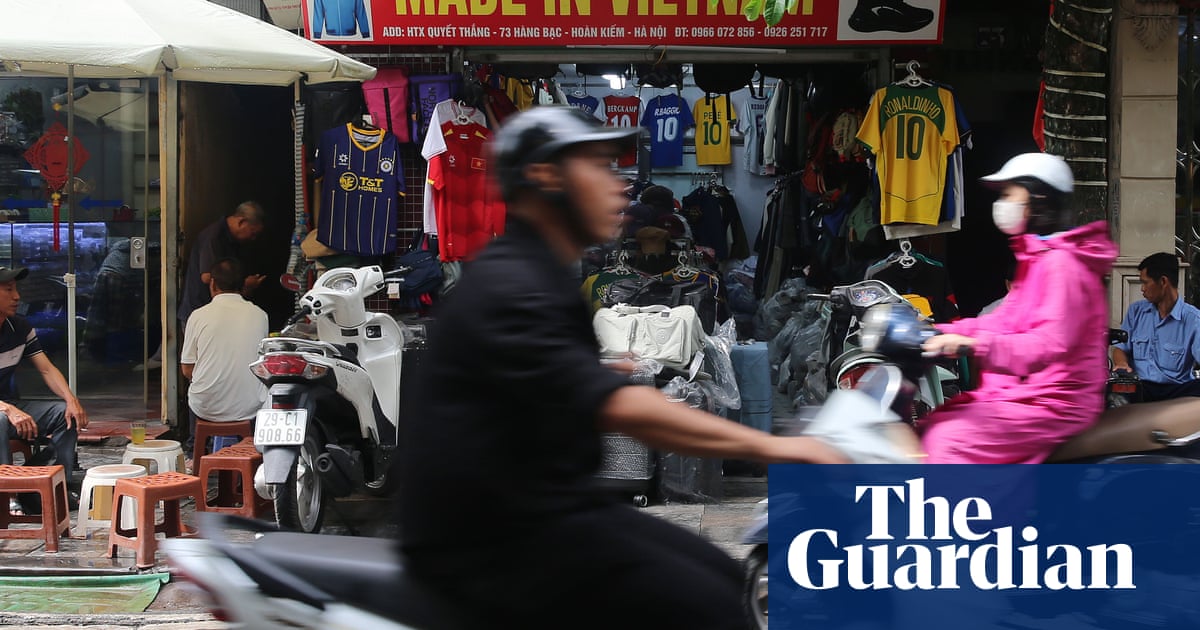
Vietnam has reached a tariff agreement with the US, accepting a 20% tariff on many goods and zero tariffs for US imports, thus avoiding a threatened 46% levy. Crucially, the deal includes a 40% tariff on "transshipments" aimed at Chinese goods, which has introduced significant uncertainty as businesses express concern over its broad definition and enforcement given Vietnam's reliance on Chinese inputs as a manufacturing hub. This provision is viewed as a US strategy to pressure China, prompting Beijing to threaten countermeasures. The situation places Vietnam on a delicate geopolitical tightrope, balancing its economic and security interests with both the US and China, leading to market volatility and paused business decisions amid unclear implications for global supply chains and regional stability.
The initial optimism surrounding the US-Vietnam tariff agreement has been replaced by significant uncertainty, reflecting a moderately negative sentiment. While Vietnam successfully avoided a threatened 46% levy, the new structure imposes a 20% tariff on many goods and, critically, a 40% tariff on so-called "transshipments." The lack of a clear definition for transshipment is the central issue, creating substantial risk for Vietnam's manufacturing sector, which is fundamentally integrated with Chinese supply chains for inputs in everything from footwear to electronics. As noted by the ISEAS Yusof Ishak Institute, it is unrealistic to expect most Vietnamese exports to be made entirely from domestic components. This provision is widely interpreted as a strategic US move to exert pressure on China, a view supported by former US trade negotiators and underscored by Beijing's threat of "resolute countermeasures." The deal places Vietnam in a precarious geopolitical position, balancing its largest export market, the US, with its top import source, China. Consequently, businesses are pausing investment decisions, and companies in low-margin sectors like textiles may face an unsustainable burden if required to prove the origin of all components, clouding the outlook for foreign direct investment and supply chain stability.
AI-powered research, real-time alerts, and portfolio analytics for institutional investors.
Request DemoOverall Sentiment
moderately negative
Sentiment Score
-0.45
