
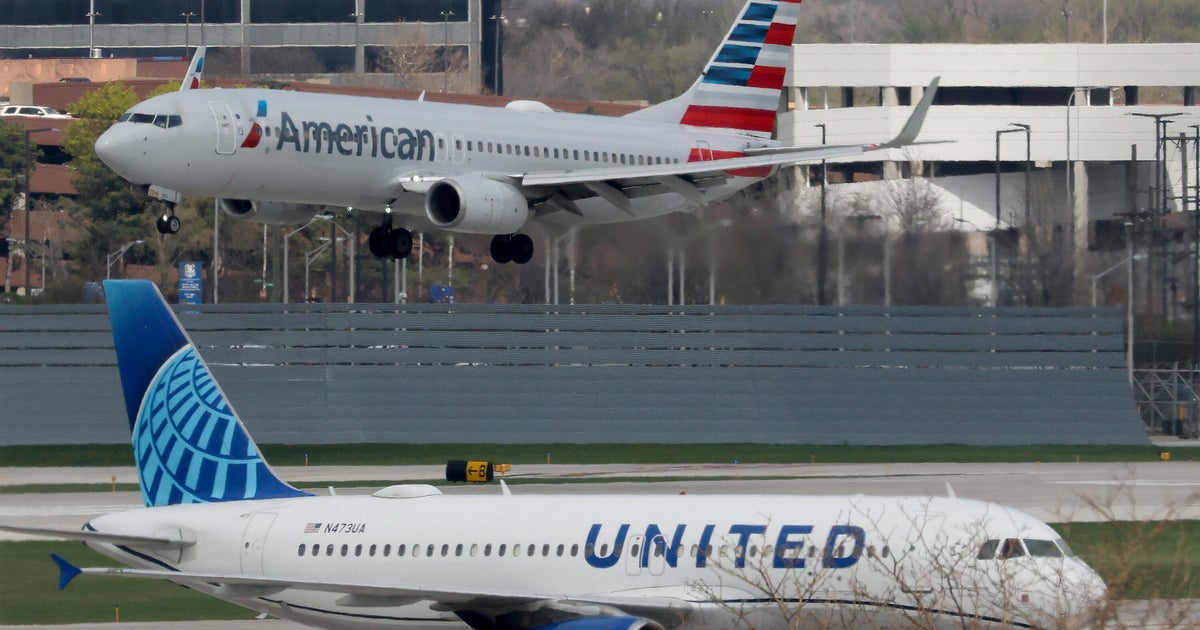
A United Airlines Boeing 737 carrying 147 passengers and 6 crew diverted from Chicago to Madison after a reported unruly passenger incident; the flight landed safely with no injuries reported. According to tracking data, the plane departed Chicago O'Hare at 8:02 p.m. CDT and arrived in Madison at 9:29 p.m. CDT, with service expected to resume to Minneapolis-St. Paul later that night. The event is operationally disruptive but appears isolated, limiting likely market impact.
This is not a demand story; it is an operational and governance headline with limited direct earnings impact unless it becomes a pattern. The market should treat the incident as a small probability, high-visibility event that can widen the discount on UAL’s premium business mix if it feeds perceptions around cabin security, crew de-escalation protocols, and controllable delays. The immediate financial effect is trivial, but the second-order risk is reputational: repeated incidents can raise corporate travel churn at the margin and pressure premium yields over the next 1-2 quarters.
The near-term losers are mostly on the operational side: UAL absorbs disruption cost, crew time, and possible maintenance/inspection follow-through, while peers benefit only if travelers perceive a carrier-level service gap. The more important competitive angle is that any sustained noise around unruly-passenger events disproportionately hurts legacy carriers with dense hub-and-spoke networks, because a single diversion cascades into missed connections and re-accommodation costs. Low-cost carriers are less exposed economically, but they can still gain mindshare if the market starts associating legacy carriers with higher-friction travel experiences.
The key catalyst is whether this is isolated or the start of a statistically visible cluster over the next 30-60 days. If there are additional security-related diversions or social-media amplification, expect short-lived pressure on UAL relative to DAL and AAL, especially into earnings or investor conferences where management has to address controllability and compensation. The contrarian view is that these headlines often overstate durability: absent a pattern, investors tend to fade them quickly because they do not alter capacity, fares, or fuel economics in any meaningful way.
For risk management, the actionable line is not a directional bearish thesis on the airline industry, but a relative-value expression versus a better-operating peer. If incident frequency normalizes, the stock should mean-revert within days; if not, the damage is mostly to sentiment and can persist for weeks, not quarters. The longer-term risk is regulatory pressure around in-cabin security procedures, but that would require a broader change in public policy or multiple incidents, which is not yet priced as a base case.
AI-powered research, real-time alerts, and portfolio analytics for institutional investors.
Request TrialOverall Sentiment
neutral
Sentiment Score
-0.10
Ticker Sentiment
