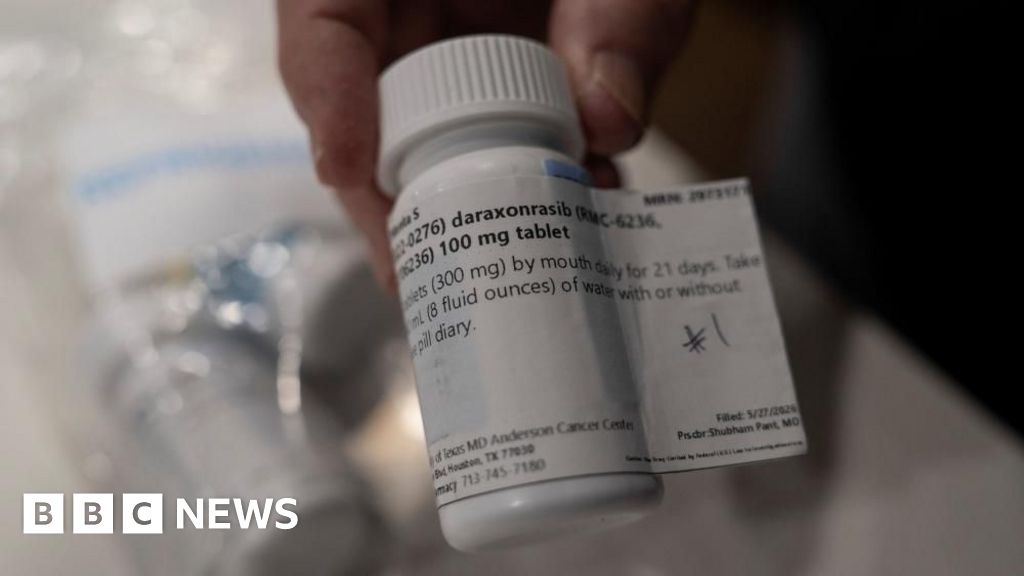
Daraxonrasib nearly doubled average survival in advanced pancreatic cancer patients to 13.2 months versus 6.6 months on chemotherapy, while reducing severe side-effects to 43.6% from 57.5%. The trial covered 500 patients across North America, Europe, and Asia and was presented at ASCO. The results are a significant breakthrough for KRAS-mutated metastatic pancreatic cancer, though the direct market impact is likely limited to biotech and oncology names.
This is less a single-drug story than a proof-of-platform event for KRAS biology. The second-order implication is that the value stack shifts toward companies with KRAS franchises, companion diagnostics, and earlier-line combination capabilities, while generic chemo exposure in pancreatic cancer becomes structurally less relevant over time. The market is likely underestimating how quickly physician behavior can change once a tolerable oral option shows survival separation in a disease with very limited benchmark therapies.
The biggest near-term winner is the developer, but the broader basket effect may matter more over 6-18 months: sequencing the right biomarker-selected population, building combo regimens, and expanding into adjacent KRAS-driven tumors can multiply the commercial opportunity. The losing side is not just chemo revenue; it is also hospitals and infusion-center economics tied to prolonged multi-cycle chemotherapy, which could see utilization pressure if an oral standard emerges.
The main risk is regulatory and translational, not scientific enthusiasm. A single trial can reset sentiment, but reimbursement, label breadth, and real-world durability across mutation subtypes will determine whether this becomes a franchise or a one-hit wonder. For investors, the asymmetry is best expressed through options or pairs rather than outright beta chasing, because positive read-through is substantial but the timeline to revenue inflection is still measured in quarters, not days.
Consensus may be too focused on the headline survival multiple and not enough on adoption friction. In oncology, the first truly practice-changing data often face a slow ramp if testing rates are low, referral pathways are fragmented, or payers demand extra evidence in earlier lines. That creates a window where the science can be right but the stock reaction can overshoot, especially if the market has already priced in best-case penetration.
AI-powered research, real-time alerts, and portfolio analytics for institutional investors.
Request TrialOverall Sentiment
strongly positive
Sentiment Score
0.86
