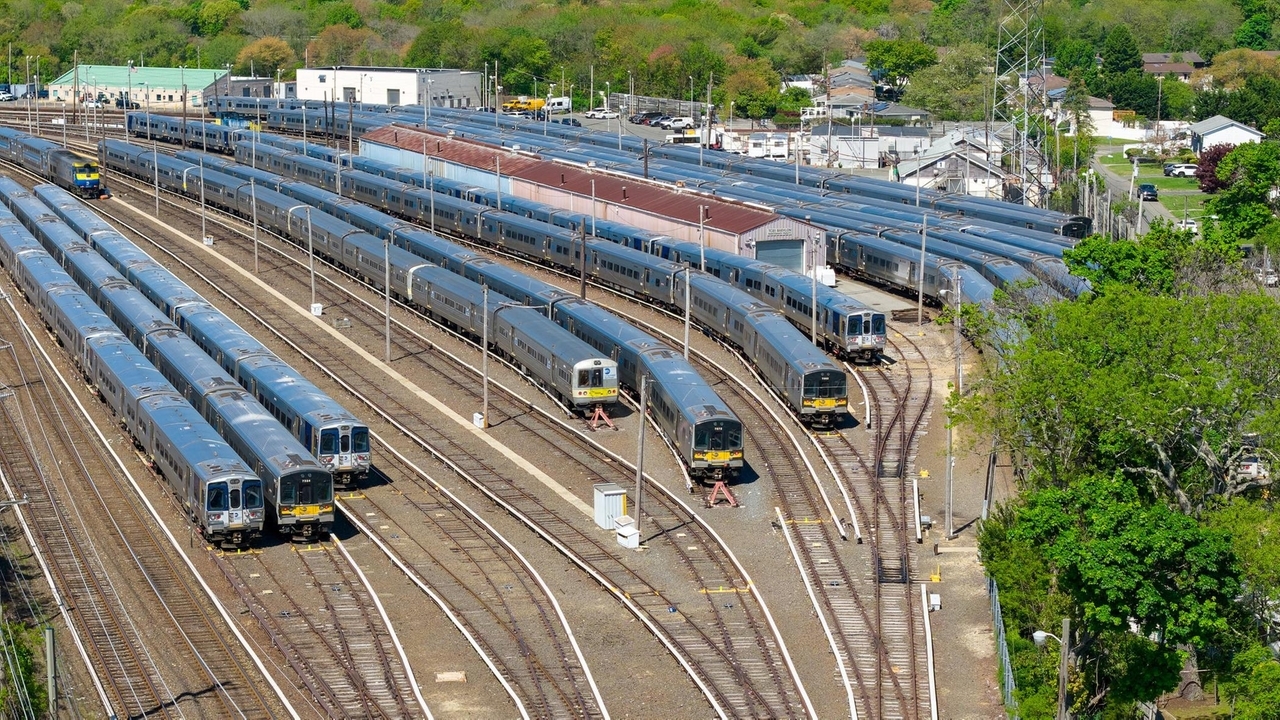
The LIRR strike halted service just after midnight Saturday, disrupting an estimated 270,000 daily commuters if it extends into Monday. The shutdown is already snarling traffic, pushing travelers into costlier rideshares and buses, and threatening Long Island businesses and tourism ahead of the busy summer season. Negotiations with five labor unions remain unresolved, with no clear timetable for resuming talks.
The near-term winner is not the labor side per se, but any substitute with fixed capacity and pricing power: bus operators, commuter van services, rideshare platforms, parking operators, and even certain urban delivery/logistics names that benefit from traffic re-routing and higher vehicle utilization. The loss is concentrated in time-sensitive consumer and service demand, especially around airports, entertainment, and weekend leisure, which implies a measurable revenue hit for local discretionary spend even if the strike resolves quickly. The second-order effect is worse than the headline suggests: once commuters are forced to establish alternative routines for even a few days, some share of that traffic tends to remain on substitute modes for weeks, especially if employers normalize hybrid attendance during disruptions.
The key catalyst is duration. A 1-2 day stoppage is mostly noise, but a Monday-morning continuation converts this into a broader regional productivity shock and raises the probability of last-minute policy intervention, emergency transit funding, or a face-saving settlement. The market should also focus on inflation pass-through: if wage concessions lead to fare increases and/or higher payroll-tax burdens, that is mildly stagflationary for local businesses and could pressure consumer-facing small caps on Long Island more than the rail system itself.
A contrarian angle is that the strike may be less negative for the transit ecosystem than feared if it accelerates a structural shift toward higher weekend usage of buses, ferries, parking, and app-based mobility. The most vulnerable assumption is that all displaced riders are permanently lost; in reality, the shock may redistribute demand rather than destroy it, especially for destination travel. That said, if the shutdown extends past Monday, the probability of visible demand destruction for leisure, station-adjacent retail, and airport-linked spending rises sharply and becomes the cleaner short trade.
AI-powered research, real-time alerts, and portfolio analytics for institutional investors.
Request DemoOverall Sentiment
moderately negative
Sentiment Score
-0.45
Ticker Sentiment
