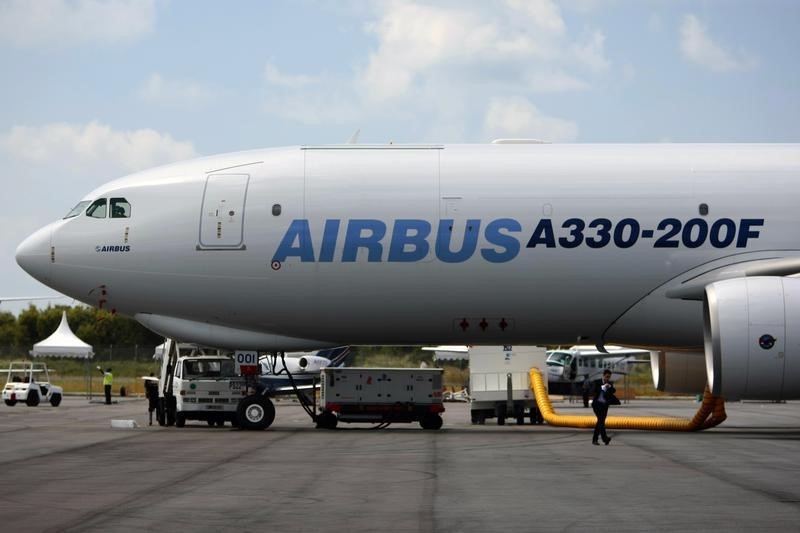
Airbus first-quarter revenue fell 7% year over year to EUR 12.7 billion, missing consensus of EUR 12.87 billion, while adjusted EBIT more than halved to EUR 300 million from EUR 624 million. Commercial aircraft EBIT collapsed to EUR 81 million from EUR 494 million as deliveries dropped to 114 from 136 and free cash flow before customer financing swung to a EUR 2.5 billion outflow. Airbus kept full-year 2026 guidance unchanged, but the results point to near-term margin pressure and ongoing supply-chain execution risk tied to Pratt & Whitney engine shortages and a dynamic geopolitical backdrop.
The near-term read-through is not just a one-quarter earnings miss; it is a reminder that aerospace margins are highly levered to delivery cadence, hedge rates, and supplier bottlenecks. The bigger second-order effect is that Airbus is choosing to defend the production ramp even while cash flow is negative, which implies working-capital drag for several quarters before the volume/margin operating leverage shows up. That should keep pressure on European industrial suppliers with high Airbus exposure, while creating relative support for defense-adjacent names that can absorb talent, capital, and management attention away from commercial aviation.
The supply-chain angle matters more than the headline profit decline. Ongoing engine shortages and Middle East uncertainty extend the timeline for a clean recovery, which means the market should expect intermittent delivery slippage rather than a straight-line rebound. That favors less customer-facing, more pricing-power-rich suppliers upstream, while airlines and lessors face a longer period of tight narrowbody availability, limiting fleet-growth upside and keeping lease rates elevated.
The contrarian view is that the market may be over-anchoring on the weak quarter and underpricing the fact that guidance is intact despite the cash burn. If production discipline holds, this is a classic setup where the next 2-3 quarters can show improving unit economics even if reported cash remains messy. The real risk is not demand collapse; it is execution failure on the ramp, which would push the inflection from late 2026 into 2027 and compress multiples across the aerospace complex.
AI-powered research, real-time alerts, and portfolio analytics for institutional investors.
Overall Sentiment
moderately negative
Sentiment Score
-0.25
