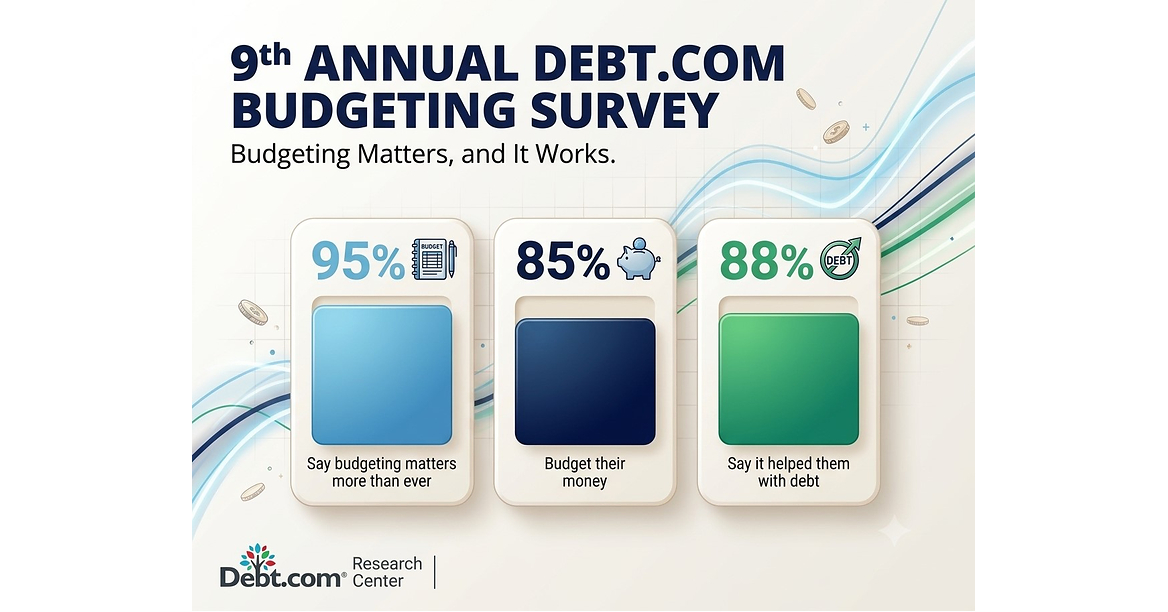
Debt.com’s 2026 Budgeting Survey finds the share of Americans living paycheck to paycheck fell 21 points to 48% (from 69% in 2025), the lowest in five years. Despite the improvement, 95% say economic uncertainty and rising costs make budgeting more vital than ever, and 44% report household-wide coordination to stay on track. The results are a modest positive on financial resilience, but the continued 48% being financially stretched keeps the consumer backdrop cautious.
This reads more like a behavioral confirmation than a clean macro signal: consumers are still signaling stress, but they are getting more disciplined about cash management. In markets, that usually favors operators that win on affordability and basket frequency rather than names that need a decisive re-acceleration in unit demand. The first-order beneficiary is value retail and private-label exposure; the second-order winner is anyone with tighter inventory turns and lower promotional intensity because budgeted consumers tend to be more loyal to price architecture than to brand aspiration.
The bigger takeaway for credit is that improved self-reported budgeting should reduce near-term payment slippage at the margin, but not enough to justify a full reset in underwriting assumptions. For banks and card issuers, this is a slow-burn positive only if it shows up in 60-90 day delinquency and charge-off data; otherwise it is just sentiment noise. If the consumer really were healing, you would expect stronger evidence in revolving balances, ticket sizes, and late-payment rates before it matters for names like COF, DFS-style exposures, or KRE proxy baskets.
Contrarian view: the market may overread the drop in "paycheck-to-paycheck" as if it were disposable-income expansion, when it may simply reflect tougher budgeting behavior amid continued uncertainty. That distinction matters because disciplined consumers often spend the same or less, just with better category mix. If this thesis is right, the marginal dollar still flows to essentials, warehouse clubs, and off-price; if it is wrong, a rebound in broader discretionary would show up quickly in back-to-school and holiday read-throughs over the next 1-3 months.
AI-powered research, real-time alerts, and portfolio analytics for institutional investors.
Request TrialOverall Sentiment
mixed
Sentiment Score
-0.10
