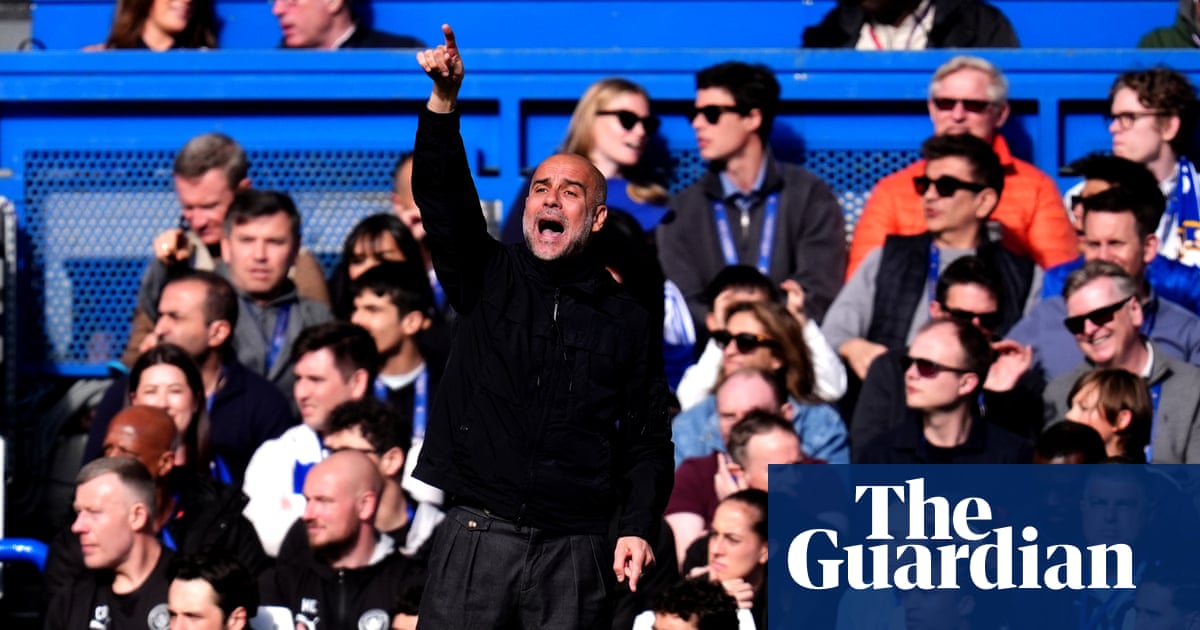
Manchester City beat Chelsea 3-0 at Stamford Bridge and now control their Premier League title fate, sitting six points off the top with a game in hand. The article frames City as peaking in April, with 19 wins in their last 23 April matches across all competitions and nine goals scored without conceding in their last three games. Arsenal's recent collapse is highlighted as the main counterpoint, but the piece is largely opinionated match and title-race analysis rather than market-moving financial news.
The market takeaway is not the football narrative; it is the re-pricing of probability around a highly path-dependent outcome. When a dominant incumbent reasserts control this late in a campaign, the distribution of league outcomes compresses fast: a small set of “must-win” fixtures becomes the main driver of sentiment, sponsorship narratives, and short-term media inventory. In sports-media terms, the winner is the rights holder that can monetize urgency and repeat tension; the loser is the challenger whose equity story depends on maintaining optionality rather than defending a lead. The second-order effect is that the article’s “April specialist” framing reinforces a positioning dynamic already present in fan and betting markets: participants tend to over-rotate after one swing game and underweight structural depth. That usually creates a momentum loop over the next 1-3 matchweeks as casual money and narrative capital chase the frontrunner, while the challenger’s probability curve steepens sharply. If the frontrunner sustains even one more clean win, implied title odds can move disproportionately because remaining fixtures become cleaner to model and the path to the trophy stops being abstract. Contrarian risk: this sort of late-cycle dominance often looks more durable than it is. One congested schedule week, a minor injury to a ball-progressor, or a low-probability red card can re-open the distribution quickly because the lead is still small in absolute points terms. The better trade is not to chase the headline winner outright, but to express the widening gap through volatility and timing: the market is likely underpricing the chance of a sharp reversal, especially if the challenger faces another confidence shock before the head-to-head.
AI-powered research, real-time alerts, and portfolio analytics for institutional investors.
Request DemoOverall Sentiment
moderately positive
Sentiment Score
0.35
