
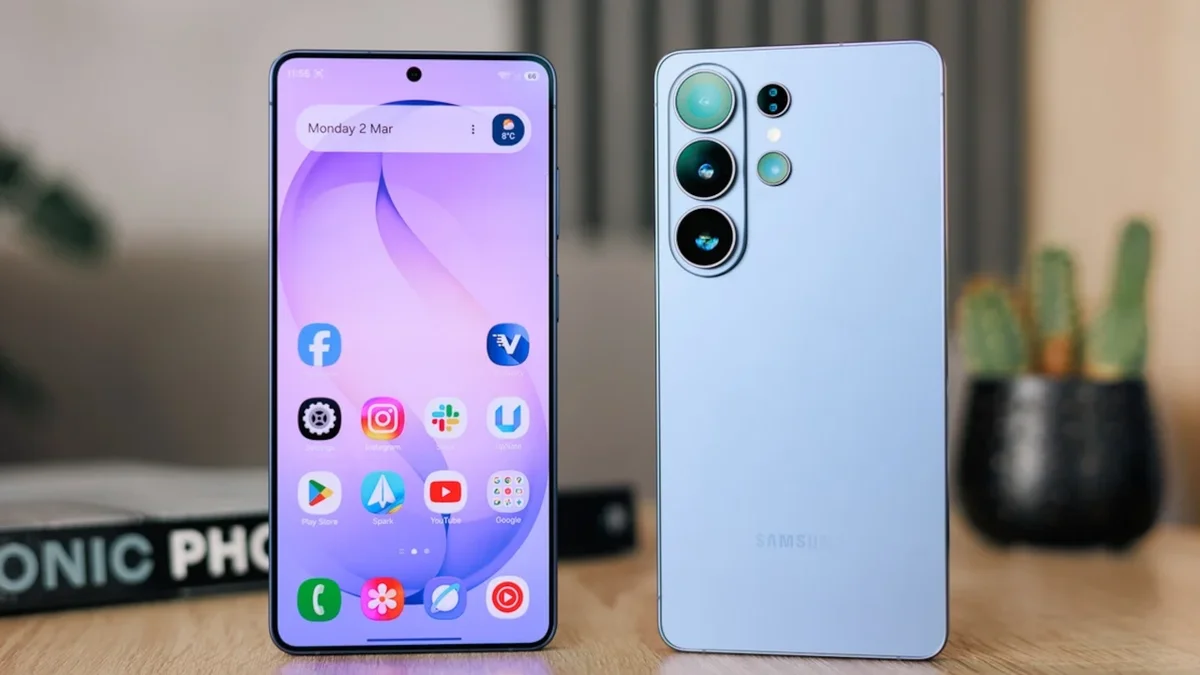
Samsung’s executives said rounded corners, a slimmer profile, and vertically mounted triple rear cameras are part of the core Galaxy design identity, and the Galaxy S26 Ultra will fully abandon the sharp-cornered Galaxy Note look. The article suggests Samsung is prioritizing design continuity across premium and mid-range Galaxy phones, with little expectation of major outward changes over the next few years. Any future redesign would likely be driven by weaker sales or a new feature requirement rather than current product strategy.
Samsung is signaling that industrial design has shifted from a differentiator to a brand moat: the risk is not that the phones become uglier, but that the lineup becomes more substitution-prone across price tiers. That usually compresses the premium-vs-midrange mix over time because if the visible delta narrows, consumers anchor more on camera/software/spec sheets and carrier promos, which are lower-margin channels. For component suppliers, a stable chassis language can support longer design-in cycles, but it also reduces the odds of a refresh-driven sell-through bump.
The more important second-order issue is competitive cadence. Apple and Google have both used distinct rear-camera architecture and/or feature asymmetry to preserve product laddering; Samsung is doing the opposite, which may protect brand continuity but can cap perceived innovation in the flagship tier. In a market where replacement cycles are already stretching, the absence of a tactile “newness” signal increases the chance that upgrades are deferred by one more cycle, especially in developed markets where hardware differences are already marginal.
Near term, this is not a revenue event for Alphabet, but it matters for Android ecosystem share and premium-device mindshare over a 6-18 month horizon. The biggest catalyst that could break the thesis is a meaningful new hardware feature that is visually obvious and functionally sticky—magnetic charging, modular accessories, or a foldable design migration into the slab line. Without that, Samsung is effectively betting that brand consistency outweighs feature-driven demand elasticity; that’s defensible, but it leaves the company more exposed if consumer sentiment weakens or carrier subsidies tighten.
The contrarian take is that the market may be overrating the need for outward novelty in a mature smartphone cycle. If Samsung can keep industrial design static while improving cameras, battery efficiency, and on-device AI, it may preserve attachment rates better than a louder redesign would. The real risk is not aesthetics; it’s that a sameness strategy makes it harder to defend ASPs when competitors decide to use design as a reason to trade up.
AI-powered research, real-time alerts, and portfolio analytics for institutional investors.
Request TrialOverall Sentiment
neutral
Sentiment Score
0.05
Ticker Sentiment
