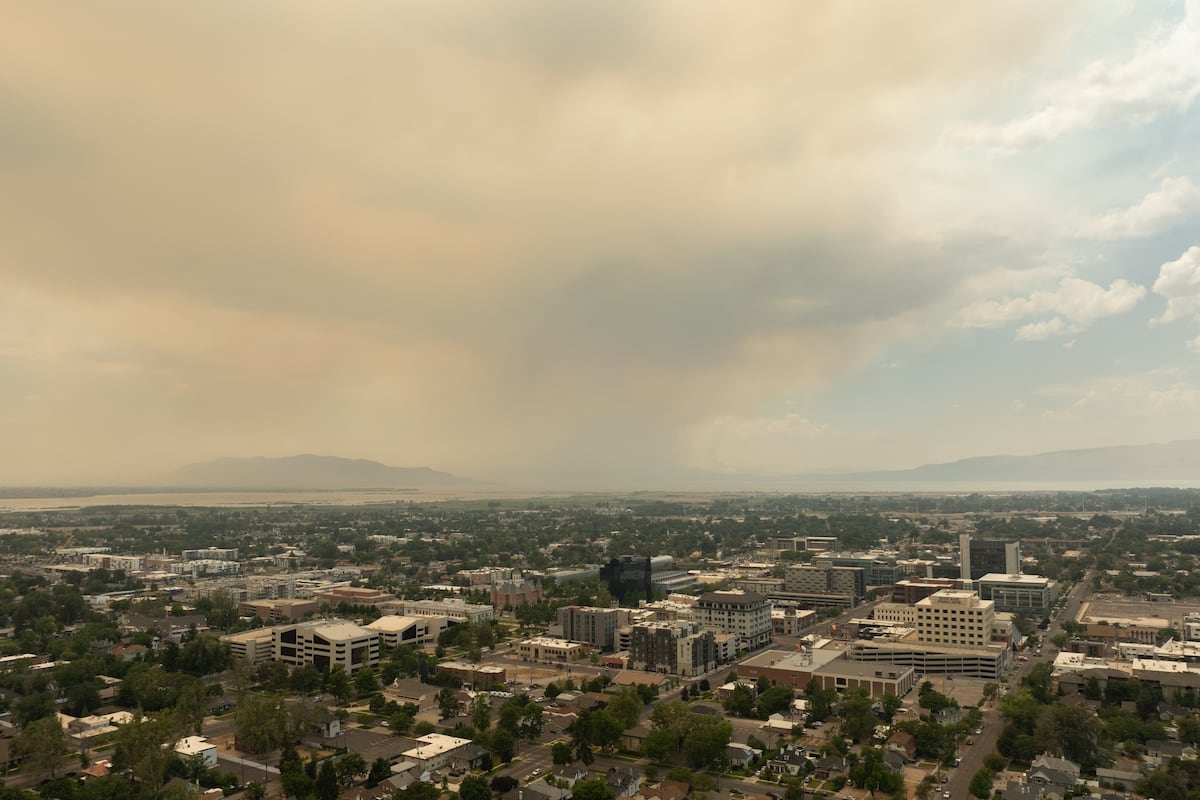
Wildfire smoke from large fires in Nevada and Arizona is causing haze along Utah's Wasatch Front, including Salt Lake City and Utah County. State fire officials said the smoke is not coming from the Iron or Sawmill fires. The article is largely factual and weather-related, with minimal direct market impact.
This is a regional air-quality shock with asymmetric but temporary economic effects: the direct hit is to outdoor recreation, local retail foot traffic, and any discretionary spend that depends on clear-sky visibility, while indoor categories get a relative lift. The more interesting second-order effect is on municipal and utility operations: prolonged haze increases pressure on local governments to show contingency planning, and can pull forward spend on filtration, HVAC upgrades, and indoor air monitors across schools, offices, and healthcare facilities.
The market often underprices how quickly smoke events translate into behavior change. In a multi-day haze episode, we typically see same-week shifts toward e-commerce, delivery, and indoor entertainment, plus incremental demand for consumables like filters and portable purifiers; if conditions persist for weeks, the revenue impact broadens into labor productivity and absenteeism, especially for construction, logistics, and field services. The tail risk is not the smoke itself but repetition: a bad summer can create a durable capex cycle in resilience and air-quality mitigation, with budget implications that last months to years.
Contrarianly, this is not automatically a bearish macro signal for the region. If the haze is sourced externally and localized air-quality infrastructure is adequate, the economic damage may be less severe than the headlines imply; investors may overrotate on a short-lived weather event. The higher-conviction takeaway is that climate volatility is becoming a recurring procurement category, and the companies selling filtration, backup power, and indoor-environment systems should see more consistent demand than cyclically exposed outdoor operators.
AI-powered research, real-time alerts, and portfolio analytics for institutional investors.
Request DemoOverall Sentiment
neutral
Sentiment Score
-0.10
