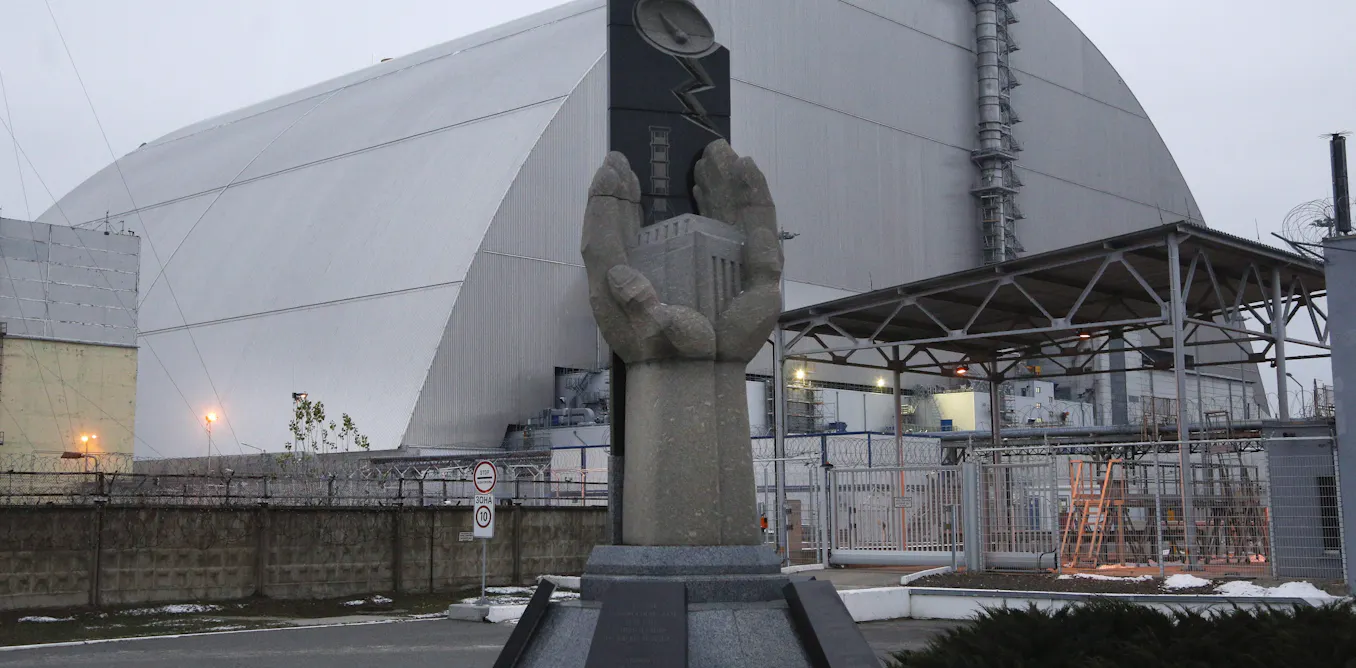
The article recounts the Chernobyl disaster, which killed 2 operators immediately and at least 28 firefighters and first responders within three months, while exposing 600,000 liquidators to contamination and causing more than 3,000 childhood thyroid cancer cases in Belarus by 1990. It also notes the broader political fallout: anti-nuclear protests, the rise of glasnost, and momentum toward Soviet political change. Market impact is limited today, but the piece underscores long-run nuclear safety and energy-policy risk.
The underpriced market impact is not the historical accident itself, but the enduring premium on sovereign credibility and operational opacity whenever nuclear risk re-enters the geopolitical tape. Any renewed stress around Ukrainian nuclear assets should widen the risk premium for utilities with high nuclear exposure, while improving relative sentiment for gas, renewables, grid security, and defense-infrastructure names tied to hardening critical assets. The second-order effect is a “trust trade”: investors rotate away from jurisdictions where regulators, operators, and ministries are not clearly separated.
The more immediate trading vector is Europe power and gas volatility. Nuclear outages or sabotage fears can force incremental fossil generation at the margin, lifting prompt gas, coal, and EUA prices over days to weeks; that helps upstream gas and LNG exporters but hurts energy-intensive industrials and chemicals. Over months, the bigger winner is grid resilience capex: transformers, switchgear, cybersecurity, remote monitoring, and physical security vendors should see a higher urgency budget cycle as utilities attempt to de-risk single points of failure.
In healthcare, the event reinforces a persistent tail-risk bid for thyroid screening, oncology diagnostics, and radiation preparedness supply chains, but this is more of a small-cap/speculative basket than a broad thematic trade. The contrarian point: markets tend to overreact to headline nuclear fear and underreact to the slower-moving fiscal and regulatory response, which is where the durable alpha lies. If governments respond with accelerated nuclear oversight, decommissioning, and safety upgrades, that can become a multi-year capex tailwind rather than a pure risk-off shock.
For positioning, the best risk/reward is to express the thesis through beneficiaries of resilience spending and energy substitution rather than through outright catastrophe hedges. The key catalyst window is days-to-weeks for power price volatility, and quarters-to-years for infrastructure and regulation. Any de-escalation or stable inspection regime would compress the risk premium quickly, so options structures are preferable to spot exposure.
AI-powered research, real-time alerts, and portfolio analytics for institutional investors.
Request TrialOverall Sentiment
strongly negative
Sentiment Score
-0.75
