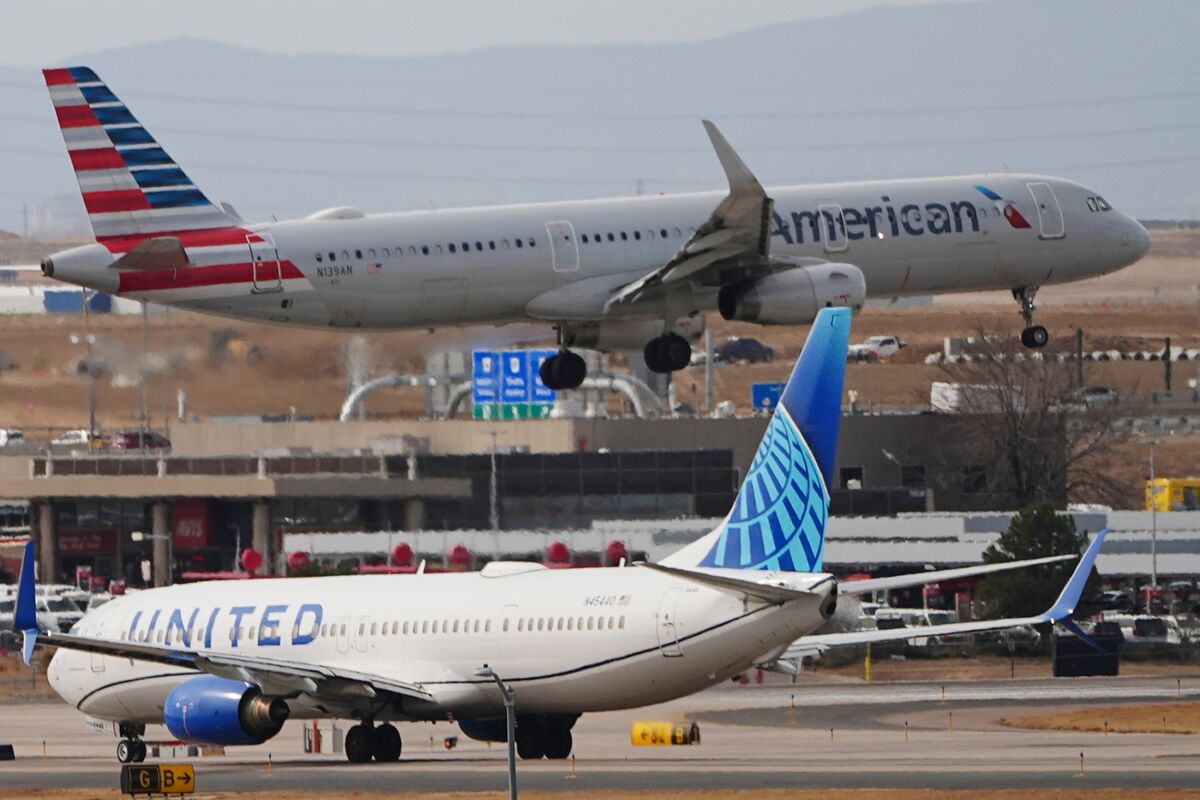
United Airlines CEO Scott Kirby said he approached American Airlines about a merger, but talks have ended after American did not agree. Kirby argued the combination could have created a more globally competitive airline, supported jobs, and potentially won regulatory approval. The article is mostly factual and strategic, with limited near-term financial impact absent a live deal.
The real market signal is not an accretive airline merger thesis; it is that management is now publicly testing the boundary of antitrust tolerance after years of consolidation fatigue. That matters because it raises the probability of defensive behavior across the industry: share protection, capacity restraint, and more disciplined capital returns become more valuable than growth at any cost. For UAL, the optionality is asymmetric—if the market starts to believe management can engineer structural scarcity, the stock earns a higher scarcity multiple even without a deal.
For AAL, the negative implication is less about the failed transaction and more about strategic fragility. Being publicly identified as the company that said no can force a premium to strategic independence risk: if earnings soften, investors may start pricing AAL as a perpetual target or as a laggard that must spend more on product and loyalty to avoid share loss. Second-order, any renewed industry consolidation talk can tighten aircraft, airport gate, and labor bargaining dynamics, which tends to favor the largest, most network-dense carriers over weaker balance-sheet peers.
The main contrarian point is that the failed approach may actually reduce near-term headline M&A risk while increasing discipline value. If regulators viewed this as potentially approvable, that raises the long-run ceiling for U.S. airline consolidation, but it also means the next serious catalyst is likely months or years away, not days. The near-term trade is therefore more about sentiment and relative positioning than deal probability; the market may overreact on AAL downside and underreact to UAL's strategic flexibility.
Catalyst-wise, watch for management commentary on domestic capacity, loyalty monetization, and capital allocation in the next 1-2 quarters. If UAL begins to pair this narrative with share repurchases or premium-cabin expansion, the stock can re-rate without an M&A event. Conversely, if macro weakens and pricing power fades, the merger story disappears quickly and AAL's underperformance could widen materially over 3-6 months.
AI-powered research, real-time alerts, and portfolio analytics for institutional investors.
Request DemoOverall Sentiment
neutral
Sentiment Score
0.05
Ticker Sentiment
