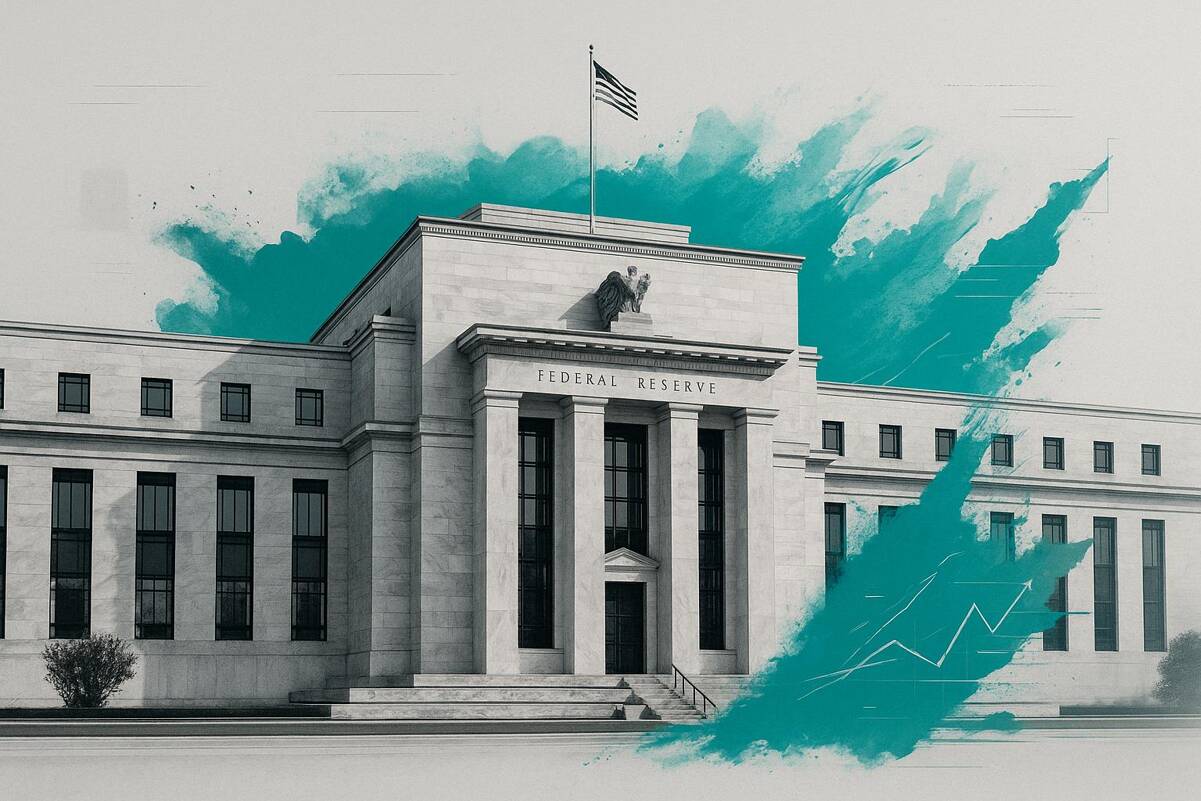
Markets have repriced sharply after a strong May jobs report and hotter CPI data erased expectations for 2026 Fed rate cuts, with CME FedWatch showing about a 70% probability of a December hike. Nonfarm payrolls rose 172,000, unemployment held at 4.3%, and annual inflation hit a three-year high, reinforcing a higher-for-longer rate backdrop. Rate-sensitive sectors, bonds, and growth stocks—especially semis and AI names—are under pressure as investors rotate toward fixed income and reprice valuations.
The key second-order effect is that the market is no longer repricing just the level of rates, but the duration of elevated discount rates. That matters most for long-duration equity cash flows: AI capex leaders still have demand, but their valuation support from falling yields has been removed, so multiple compression can persist even if fundamentals stay intact. This tends to favor firms with near-term monetization and self-funded capex over “story” names whose returns depend on a lower WACC two to three quarters out.
The larger loser set is broader than semis. Higher-for-longer policy tightens credit availability just as the economy is showing enough strength to keep financing costs elevated, which is a bad setup for levered growth, REITs, small caps, and any supplier tied to data-center expansion that depends on external funding. A subtle beneficiary is the Treasury market: if investors continue rotating out of rate-sensitive equities, real yields can stay stubbornly high, reinforcing the pressure on equity duration and accelerating passive outflows from momentum baskets.
The contrarian risk is that the market may be front-running too much hawkishness too quickly. If inflation cools even modestly over the next 1-2 prints while payroll growth normalizes, a December hike probability near 70% can unwind sharply, and the most beaten-down growth names would snap back hardest because positioning is now one-sided. In other words, this is less a clean bearish call on AI demand than a regime change in valuation plumbing; the trade works until the data stops validating higher-for-longer.
Near term, the catalyst sequence is asymmetrical: every CPI, payroll, and crude print can keep pressure on multiples, but only a meaningful downside surprise can restore the cut narrative. That makes this a better short-vol, relative-value environment than a blanket index short, with the highest convexity in the names most dependent on falling rates rather than current earnings power.
AI-powered research, real-time alerts, and portfolio analytics for institutional investors.
Request DemoOverall Sentiment
strongly negative
Sentiment Score
-0.55
Ticker Sentiment
