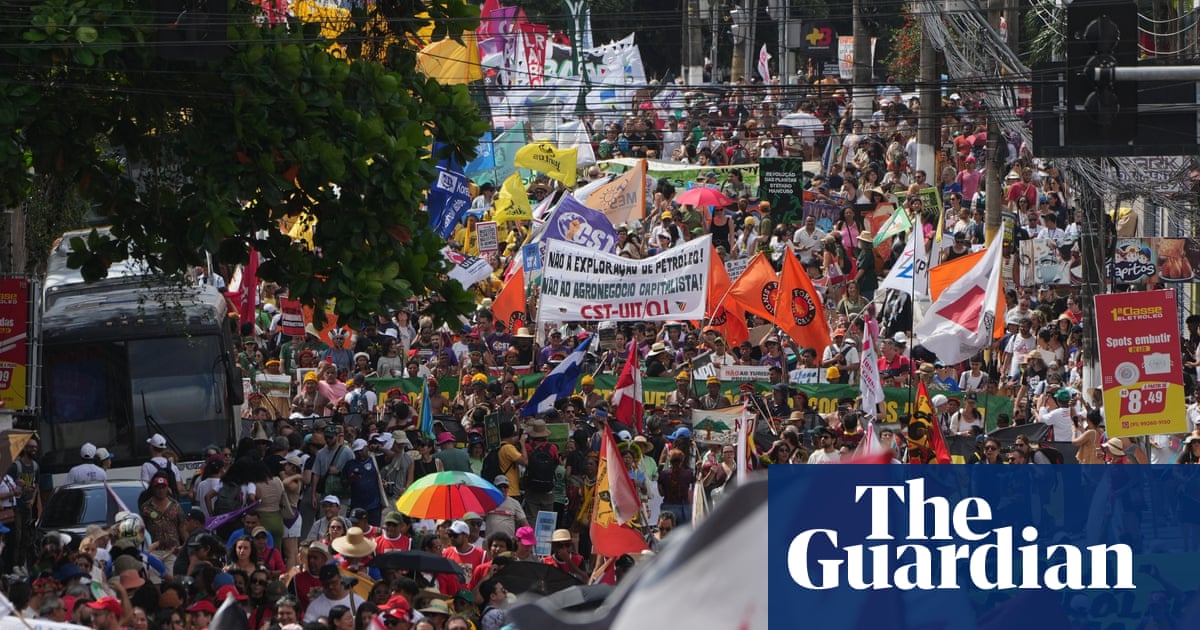
Tens of thousands of activists, including indigenous groups, marched in Belém during COP30, demanding urgent climate action, an end to fossil fuel reliance, and increased climate finance, marking the first major protest outside annual climate talks since COP26. This escalating public pressure coincides with negotiators remaining deadlocked on critical issues like climate finance, trade, and national climate plans, underscoring growing regulatory and investment risks for carbon-intensive industries. As Brazil focuses on implementation over a traditional 'cover decision,' the demonstrations highlight potential opportunities in green sectors and create uncertainty for global climate policy and related market implications.
Tens of thousands of activists converged in Belém during COP30, staging the first major climate protest since COP26, demanding urgent climate action, an end to fossil fuels, and increased climate finance. This significant public demonstration underscores escalating societal pressure on climate policy and highlights a renewed focus on direct action following a period of less visible protests at previous COPs.
The protests coincide with ongoing deadlock among COP30 negotiators on critical issues such as climate finance, trade, and the adequacy of national climate plans, contributing to a "moderately negative" sentiment and "uncertain" tone regarding policy outcomes. Brazil's stated intent to prioritize "implementation" over a traditional "cover decision" further complicates the global climate policy landscape, creating ambiguity for future regulatory frameworks.
The strong anti-fossil fuel rhetoric, including a "funeral for fossil fuels" demonstration, signals growing regulatory and investment risks for carbon-intensive industries, aligning with themes of ESG and climate policy. Conversely, the explicit calls for climate finance and a green energy transition point to potential opportunities and tailwinds for renewable energy, green infrastructure, and sustainable finance sectors.
AI-powered research, real-time alerts, and portfolio analytics for institutional investors.
Request DemoOverall Sentiment
moderately negative
Sentiment Score
-0.50
