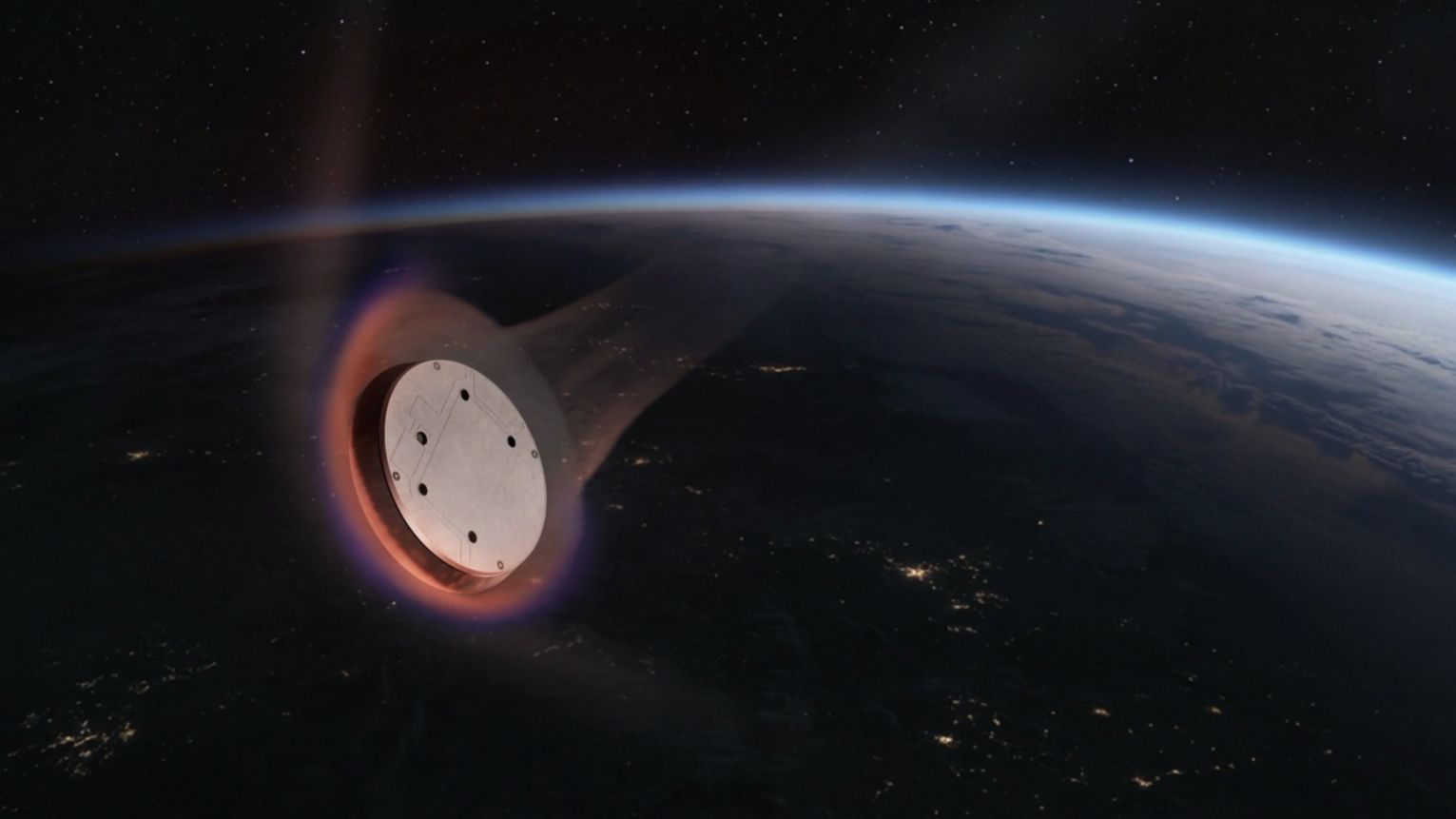
SpaceX successfully launched its first Starfall reentry capsule on a Falcon 9 mission from Cape Canaveral, marking the debut of a cargo-return platform designed to carry up to 2,200 pounds (1,000 kg) to LEO and back. The mission is the first of at least two planned Starfall demonstrations, with the booster making a drone-ship landing in the Atlantic and the capsule targeted for Pacific splashdown. The update is largely developmental and should have limited near-term market impact, but it advances SpaceX's reusable return-capable payload technology.
This is an early proof point for a reusable orbital logistics stack, but the marketable significance is not the capsule itself — it is the operational moat created if SpaceX can normalize retrieve-and-return cadence. That would compress the timeline for microgravity manufacturing, sample-return biotech, and defense payloads that currently face long lead times or one-off retrieval risk, pulling demand away from smaller point-solution providers and toward the launch provider that can control both outbound and inbound logistics.
The second-order beneficiary is likely not obvious aerospace hardware, but the broader enabling chain: specialty materials, thermal systems, mission software, ground ops, and insurance underwriters that can price recurring returns. The bigger strategic implication is competitive pressure on commercial reentry startups that rely on a single capsule architecture or narrow customer base; if SpaceX can bundle return capability with launch capacity, the barrier shifts from engineering novelty to distribution and cost per recovered kilogram.
Near term, the catalyst path is binary and timeline-driven: successful landing and payload recovery over the next 1-3 demos would de-risk customer adoption and could re-rate the market for orbital manufacturing by year-end; any recovery anomaly would push commercialization out by 6-12 months. The contrarian view is that this is more about platform optionality than immediate revenue — the addressable market is real but likely too small to move near-term SpaceX economics, so the opportunity may be in adjacent public names exposed to future payload-return demand rather than in “space” broadly.
From a risk perspective, the main failure mode is not launch execution but reentry/recovery complexity: every additional recovery step multiplies operational fragility, insurance costs, and customer qualification time. If SpaceX proves it can land repeated capsules with acceptable damage rates, competitors will struggle to defend premium pricing, but if the program remains experimental, the market may have overestimated how quickly orbital manufacturing becomes a recurring logistics business.
AI-powered research, real-time alerts, and portfolio analytics for institutional investors.
Request DemoOverall Sentiment
mildly positive
Sentiment Score
0.20
