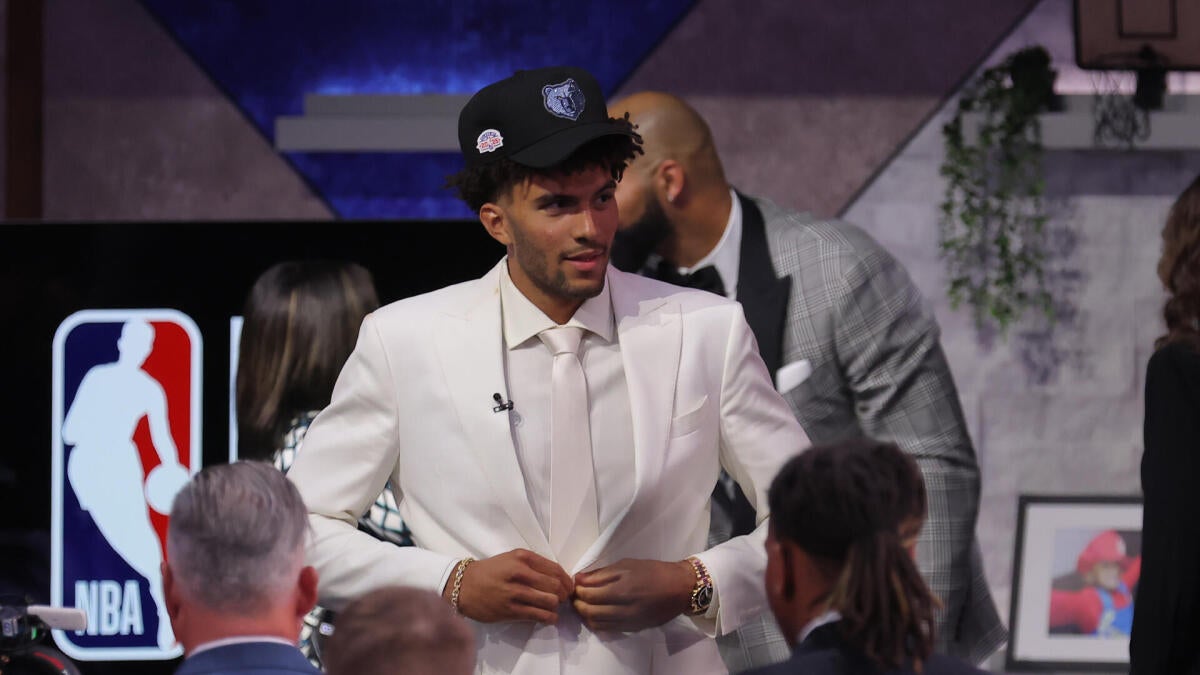
CBS Sports published first-round grades for the 2026 NBA Draft, highlighting AJ Dybantsa, Darryn Peterson, and Cameron Boozer as the marquee No. 1-3 picks. The article is primarily evaluative commentary rather than market-moving news, though it notes several notable team-building moves and trade-related selections across the lottery and late first round. Overall tone is balanced and largely informational, with no direct corporate or macroeconomic implications.
This draft is a talent-concentration event, not a normal year-to-year replenishment cycle. In basketball terms, that means more franchises can plausibly reset their identity around a single premium creator or defensive anchor, which tends to compress the development runway for incumbent mid-tier veterans and fringe rotation players. The second-order effect is a broader “youth premium” across the league: teams that missed the top tier are now incentivized to double down on future draft capital rather than chase marginal veteran upgrades, because the gap between the top group and the rest of the class appears wide enough to justify patience.
The most actionable market implication is roster construction asymmetry. Teams that added ball-dominant guards and large-usage wings are effectively buying optionality on offensive ceiling, but they also increase variance in Year 1 and Year 2 because those archetypes usually need on-ball reps to realize value. Conversely, the clubs that took defensive bigs and connector forwards are buying more stable minutes sooner, which should help stabilize those rotations and reduce pressure to spend inefficiently in free agency. That matters because it changes which front offices can afford to be aggressive at the trade deadline and which will be forced into asset preservation.
The contrarian read is that the consensus may be overpricing immediate offensive translation from the lead-guard cohort. Historically, the best shot-makers in these classes often take longer to convert skill into efficient NBA creation once they face switching, length, and physical contact; the upside is real, but the path is often volatile over the first 18 months. On the other hand, some of the lower-ceiling connective bigs could outperform draft-slot expectations quickly because rebounding, screening, passing, and defensive rotation quality tend to translate faster than self-created scoring.
Catalyst-wise, the first real re-rating point will be Summer League and then the first 20-30 regular-season games, when usage allocation and defensive survivability become visible. If the top guards are efficient early, the class narrative hardens quickly; if not, the market will likely rotate toward the longer-horizon defenders and multi-positional forwards by midseason. The risk to this view is a breakout from the athletic wing cohort, which could force teams to re-rank the class and validate a more aggressive ceiling-first draft philosophy.
AI-powered research, real-time alerts, and portfolio analytics for institutional investors.
Request DemoOverall Sentiment
neutral
Sentiment Score
0.10
