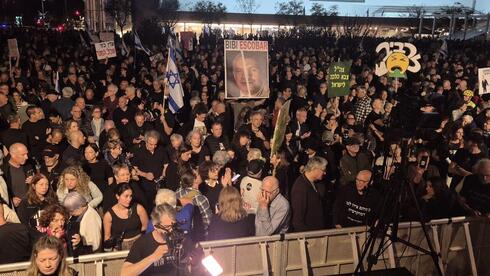
Thousands gathered in Tel Aviv for an alternative memorial ceremony marking 1,000 days since the Oct. 7 attack, reflecting continued grief and anger over the war's aftermath and the government's response. Speakers included relatives of hostages, victims, and fallen security personnel, with repeated calls for accountability and additional memorial protests planned outside government ministers' homes.
This is a medium-horizon political risk event, not a direct market shock, but the second-order effect is rising policy volatility in Israel at exactly the wrong time for defense procurement, fiscal planning, and foreign investment sentiment. When grief turns into organized street pressure and targeted protests at ministers’ homes, the probability distribution widens: fewer degrees of freedom for the cabinet, more incentive to over-index on symbolic security gestures, and a higher chance of decisions driven by domestic legitimacy rather than operational optimization. That usually raises the cost of capital for locally exposed infrastructure and makes multinationals more cautious about project timing, even if the headline event itself is non-economic.
The near-term winners are opposition-aligned protest networks and media ecosystems that benefit from heightened attention, but the marketable implication is more subtle: this keeps accountability and governance failure in the foreground, which can compress valuations for Israel-linked consumer, transport, and real-estate exposures if domestic boycotts or labor disruptions broaden. The bigger second-order risk is bureaucratic paralysis: a government under moral siege often delays procurement, budget reallocations, and post-crisis reconstruction decisions, which can slow contracting cycles for defense primes and civil infrastructure vendors even when strategic demand is structurally higher.
Contrarian view: the consensus is likely to overestimate the persistence of this outrage as a tradable macro factor. These protest waves tend to spike around commemorative dates and then fade unless they translate into coalition breakdown or a formal inquiry with teeth; absent that, the economic impact is mostly sentiment and schedule slippage, not a regime change in spending. The tail risk is a political escalation that forces early elections within months, which would materially reprice domestic cyclicals and any names dependent on government capex, but the base case remains noisy headlines with limited direct earnings revision.
AI-powered research, real-time alerts, and portfolio analytics for institutional investors.
Request TrialOverall Sentiment
strongly negative
Sentiment Score
-0.60
