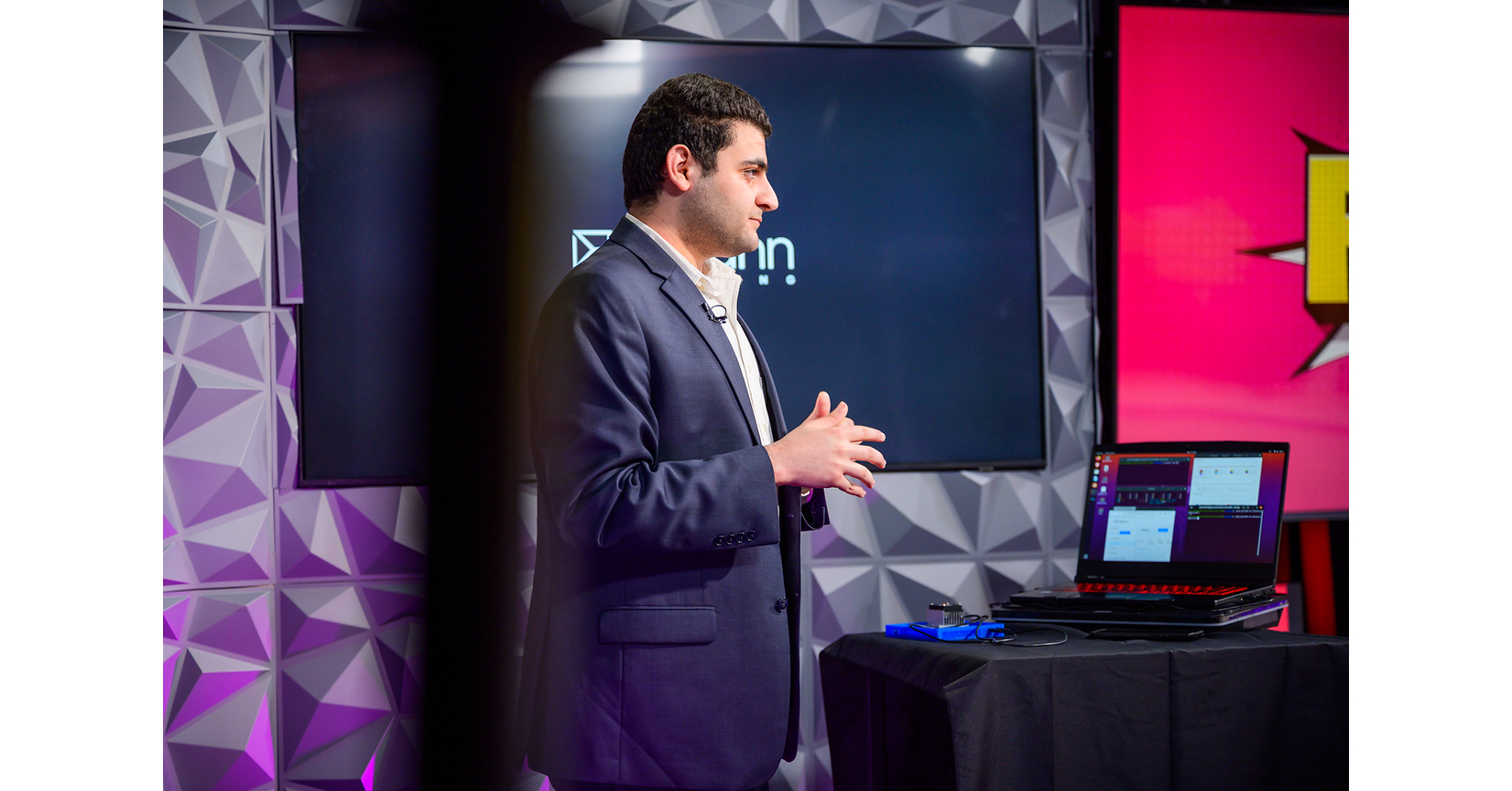
Riemann Computing launched a Wefunder campaign to raise public support while progressing its AI and software roadmap. The company cites January 2026 milestones with the OpenPeer AI model family (aimed at improving data efficiency and lowering the cost/complexity of AI) and recently teased LonScript, a new programming language targeting faster, more efficient scientific/high-performance computing.
This is a fundraising signal, not a commercial inflection, so the near-term public-market read-through is close to zero. The only meaningful mechanism is sentiment: when private AI names lean on community capital, it usually means institutional capital is selective, which tends to keep pressure on weaker, cash-burning AI software names once the market stops rewarding narrative alone.
If the company’s thesis around cheaper, more modular AI is real, the second-order winner is not the model startup itself but the platforms that monetize higher usage at lower cost per workload. That favors hyperscalers with distribution and pricing power (MSFT, GOOGL, AMZN) over smaller AI pure-plays that need scarce capital and premium multiples. The loser set is the long tail of public AI software names with thin differentiation and high burn; efficiency improvements lower their moat faster than their costs.
Contrarian view: consensus often treats any AI announcement as bullish for the theme, but the market should be asking whether this is evidence of product pull or just a capital-raising event. The thesis is falsified if hyperscaler capex and inference demand keep rising while public AI software gross margins stay stable over the next 1-3 quarters; that would imply efficiency gains are expanding the pie rather than commoditizing it. There is no immediate trade unless follow-on data shows real user traction or pricing pressure in adjacent public comps.
AI-powered research, real-time alerts, and portfolio analytics for institutional investors.
Request TrialOverall Sentiment
mildly positive
Sentiment Score
0.12
