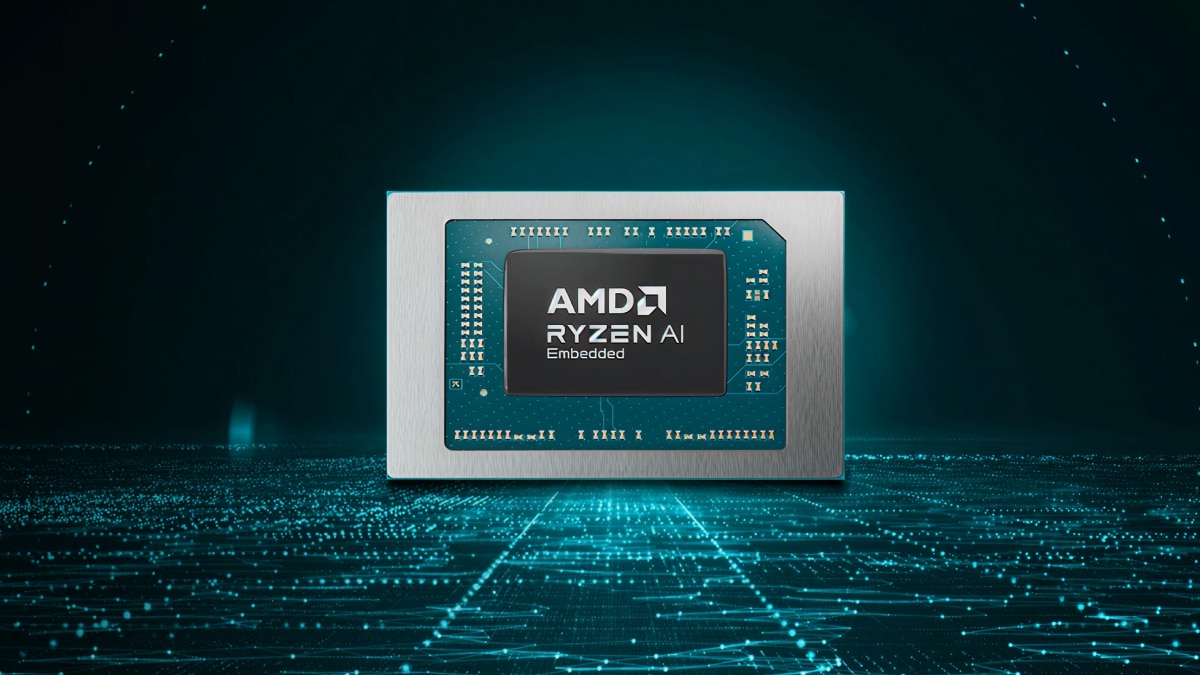
AMD expanded its Ryzen AI Embedded P100 Series with new APUs offering up to 2x CPU cores, up to 8x GPU compute, up to 80 system TOPS and an estimated 36% higher system tera operations; 8–12 “Zen 5” core SKUs are sampling now with production shipments expected July 2026, while 4–6 core SKUs are sampling and due in Q2 2026. Compared with the prior Ryzen Embedded 8000 Series, AMD cites up to 39% higher multithreaded performance and up to 2.1x higher total system TOPS; the launch includes ROCm open-source software support and announced OEM designs from Advantech, congatec and Kontron.
This release is more strategically important than a single SKU bump — it signals AMD pushing into the mixed-criticality, long-lifecycle embedded stack where OEMs pay premiums for validated platforms and long-term support. That market pays out over multi-year hardware refresh cycles, so a credible virtualized reference stack and partner wins can translate into durable design wins that show revenue runoff into 2H26–2027, not an immediate quarter spike.
Second-order beneficiaries include memory and packaging vendors because consolidated edge boards with unified CPU/GPU/NPU tighten demand for LPDDR/Flash and advanced packaging services; conversely, cloud-GPU providers see marginal risk if workloads move on-prem but only at the margin given scale differences. Incumbent embedded/real-time specialists and Arm-focused SoC vendors face intensified competitive pressure: success depends on software portability and certification velocity, not just silicon specs, so wins will cluster where integrators can fast-track regulatory and field tests.
Key risks are execution and adoption cadence — yield, thermal/real-time determinism in production systems, and embedded ROCm maturity on constrained platforms can all delay revenue realization. Competitive reversals could come from a best-in-class ARM/NPU combo winning cost-sensitive robot and medical OEM programs, or from a dominant GPU/edge player bundling software to lock out alternative stacks. Monitor production ramp metrics and initial design-win announcements over the next 3–9 months as primary catalysts; certification and OEM shipment data drive the 12–24 month revenue picture.
AI-powered research, real-time alerts, and portfolio analytics for institutional investors.
Overall Sentiment
moderately positive
Sentiment Score
0.45
Ticker Sentiment
