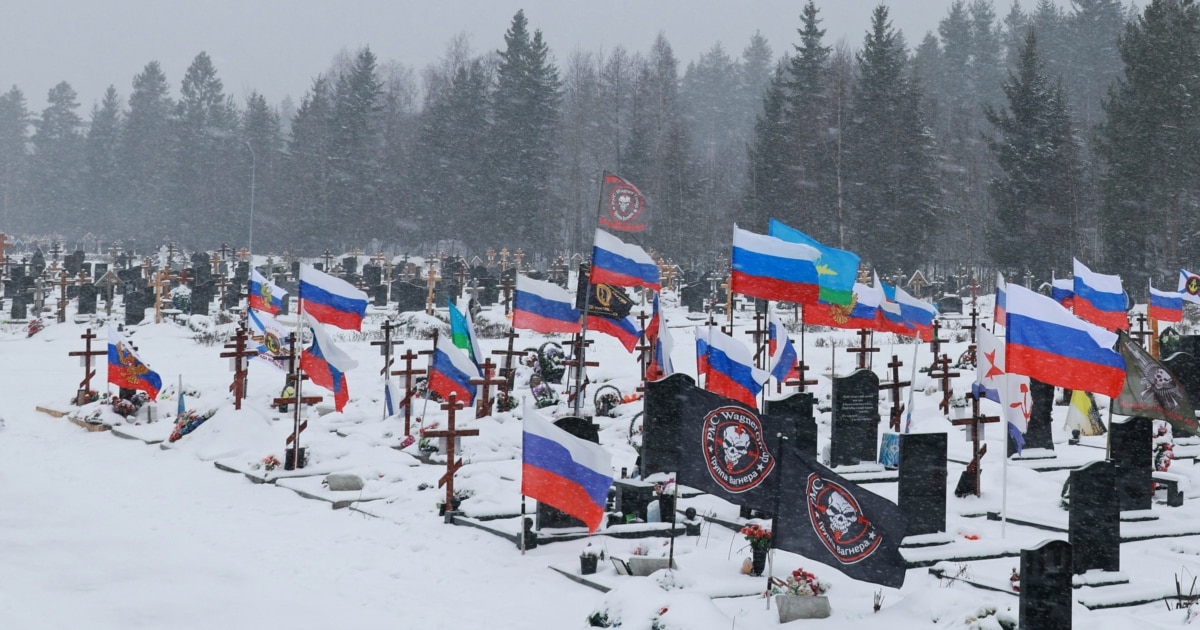
UK intelligence estimates nearly 500,000 Russian soldiers have been killed since the 2022 invasion of Ukraine, underscoring the scale of attrition in a conflict that has reached near stalemate. The article also highlights Russia’s continued targeting of critical infrastructure and Western efforts to protect cables, pipelines, and sanctions enforcement. The war remains materially relevant for defense, sanctions, and broader European security risk.
The key market implication is not the headline casualty count itself but the shift from attritional advance to a manpower-constrained stalemate. That tends to compress the probability of a clean battlefield resolution while increasing the odds of a long-duration conflict, which is structurally supportive for defense procurement, ISR, drone, EW, and undersea infrastructure protection over the next 12-36 months. The more interesting second-order effect is that both sides are being forced into a technology substitution loop: cheap drones and counter-drone systems are displacing legacy platforms, so the value capture shifts away from classic armored/mechanized spending toward sensors, guidance, jamming, comms, and rapid iteration software/hardware suppliers. Sanctions enforcement appears increasingly important because Moscow’s adaptation relies on imported dual-use components and clandestine procurement channels. That creates a renewed tailwind for export-control software, customs screening, and freight/logistics compliance vendors, while also raising operational risk for European industrials with exposed Eurasian supply chains. A prolonged stalemate also keeps pressure on European fiscal budgets, but the defense trade is better insulated than the broader industrial complex because governments can justify multi-year replenishment cycles even if macro growth softens. The highest-risk near-term catalyst is a change in mobilization economics: if Russia can keep recruiting at current wage levels, the stalemate persists; if recruitment rolls over materially, the battlefield could become more elastic within 1-2 quarters. The upside risk for Ukraine-aligned assets is a step-change in Western support tied to infrastructure sabotage concerns, especially subsea cables and energy networks, which could pull forward procurement orders. The contrarian point: the market may be too focused on headline war fatigue and underpricing how long defense capex can compound once governments rearm for resilience rather than just for ammunition replacement.
AI-powered research, real-time alerts, and portfolio analytics for institutional investors.
Request DemoOverall Sentiment
moderately negative
Sentiment Score
-0.40
