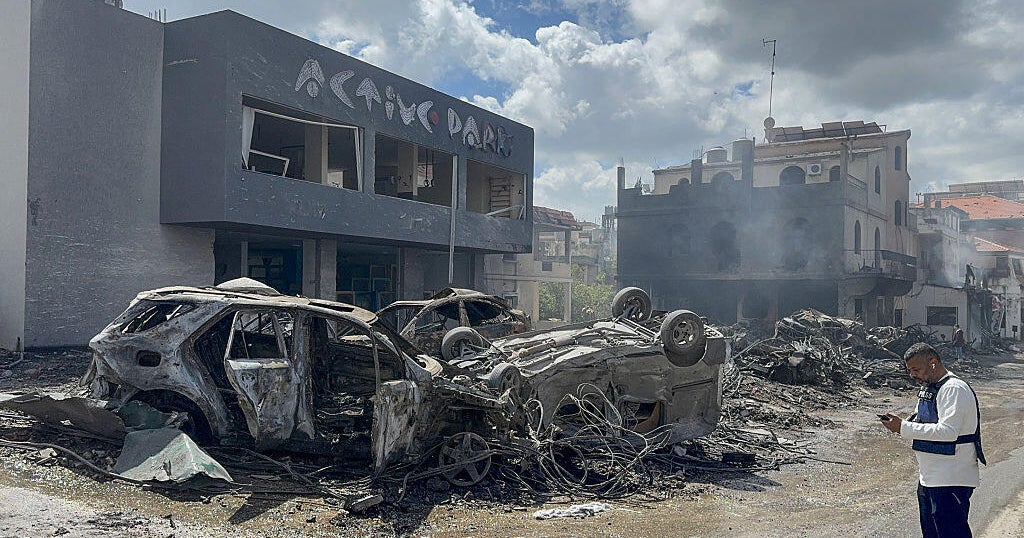
The U.S. will convene three-way ceasefire talks in Washington next week between Lebanon and Israel, led by U.S. Ambassador to Lebanon Michel Issa with Lebanese and Israeli ambassadors participating. The meeting aims to launch direct talks amid Israeli strikes on Hezbollah and civilian casualties, while shifting U.S. positions after a Trump-Netanyahu call and competing diplomatic tracks (including VP J.D. Vance’s involvement) complicate an Iran deal. This escalation and diplomatic fragmentation raise near-term regional tail risks, with potential upside volatility for oil prices and broader risk-off flows into safe-haven assets.
The Lebanon front has become an asymmetric negotiation lever: even limited cross-border escalation raises the diplomatic bar for an Iran deal because it forces Washington to choose between immediate contingencies (protecting Israeli operations) and the longer-term payoff of constraining Tehran. Expect episodic violence over the next 30–90 days to act as a geopolitical volatility catalyst rather than a sustained commodities supply shock — price and risk-premium spikes will be event-driven and short-lived unless the theater expands to major shipping lanes or Iranian holdings.
Operationally, second-order winners are defense primes with ongoing supply backlog and modifiable production lines (Lockheed, Raytheon, General Dynamics): additional procurement can be fast-tracked via supplemental budget authorities within 3–9 months, translating to earnings upside concentrated in FY+1. Conversely, regional insurers, smaller specialty re/insurers and commercial carriers servicing Levant routes face concentrated short-term loss exposure and premium repricing; travel and leisure exposures tied to MENA routing will see immediate demand destruction and rerouting costs (airtime/fuel) that could add 3–8% to unit costs.
Market structure risk: internal US policy incoherence (shifting language, vice-presidential diplomacy) materially increases tail-risk of sudden tactical escalations — this raises probability of >50 bps move in front-month oil volatility and a 10–20% jump in implied volatility for defense equities around key diplomatic dates. That makes short-dated, asymmetric option structures and cross-asset hedges (defense longs funded with travel/airline shorts) the most efficient way to monetize this regime while keeping drawdowns capped.
AI-powered research, real-time alerts, and portfolio analytics for institutional investors.
Request DemoOverall Sentiment
strongly negative
Sentiment Score
-0.60
