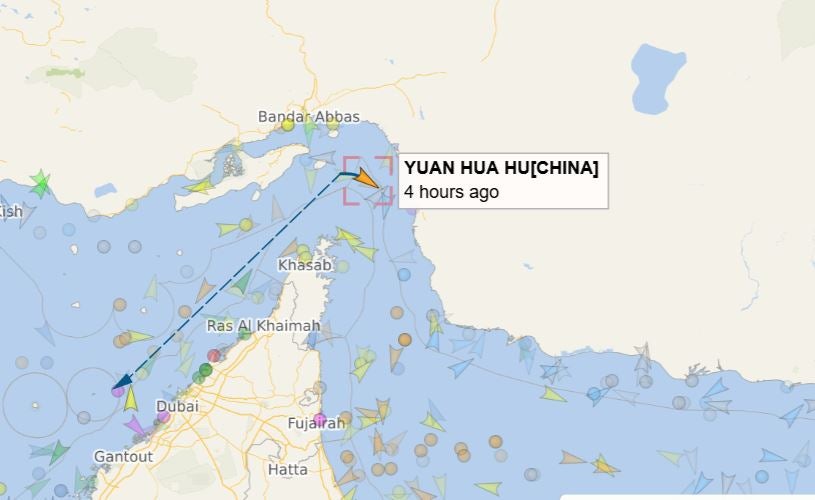
A Chinese VLCC carrying nearly 2 million barrels of Iraqi crude is attempting to transit the Strait of Hormuz, underscoring continued disruption in a chokepoint that has stranded 1,550 vessels and 22,500 mariners. Iran's tightened control over the waterway has already pushed fuel prices higher and is rippling through global supply chains. The article signals sustained geopolitical and energy-market stress rather than a company-specific event.
The market is treating this as a straight crude-supply shock, but the more durable consequence is a re-pricing of maritime optionality. Once a single chokepoint starts functioning on a quasi-discretionary basis, freight, insurance, and working-capital assumptions across the Gulf move from cyclical to strategic, which tends to widen time-charter and war-risk premia even if spot oil retraces. That creates a second-order winner set in tanker and marine services, while refiners and industrials face margin compression from both input costs and higher delivered-cost volatility.
The important tactical nuance is that this is not just a bullish oil story; it is a refinery-mix and inventory-location story. Middle East grades moving under political constraint favor operators with flexible feedstock slates, large storage, and access to non-Gulf barrels, while narrower refiners in Asia and Europe will see crack spreads deteriorate before headline crude prices fully reflect the disruption. If the market believes the strait is being normalized into a bargaining chip, the term structure can stay backwardated longer, pulling forward prompt-month strength but not necessarily sustaining a clean long-duration rally in the front end.
The biggest underappreciated risk is policy substitution: if the disruption persists for weeks rather than days, expect accelerated diplomatic carve-outs, strategic reserve coordination, and route re-optimization that gradually bleeds out the price spike. That means the trade is most attractive in the next 2-6 weeks, not as a multi-quarter outright long unless escalation broadens beyond shipping. The contrarian view is that the shock may be overdone for Brent but underdone for freight and regional refining spreads, where capacity constraints and rerouting friction can compound even after crude headline volatility eases.
AI-powered research, real-time alerts, and portfolio analytics for institutional investors.
Request DemoOverall Sentiment
strongly negative
Sentiment Score
-0.62
