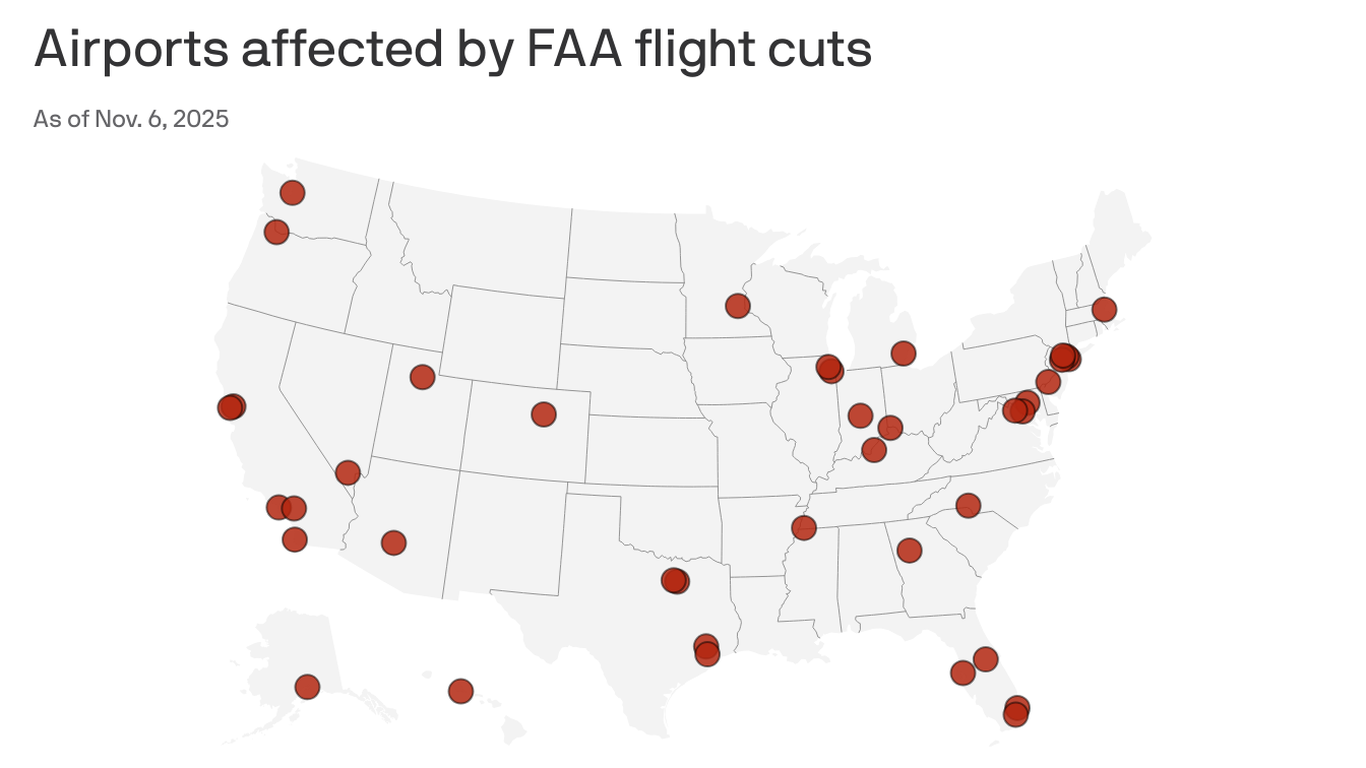
The federal government shutdown is causing persistent flight delays and cancellations, with the FAA cutting air traffic at major U.S. airports by up to 10% due to staffing shortages and air traffic controllers working without pay. Transportation Secretary Sean Duffy indicated restrictions will remain until staffing normalizes, and airline industry groups confirm that flight schedules will take days to recover post-shutdown, impacting operational capacity and potentially the upcoming Thanksgiving travel period. This situation highlights ongoing operational challenges for the airline sector, exacerbated by pre-existing issues in air traffic controller staffing and training, with 6.3% of U.S. flights already cancelled between November 6-12.
The ongoing federal government shutdown is severely impacting U.S. air travel, leading to persistent flight delays and cancellations. The Federal Aviation Administration (FAA) has progressively cut air traffic at 40 high-traffic airports, increasing from 4% to 10% due to air traffic controller shortages, many of whom are working without pay. This has already resulted in 6.3% of U.S. flights being cancelled between November 6 and 12, indicating significant operational disruption. Recovery is expected to be protracted, with Transportation Secretary Sean Duffy stating restrictions will remain until sufficient controllers return, and Airlines for America confirming that schedules cannot immediately rebound. JetBlue's (JBLU) senior vice president, Steve Olson, highlighted the need to utilize reserve crews and assess staffing for the critical Thanksgiving travel period, underscoring the operational strain on carriers. The situation is exacerbated by pre-existing issues in air traffic controller staffing, training, and compensation, which the shutdown has intensified. The 2019 shutdown precedent, where controller compensation took nearly three months, suggests a potentially slow resolution, posing continued risks to airline operational stability and profitability, especially heading into peak holiday travel.
AI-powered research, real-time alerts, and portfolio analytics for institutional investors.
Overall Sentiment
strongly negative
Sentiment Score
-0.70
Ticker Sentiment
