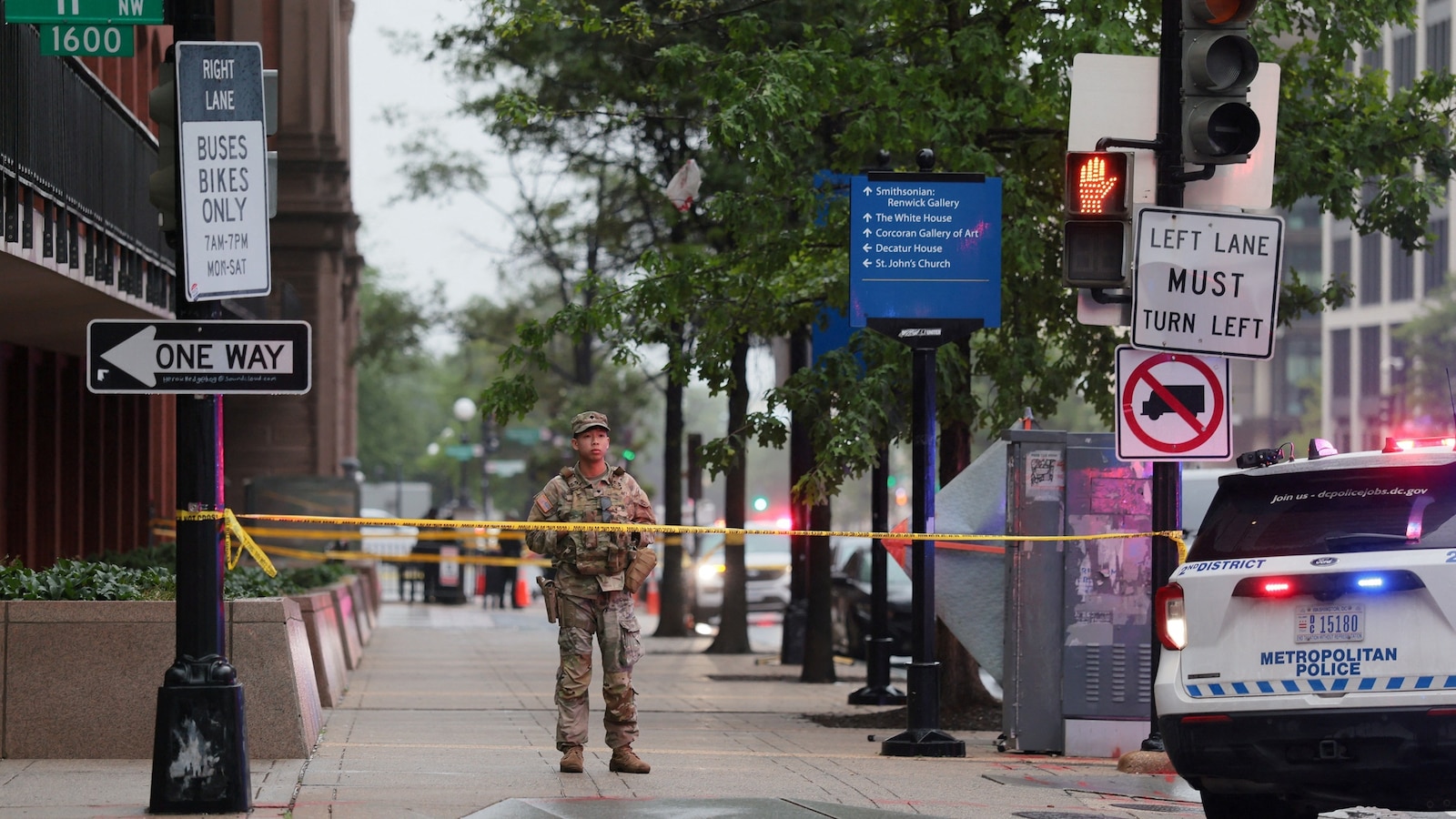
One armed suspect was killed and a bystander wounded after gunfire erupted near a White House checkpoint around 6 p.m. Saturday. The Secret Service said officers returned fire, no agents were hurt, and the FBI is assisting in the ongoing investigation. The incident adds a small near-term security overhang, but it is primarily a public-safety and political headline rather than a direct market driver.
This is not a broad market event, but it is a volatility catalyst for the small cluster of assets that reprice on perceived domestic instability: private security, surveillance, aviation around D.C., and election-adjacent defense spending narratives. The first-order move is likely confined to headline-sensitive names, but the second-order effect is a modest bid for firms tied to executive protection, public-safety tech, and federal security budgets as agencies push for visible hardening measures over the next 1-3 quarters.
The more interesting read is political rather than operational: incidents near the White House tend to increase the probability of funding for perimeter security, counter-UAS, body-scanning, and rapid-response communications. That can eventually benefit defense-electronics and security integrators, but the lag matters; the market often fades the immediate headline and only prices the budget follow-through once appropriations language appears. In the near term, the event also slightly raises the odds of tighter crowd-control protocols around federal buildings, which is a negative for local event-driven foot traffic and a mild positive for security contractors.
Consensus likely overestimates the durable macro impact and underestimates the procurement lag. Unless there is a broader pattern of incidents or a policy response with named vendors, the tradeable move should mean-revert within days. The real tail risk is if the event is folded into a larger narrative of domestic unrest heading into the election cycle, in which case defense and homeland-security spend could see a sustained multiple re-rate over months rather than a one-day sympathy bid.
AI-powered research, real-time alerts, and portfolio analytics for institutional investors.
Request DemoOverall Sentiment
mildly negative
Sentiment Score
-0.20
