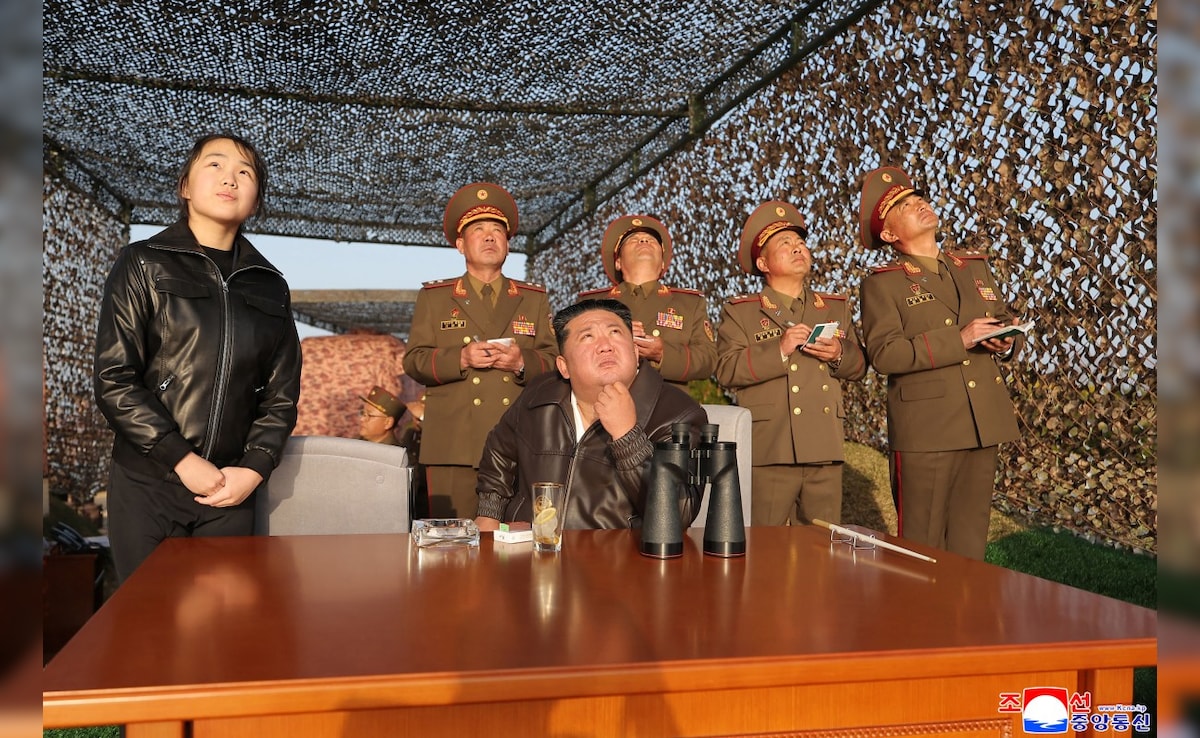
North Korea test-launched five upgraded Hwasong-11 Ra ballistic missiles with cluster bomb warheads, following an earlier Hwasong-11 Ka launch this month. The missiles struck an island target, and Kim Jong Un said the tests were aimed at boosting 'high-density striking capability' and improving penetration of US and South Korean defenses. The escalation adds to regional military risk and could raise geopolitical volatility across Northeast Asia.
This is less about immediate military risk than about a steady repricing of Northeast Asia’s base security regime. Repeated demonstrations of salvo-style, area-effect munitions point to an evolving asymmetric doctrine designed to saturate point defenses and force higher magazine depth from US and South Korean systems; that tends to benefit firms selling interceptors, sensors, counter-drone, and battle management software more than legacy platform primes in the near term. The second-order effect is procurement urgency: when defenders worry about cost-exchange ratios, they move faster on layered air defense and distributed sensing, which usually supports budgets before it shows up in backlog.
The market should care most about the signaling window into the next 1-3 quarters, not the launch itself. If this is intended to gain leverage ahead of diplomatic engagement, the practical output is more spending on Patriot/THAAD class interceptors, naval missile defense, and hardened infrastructure in South Korea, Japan, and US forward bases; that can lift orders for selected defense names even without a formal crisis. The more interesting tail risk is not war, but calibration error: a misread by Seoul/Tokyo can trigger exercises, sanctions tightening, or accelerated indigenous missile-defense spending, all of which extend the procurement cycle.
The consensus overweights headline risk and underweights the asymmetry in cost per shot. If offensive low-cost salvo capability keeps improving faster than interceptors, the marginal value shifts toward electronic warfare, directed-energy R&D, and stockpiled munitions rather than just more high-end missile-defense hardware. That argues for a barbell: own beneficiaries of defensive replenishment, but fade names whose valuation assumes a clean, short conflict premium.
For EM, the direct trade is less about Korea equities and more about regional risk premia and FX volatility. A sustained escalation path would pressure KRW and JPY via safe-haven flows and higher hedging demand, while semicap and industrial supply chains in South Korea/Japan could see temporary multiple compression if investors price in higher defense outlays crowding out capex elsewhere.
AI-powered research, real-time alerts, and portfolio analytics for institutional investors.
Request DemoOverall Sentiment
strongly negative
Sentiment Score
-0.60
