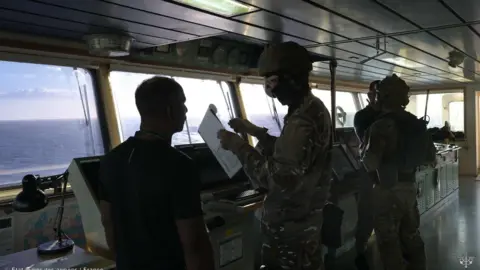
French navy forces have intercepted and seized the oil tanker Grinch — believed to be part of a Russian 'shadow fleet' — taking its Indian captain into custody while keeping the crew aboard; the vessel, reported to be sailing under a Comoros flag from Murmansk, is now anchored near Marseille as prosecutors investigate possible false-flag registration and sanctions breaches. President Macron framed the action as enforcement against networks financing Russia's war; coupled with S&P Global's estimate that one in five tankers may be used to smuggle oil, the seizure underscores rising enforcement and compliance risk for energy traders, shipping counterparties and insurers handling suspected sanctioned cargoes.
Market structure: Immediate winners are compliance/intelligence providers (SPGI), satellite/AIS analytics vendors and reinsurers (higher premium pool); losers are shadow-fleet ship managers, flags-of-convenience registries and small shipping specialists that facilitate sanctioned flows. Expect a 5–15% bid in specialized maritime analytics revenue over 6–12 months and upward pressure on tanker time-charter rates (TD/TCE indices) by mid-teens if seizures accelerate, while Brent-equivalent physical crude may move +0.5–3% near-term from tighter opaque flows.
Risk assessment: Tail risks include escalation (retaliatory seizures, ship-board incidents) producing a sudden oil-price shock of +10–30% within days and systemic insurance/finance de-risking that halts sanctioned shipments for months. Hidden dependencies: banks and P&I clubs can effectively stop flows without new laws by refusing coverage; catalyst set = 2–3 additional high-profile seizures or coordinated EU/US enforcement in the next 30–90 days.
Trade implications: Tactical trades: buy SPGI (ticker SPGI) as a 1–1.5% portfolio position for 3–12 months to capture recurring compliance spend; open a small, defined-risk crude bullish option spread (e.g., 2-month Brent $5-wide call spread sized to 0.5–1% portfolio risk) to express a 5–15% oil upside. Pair trade: long SPGI 1.5% vs short shipping ETF SEA (or small-cap ship managers) 1.0% to capture relative rerating; rotate overweight Energy (XLE) by 1–2% if two more seizures occur within 60 days.
Contrarian angles: The market underprices sustained demand for surveillance/compliance — this is not one-off enforcement but structural (tracking tech + legal risk) that benefits data providers for years. Reaction may be overdone for pure shipping names exposed to opaque trades (short candidates), while long positions in legitimate tanker owners (Frontline FRO) are binary — avoid size until legal risk falls. Historical analog: Iran/Venezuela sanctions show initial price spikes then adaptation; if enforcement stalls, oil decompresses — cut oil longs if Brent reverts by >7% within 30 days.
AI-powered research, real-time alerts, and portfolio analytics for institutional investors.
Request DemoOverall Sentiment
mildly negative
Sentiment Score
-0.25
Ticker Sentiment
