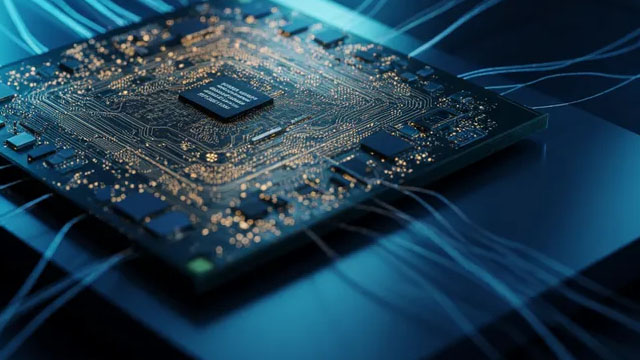
Intel says it is reconsidering long-deprioritized memory challenges as AI shifts memory toward a critical bottleneck. CEO Lip-Bu Tan noted Intel is exploring new memory architectures, including approaches to bring memory and processors closer together, signaling strategic repositioning to capture AI-driven compute demand.
This is more important as a strategy signal than a near-term product event: Intel is implicitly acknowledging that AI value creation is shifting from raw compute toward memory bandwidth, latency, and power efficiency. If that thesis holds, the economic winners are the firms already monetizing advanced packaging and high-bandwidth memory, not the CPU vendors talking about it; that points more to MU, SK Hynix, TSM, AMAT, and KLAC than to a quick fundamental re-rate for INTC.
For Intel itself, the upside is mostly optionality and multiple support, not earnings. Any real impact likely sits 12-18 months out because bringing memory closer to compute requires ecosystem changes, packaging yield, and software optimization; until then, it is a roadmap story that can be derailed by execution slippage. The second-order risk is distraction: if this becomes another capital-intensive side bet, it could dilute focus from Intel's core foundry and CPU turnaround.
Consensus may be underestimating how much this validates the structural shortage of memory per flop, which keeps the premium HBM cycle intact even if AI capex moderates. The contrarian view is that the market may overread the comment as competitive strength when it is really admission that Intel is still chasing the architecture Nvidia has already productized. Falsifiers: no design-win disclosure, no packaging/customer partnership, or a guide that shows no capex reacceleration tied to this theme over the next 1-2 quarters.
AI-powered research, real-time alerts, and portfolio analytics for institutional investors.
Request DemoOverall Sentiment
mildly positive
Sentiment Score
0.15
Ticker Sentiment
