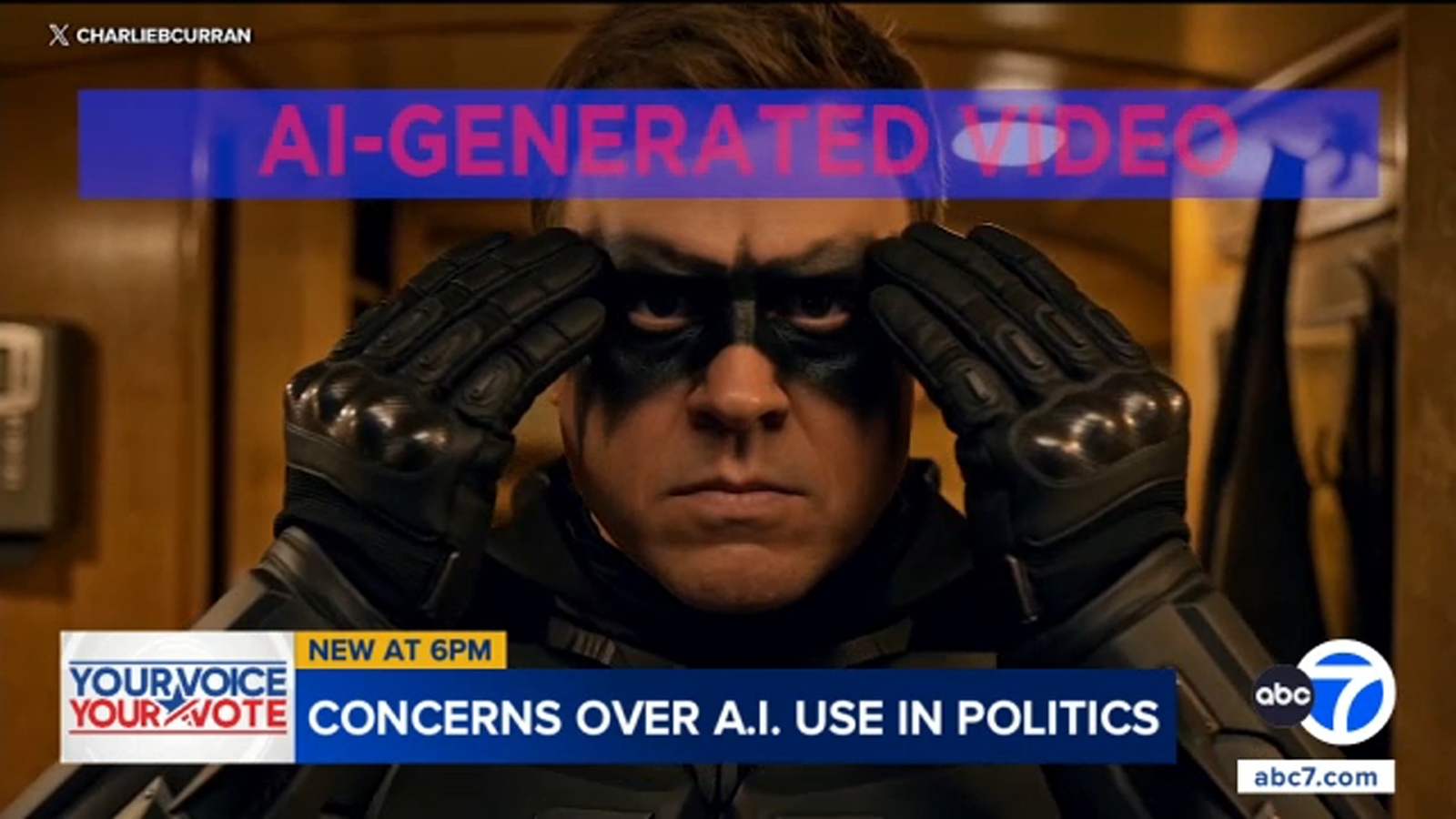
AI-generated political videos depicting Los Angeles mayoral candidate Spencer Pratt as a superhero and Karen Bass as a villain are gaining millions of views online. The article frames this as an emerging trend in political advertising, with Pratt’s supporters—not the campaign—creating and sharing the content. Bass called the videos dangerous, citing concerns about violence and potential provocation, but the piece does not indicate direct market-moving implications.
The key market signal is not the candidate-specific content; it is the emergence of low-cost, high-virality political creative as a scalable distribution layer. That shifts ad spend from paid media to owned/earned amplification, which is structurally negative for legacy political ad buyers and positive for the platforms and tooling that make AI-generated content cheap, fast, and shareable. The second-order effect is that campaign narrative velocity now matters more than message control, increasing the value of real-time content engines and moderation infrastructure.
The bigger risk is escalation: once one side proves AI meme warfare can move engagement, rivals will adopt the same playbook, accelerating an arms race in synthetic media. Over the next 1-3 election cycles, that could drive higher spend on provenance, watermarking, and identity verification, even if headline ad budgets do not rise. The fastest beneficiaries are likely to be firms selling AI creation workflows, content authentication, and trust-and-safety layers rather than traditional agencies.
The contrarian angle is that virality may be a false positive for persuasion. Younger users are most likely to amplify this content and least likely to vote, so the marginal ROI on engagement could be poor despite impressive view counts. That creates a setup where political marketers over-index on synthetic video production while actual turnout impact remains limited, making the trade more about infrastructure picks-and-shovels than election outcome exposure.
Tail risk is a regulatory or liability shock if synthetic political content is linked, even indirectly, to harassment or violence. That would likely hit consumer social platforms first via moderation costs and policy scrutiny, but it would also accelerate enterprise demand for authenticity tools within months. Watch for any state-level rules on AI political ads; a fast policy response could compress the monetization window for pure-play generative content vendors while benefiting compliance and verification layers.
AI-powered research, real-time alerts, and portfolio analytics for institutional investors.
Request DemoOverall Sentiment
neutral
Sentiment Score
0.05
