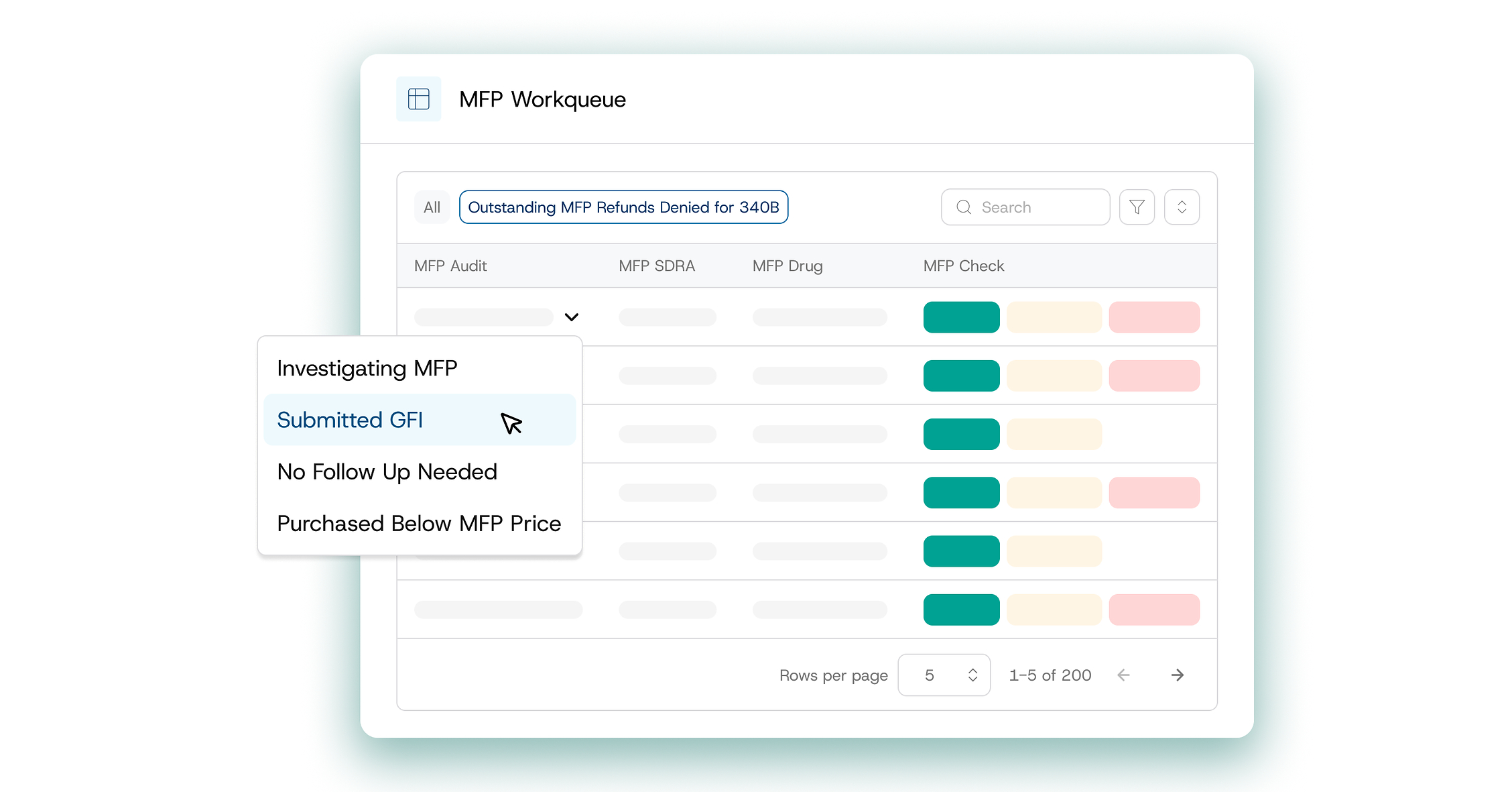
Plenful launched GFI Agent within its MFP Intelligence platform to automate Good Faith Inquiry (GFI) submissions and ESP reporting for Medicare Maximum Fair Price refunds. The company says it has helped customers identify up to 20% of expected MFP refunds as missing since Jan. 1, and that GFI Agent can save up to 5 weeks of staff time annually by eliminating claim-by-claim manual chase for potentially hundreds of GFIs per month.
This is less a product launch than a proof point that pharmacy back-office spend is moving from headcount to software. The economic value pool is not in the automation fee itself; it is in reclaiming leakage from slow, manual reimbursement workflows, which means the buyers will be CFO/RCM teams rather than pharmacy operators. That makes adoption stickier after one successful deployment, because the ROI is measurable in recovered cash and labor hours, not “AI efficiency” rhetoric.
The second-order winner is any health system with a large owned-pharmacy footprint and meaningful exposure to government pricing complexity: HCA, THC, UHS-type operators, and pharmacy services platforms that can monetize compliance tooling. The losers are outsourced billing/reconciliation vendors, temp staffing, and point solutions that rely on manual exception handling. A subtler beneficiary is the EDI/integration stack around wholesalers and claims systems, which could see more embedded workflow share as automation moves upstream into the data plumbing.
Near term, this is mostly a signal on procurement, not earnings. The meaningful catalyst path is 1-3 quarters as management teams quantify recovered dollars and decide whether to expand from pilot to enterprise rollouts; structurally, this can compress labor intensity in pharmacy ops over 6-18 months. What would falsify the thesis is weak realized ROI: if missing-refund capture is closer to low-single-digit percentages than the claimed range, or if CMS/processor rules change and standardize the workflow, the spend case becomes much less compelling.
Contrarian view: the market may be overestimating how much of this is addressable. The hardest part is not submission automation; it is dirty data, disputes, and exception management, so many systems will still require humans in the loop. That makes this a good validation of demand for vertical AI, but not yet a reason to chase the stock or assume broad margin uplift across the healthcare software complex.
AI-powered research, real-time alerts, and portfolio analytics for institutional investors.
Request DemoOverall Sentiment
mildly positive
Sentiment Score
0.25
Ticker Sentiment
