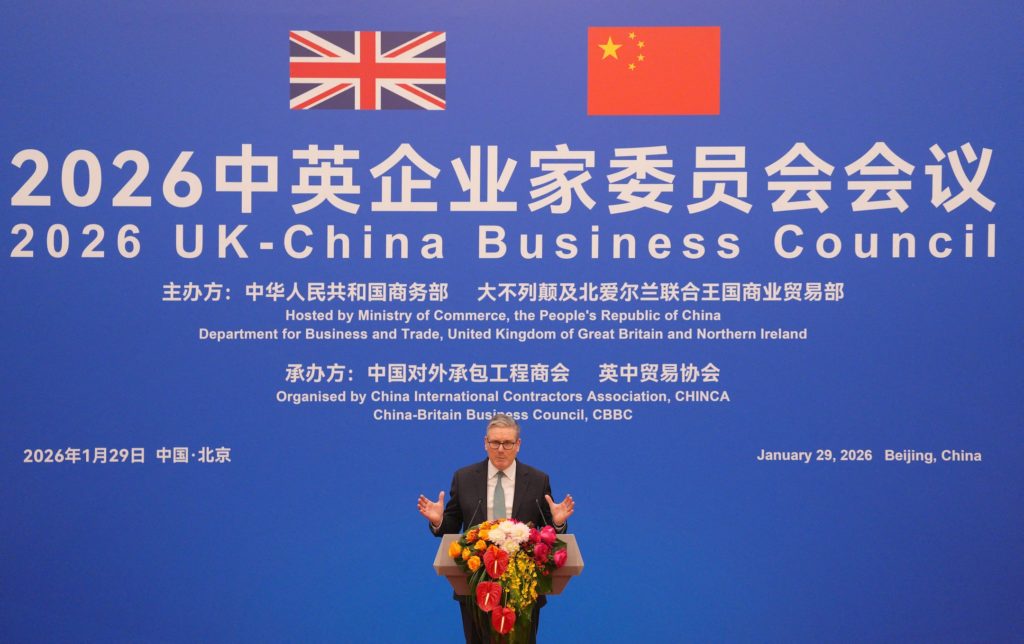
European and other U.S. allies are accelerating trade and strategic engagement with China, India and Vietnam amid frustration with U.S. tariff volatility and unpredictable rhetoric, with the EU–India deal described as covering roughly a third of global trade and transatlantic trade relationships still valued at over $5 trillion. High‑level visits — including the UK prime minister to Beijing and Canada finalizing an automotive deal in China — and upgraded EU‑Vietnam ties signal a structural shift in partnership priorities, raising medium‑term risks to U.S. influence, potential realignment of supply chains and implications for energy and defense cooperation.
Market structure: European and Asian exporters (autos, industrial capital goods, fashion/luxury) and energy suppliers (LNG exporters, North Sea producers) stand to gain as governments pivot trade away from U.S.-centric frameworks; expect a 3–8% reallocation of supply-chain sourcing to India/SE Asia over 2–4 years, raising demand for copper, LNG and industrial capex. U.S. multinationals with China-exposed supply chains lose transient pricing power; firms with onshore China manufacturing or diversified Asia footprints will command tighter margins.
Risk assessment: Tail risks include a hard strategic decoupling (5–15% probability over 3 years) that knocks global GDP growth by 200–400bps and spikes risk premia; a NATO/security shock could temporarily strengthen USD and safe-haven bonds. Near-term (days–months) expect elevated FX and sovereign spread volatility; structural effects on capex and M&A play out over quarters–years. Hidden dependencies: Europe’s security dependence on U.S. nuclear umbrella constrains full strategic autonomy and could reverse trade realignment if security agreements change.
Trade implications: Tactical: overweight European defense and LNG names, and EM India exposure; underweight China large-caps subject to geopolitical export controls. Use 3–12 month directional trades (INDA, LNG, LMT/RTX/NOC) and relative-value pair trades (long India vs short China) to capture reallocation. Options useful for asymmetric upside—buy call spreads where political catalysts are binary.
Contrarian angle: Consensus prices a permanent West-US hegemony loss; that overstates near-term decoupling—China domestic demand and tech self-reliance remain powerful cushions, creating mispricings in onshore A-shares and Chinese domestic-focused suppliers. If markets overreact and Chinese equities sell off >15% from current levels, selective buys (A-share ETFs) could outperform over 12–36 months as policy eases.
AI-powered research, real-time alerts, and portfolio analytics for institutional investors.
Request DemoOverall Sentiment
moderately negative
Sentiment Score
-0.40
