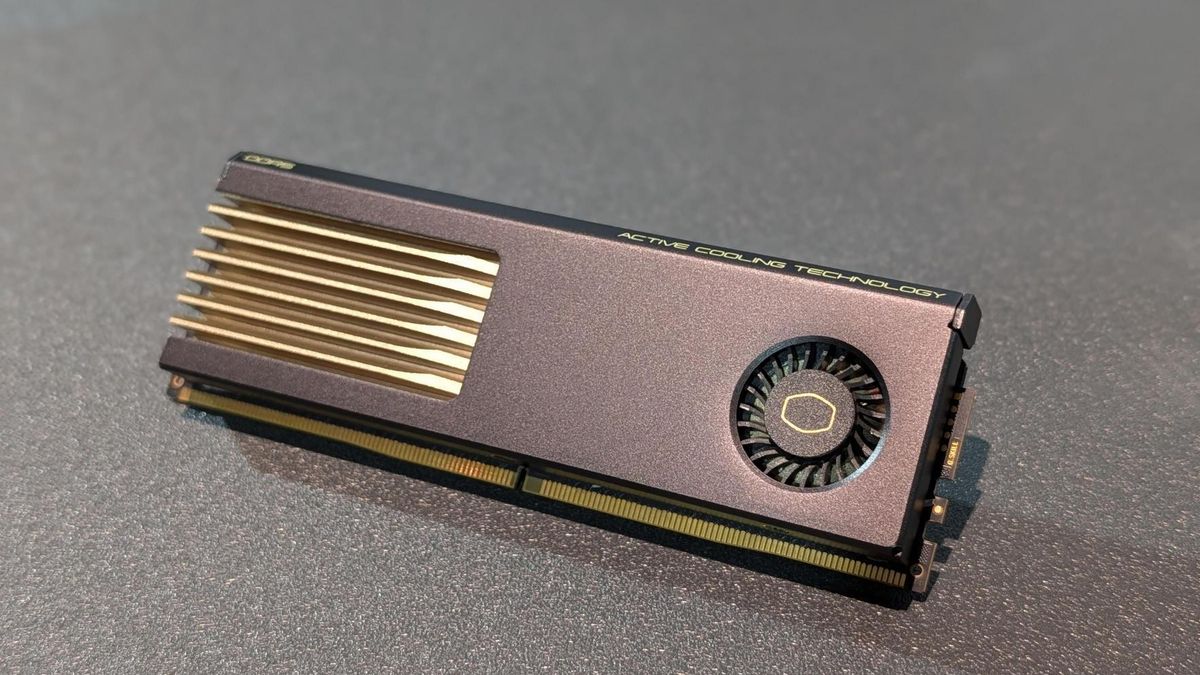
Cooler Master and G.Skill are launching MasterDIMM, a new DDR5 RAM line with built-in active cooling that they say can reduce temperatures by up to 15°C. The kits target high-end desktop systems, with speeds up to 6,000 MT/s at CL26 on AMD EXPO or 8,400 MT/s on Intel XMP 3.0, and capacities up to 128GB. Pricing and availability were not disclosed, so near-term market impact should be limited.
This is less about a single memory SKU and more about the next phase of the DDR5 margin stack: thermals becoming a monetizable feature. If active cooling meaningfully expands stable operating headroom, the economic winner is not just the RAM vendor but also board makers and chassis/case airflow suppliers that can market higher validated memory speeds without resorting to extreme overclocking. The second-order effect is that premium memory becomes more system-dependent, which raises attach rates for higher-end motherboards and better PSUs while punishing cramped form factors that cannot physically accommodate oversized modules.
For INTC, the near-term direct P&L impact is negligible, but the product matters at the margins because Intel platforms are positioned to capture the higher-end XMP segment where enthusiasts pay for validation and headroom. If this class of DIMM gains adoption, it reinforces the value of platform-level tuning and “works out of the box” performance claims, which supports premium desktop socket economics over the next 2-4 quarters. The risk is that the adoption ceiling is narrow: most buyers are not temperature-limited on DRAM, so this could stay a niche enthusiast accessory rather than a meaningful unit-volume driver.
The contrarian read is that the market may be underestimating how much of DDR5’s current pain is actually system-level heat density rather than raw memory IC capability. If active cooling reduces error rates and refresh interruptions, the benefit is larger for heavy multitasking, AI inference at the desktop edge, and high-capacity configurations than for gaming. But the flip side is that if the cooling story proves incremental rather than transformational, the product will likely be remembered as an overpriced visual gimmick, and demand could fade quickly once initial Computex enthusiasm passes.
Catalyst-wise, the next 1-3 months are all about availability, motherboard compatibility, and independent thermal validation. If reviews confirm the temperature delta and practical stability gains, expect a small but real halo effect across premium DDR5, with the most exposed beneficiaries being vendors with strong enthusiast share and inventory flexibility. If pricing comes in too high or clearance issues limit compatibility, the trade becomes a one-cycle novelty and the upside disappears fast.
AI-powered research, real-time alerts, and portfolio analytics for institutional investors.
Request DemoOverall Sentiment
mildly positive
Sentiment Score
0.20
Ticker Sentiment
