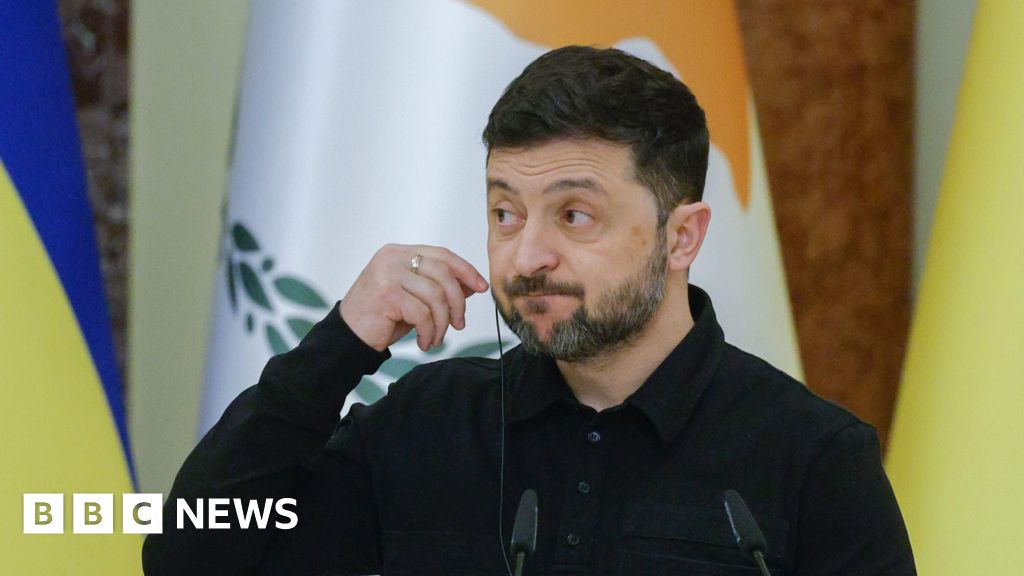
President Zelensky described a "very constructive" call with US peace envoy Steve Witkoff and Jared Kushner as US–Ukrainian talks in Miami enter a third day, with Witkoff and Ukraine's Rustem Umerov reporting agreement on a framework for security arrangements. Despite negotiations, Russia carried out major strikes — reportedly 653 drones and 51 missiles on one night, hitting a Fastiv rail hub and energy facilities in eight regions causing blackouts — keeping geopolitical risk, energy-disruption risk premia and downside market pressure elevated ahead of planned London talks with EU leaders.
Market structure: Continued heavy strikes + active US-mediated talks create a two-way market: defense primes (LMT, NOC, RTX) and energy exporters (XOM, CVX, CHXREF/Cheniere LNG) stand to gain from sustained conflict or a frozen conflict, while European airlines, regional banks and Ukrainian-linked infrastructure names see downside. War-risk premiums should keep oil/gas and grain prices roughly +5–20% higher vs pre-escalation levels in stressed weeks, supporting commodity producers' pricing power but pressuring European industrials and utilities.
Risk assessment: Tail risks include NATO escalation or a sudden, enforceable ceasefire; both are low-probability/high-impact and would respectively spike defense/commodity prices or cause 15–30% reversals. Time horizons: days — volatility spikes & safe-haven flows (USD, USTs, gold); weeks–months — negotiation outcomes drive directional repositioning; quarters — reconstruction demand could re-rate construction/engineering and defense supply chains. Hidden dependencies include shipping insurance premiums, grain shipment corridors and US political timing (election cycle influence on guarantees).
Trade implications: Expect bond yields to compress on acute risk-off while equity IV rises; deploy asymmetric hedges not outright long-only. Use short-dated options to hedge 1–3 month event risk and selectively add exposure to LNG/major oil producers for a 3–12 month commodity upcycle; keep positions size-limited (1–3% AUM) and rule-based (profit/take-loss triggers).
Contrarian angles: Market consensus prices either perpetual war or immediate peace; both are imperfect. A contained, verifiable ceasefire would cause a rapid unwind in defense equities (20–40% drawdown potential); conversely, a frozen conflict with reconstruction commitments would structurally lift select equipment/engineering names for years, a mispriced multi-year compounder opportunity.
AI-powered research, real-time alerts, and portfolio analytics for institutional investors.
Request DemoOverall Sentiment
moderately negative
Sentiment Score
-0.45
