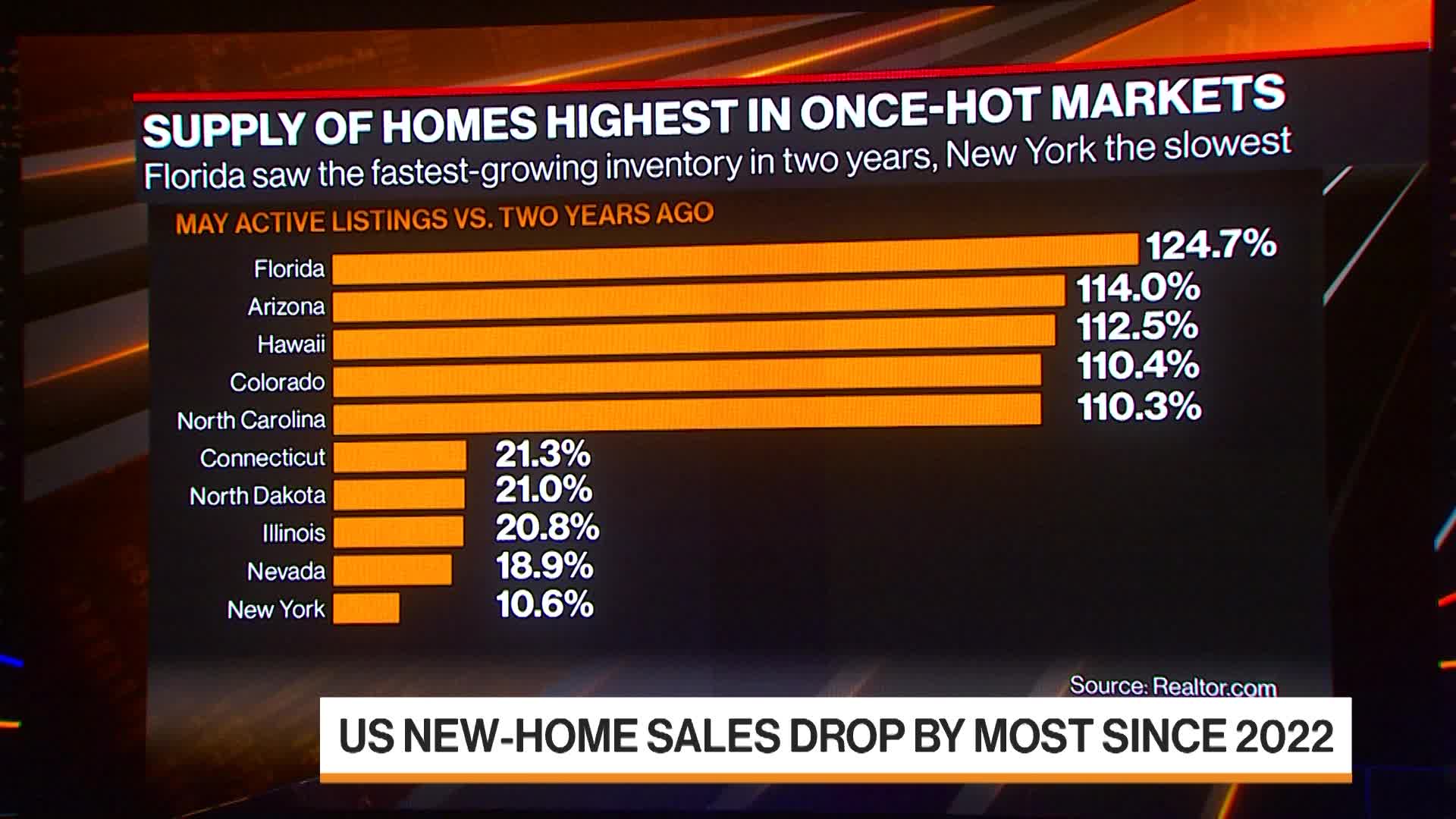
The Sun Belt housing market is experiencing a significant inventory buildup of unsold homes, a reversal from its prior boom. This trend is driven by homeowners listing properties due to soaring insurance costs and investors liquidating rental assets, indicating a notable shift in regional real estate dynamics.
A significant trend reversal is underway in the Sun Belt housing market, which is transitioning from a period of high demand to one of a notable inventory buildup. This shift, as highlighted by First American's Chief Economist Odeta Kushi, is driven by two primary factors: homeowners listing properties in response to soaring insurance costs, and real estate investors beginning to liquidate their rental portfolios. The accumulation of unsold homes indicates a cooling of market velocity and suggests a potential shift in pricing power from sellers to buyers. The strongly negative sentiment score of -0.65 underscores the market's concern over this development, viewing it as a clear headwind for regional economic growth and a negative signal for companies with direct exposure to real estate transaction volumes, such as First American (FAF).
AI-powered research, real-time alerts, and portfolio analytics for institutional investors.
Request DemoOverall Sentiment
strongly negative
Sentiment Score
-0.65
Ticker Sentiment
