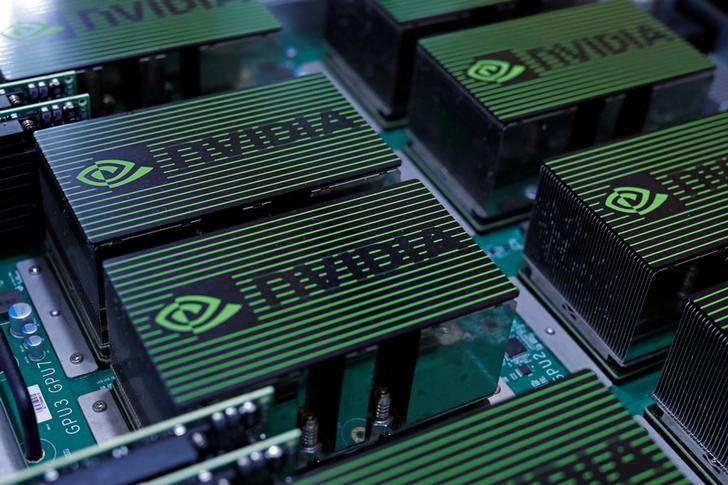
Simulations Plus shares surged 28% after announcing a technical collaboration with NVIDIA to develop GPU-accelerated simulation and AI-assisted workflows for drug development modeling. The companies said testing shows up to a 75% reduction in end-to-end QSP modeling time, with initial efforts focused on high-complexity pharmaceutical workflows. The partnership could materially improve simulation speed and efficiency, but the market impact is likely limited to the individual stock and closely related software/AI healthcare names.
This is less a single-stock partnership story than an attempted re-rating of the entire model-based drug development stack. If GPU-native workflows truly compress QSP/PK/PD cycle times by ~75%, the first-order beneficiary is SLP, but the second-order winner is any CRO, biotech, or pharma team that can redeploy modeling bandwidth into more shots on goal without adding headcount. The key competitive implication is that software used early in discovery becomes more defensible if it is embedded in the compute layer, not just the scientific layer; that raises switching costs and could pull budget away from legacy simulation vendors whose value proposition is speed rather than validated science.
The market is likely underestimating how this can pressure adjacent tools and service providers. If model construction and parameter fitting become interactive, the bottleneck shifts from computation to data curation and assay quality, which favors companies with proprietary biological datasets and hurts pure-play computational vendors lacking wet-lab integration. For NVDA, this is incrementally positive but not a near-term financial needle-mover; the more important effect is ecosystem lock-in across life sciences, where a handful of anchor workflows can drive durable enterprise adoption over 12-24 months.
The main risk is that the headline performance gain is a lab demo, not a scalable production outcome. Pharma validation cycles are slow, regulated, and conservative, so the adoption curve is likely months to years, not weeks; if early partner pilots show limited reproducibility or poor integration with existing pipelines, the multiple expansion in SLP can unwind quickly. The market has likely front-run the strategic value faster than the revenue impact, making the setup vulnerable to a classic "platform story, revenue later" reset.
Contrarian angle: the move may be overdone relative to the near-term fundamentals because the collaboration expands optionality more than it changes this year's earnings power. The better expression may be to own the platform enabler and fade the single-name reflex in the software layer unless management can quantify contract conversion, attach rates, and enterprise usage metrics within the next 1-2 quarters.
AI-powered research, real-time alerts, and portfolio analytics for institutional investors.
Request DemoOverall Sentiment
strongly positive
Sentiment Score
0.72
Ticker Sentiment
