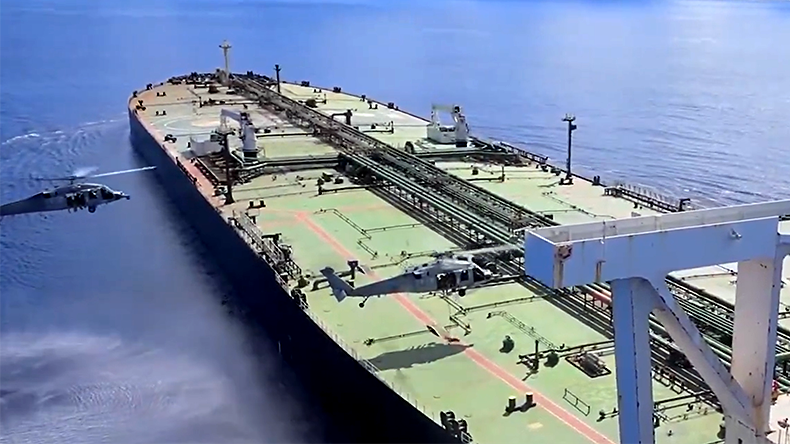
Only seven vessels transited the Hormuz chokepoint between Wednesday morning and Thursday lunchtime, reflecting a sharp drop in traffic after a spate of attacks and vessel seizures. The IRGC’s claimed seizures and continued US boarding of Iran-linked tankers in the Indian Ocean are increasing shipping risk and could disrupt crude and product flows through a critical energy artery. The news is negative for regional risk sentiment and potentially supportive of oil prices if disruptions persist.
The key market implication is not just a crude risk premium, but a temporary impairment of the global “just-in-time” tanker network. When transits fall sharply at a chokepoint, the first-order effect is higher freight and insurance, but the second-order effect is inventory hoarding: refiners and trading houses will pay up for prompt barrels and move to longer-haul alternatives, which tightens prompt Atlantic Basin supply even if headline seaborne exports are unchanged. That tends to steepen the front end of crude and product curves and widen regional dislocations more than it moves flat price alone.
The biggest beneficiaries are firms with flexible export optionality and exposed pricing power outside the affected corridor. Non-Middle East crude exporters with Atlantic access, refined-product exporters, and tanker operators with older fleets and higher war-risk exposure can see outsized day-to-day earnings volatility, while downstreams in Asia and Europe face the most immediate margin squeeze from higher delivered feedstock costs. The more durable loser is global trade efficiency: rerouting around the chokepoint increases voyage lengths, ties up tonnage, and can create a short-lived tanker shortage that amplifies freight rates for weeks, not days.
The near-term catalyst set is binary and fast-moving: additional boardings/seizures, a casualty involving a major operator, or a coordinated naval escort regime could either intensify or partially normalize flows within 1-3 weeks. The bigger tail risk is a miscalculation that forces a broader security response; that would lift crude, LNG, and marine insurance simultaneously and hit global risk assets through higher input-cost inflation. The contrarian angle is that some of the market may already be pricing the geopolitical headline, but not the logistical bottleneck; if transits remain depressed, the freight and product-market impact could outlast the news cycle by 1-2 months even if crude retraces.
From a positioning standpoint, this is a better relative-value than outright beta trade: the asymmetric payoff is in shipping, energy infrastructure, and exporters versus airlines, refiners, and industrials with thin margins. The cleanest expression is to own the assets that get paid per ton-mile and short the sectors that absorb higher delivered energy costs. Volatility is likely to stay elevated until there is visible normalization in transit counts, not just rhetoric.
AI-powered research, real-time alerts, and portfolio analytics for institutional investors.
Request TrialOverall Sentiment
moderately negative
Sentiment Score
-0.45
