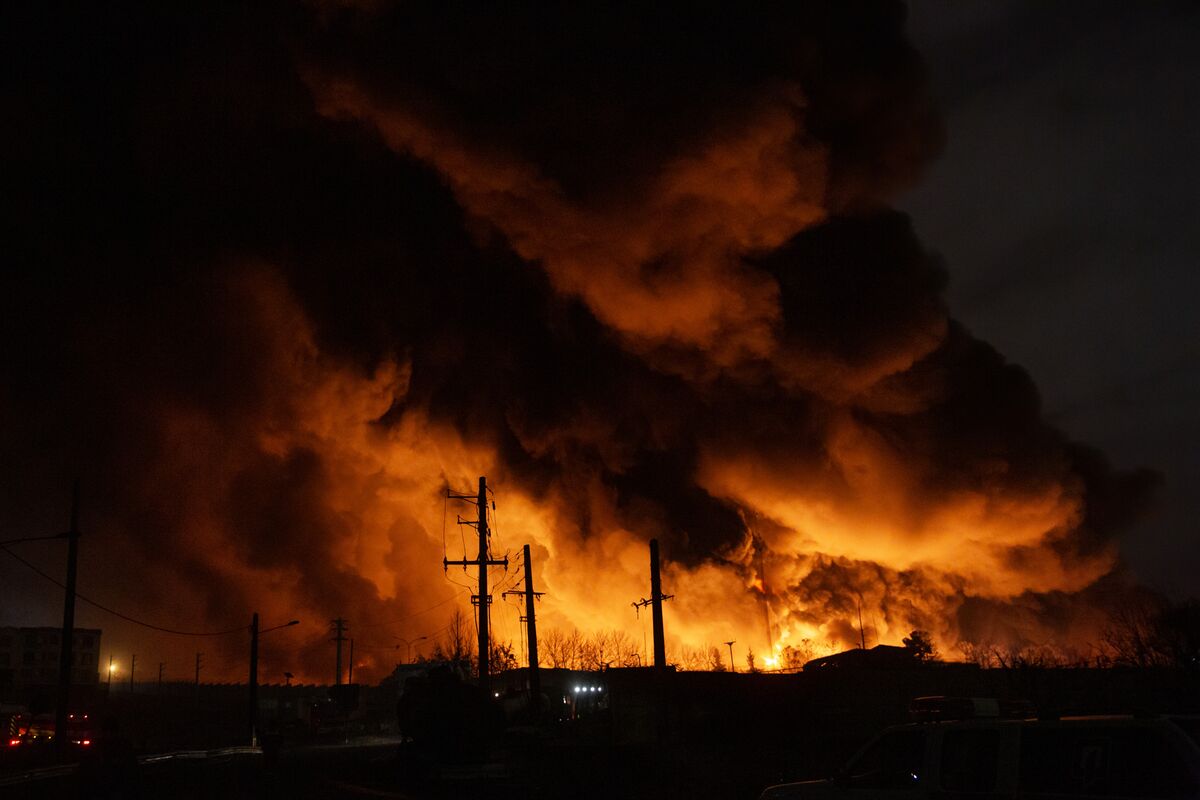
About a fifth (≈20%) of global oil supply has been paralyzed after Iran struck energy infrastructure across the Persian Gulf in retaliation for an Israeli attack on its largest natural gas field. The strikes have sent energy markets surging and left the White House and President Trump scrambling to contain oil-price and inflationary shocks amid a chaotic policy/campaign posture toward Tehran. This is a market-wide shock that raises oil-price volatility, upside pressure on inflation, and risk-off positioning across equities and commodities while increasing the likelihood of further sanctions or supply disruptions.
Immediate market mechanics will be driven less by crude volumes alone and more by route-, insurance- and blending- frictions: higher premiums on Persian‑Gulf to Asia lanes and tanker re‑routing elevate delivered costs for marginal barrels by a multiple in days, not weeks, amplifying spot Brent/WTI dispersion. That dynamic favors supplies that are logistically advantaged (US Gulf/Atlantic basin, West Africa with open Atlantic routes) and penalizes refiners and traders dependent on long-haul Middle East lifts; expect time spreads to oscillate between contango and backwardation as flows reroute.
Second‑order supply effects concentrate in feedstock-sensitive pockets: petrochemical naphtha and LPG markets will tighten faster than fuels because refinery slate adjustments cannot reconfigure complex units quickly, pressuring margins for crackers and lifting prices for chemical intermediates within 2–8 weeks. Marine freight and war‑risk insurance are effective taxes on marginal barrels — a sustained premium will shift profitable export economics toward larger, lower‑lift‑cost producers and incentivize tanker storage arbitrage if forward curves steepen.
Policy and flow catalysts create asymmetric outcomes: short, sharp policy responses (SPR releases, coordinated release or diplomatic de‑escalation) can erase a large fraction of forward risk within 4–8 weeks, while deeper escalation forces multi‑quarter adjustments (capex re‑allocation, longer shipping detours) that entrench higher structural prices for 6–18 months. The most actionable volatility comes in the next 30–90 days; position sizing should reflect a high probability of mean reversion after policy/stoarge responses but non‑trivial tail risk if supply normalisation fails.
AI-powered research, real-time alerts, and portfolio analytics for institutional investors.
Request DemoOverall Sentiment
strongly negative
Sentiment Score
-0.70
