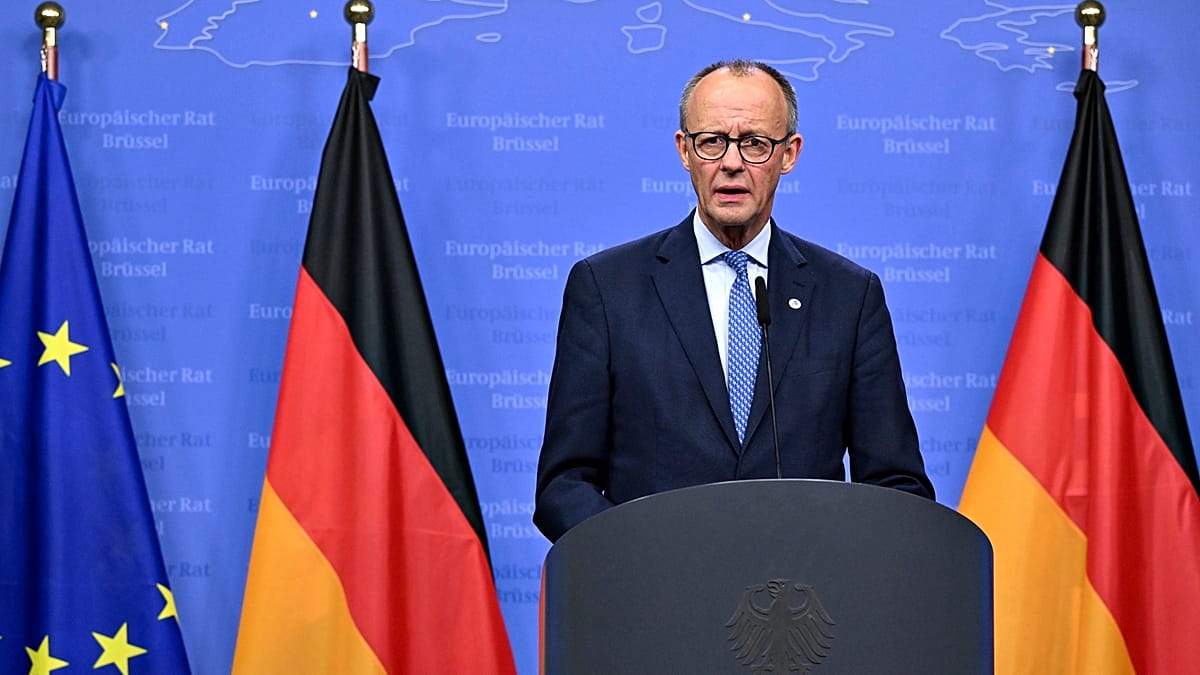
German Chancellor Friedrich Merz will meet Belgian Prime Minister Bart De Wever and Commission President Ursula von der Leyen to try to unblock a proposed reparations loan to Ukraine that would channel roughly €210 billion of immobilised Russian Central Bank assets (about €185bn at Euroclear and €25bn elsewhere) into a zero‑interest credit line repayable only if Russia compensates for war damages. Belgium has opposed the plan, citing legal and financial risks, prompting von der Leyen to propose bilateral guarantees, an EU budget backstop and legal safeguards; if the scheme fails, the EU may instead issue about €90 billion of joint debt to finance Ukraine, creating significant sovereign debt and market implications ahead of the 18 December EU summit.
Market structure: The Belgian standoff makes the EU reparations-loan a binary event that reallocates ~€185bn of frozen Russian assets or forces a €90bn joint-EU bond issuance. If the scheme passes, custodial/legal risk concentrates at Euroclear but avoids immediate sovereign issuance; if it fails, expect material supply shock to EU sovereign bond markets (an incremental €90bn supply likely to widen peripheral spreads by 15–50bp and push 10y Bunds +10–30bp near-term). Banking/custody providers and Euroclear-linked liquidity providers are asymmetric winners/losers depending on legal protections.
Risk assessment: Tail risks include a Belgian veto causing legal challenges at Euroclear (operational freeze/liability claims) or retaliatory Russian litigation that impairs cross-border collateral flows — both can abruptly curtail short-term liquidity in EUR-denominated repo and increase demanded haircuts by 200–700bp. Near-term (days–weeks) volatility will spike around the 18 Dec summit; medium-term (Q1–Q2 2026) the structural funding cliff for Ukraine (and any joint-debt issuance) becomes the dominant driver.
Trade implications: Tactical plays include FX (EUR downside), insurance buys against EU sovereign curve moves, and long defense/commodities exposure. Liquidity-sensitive instruments (EONIA/€STR-linked repo, short-term bund futures) will see outsized moves; prefer one-way option structures (puts on EUR, call spread on defense ETFs) to manage event risk. Monitor legal text publication — that will be the volatility trigger.
Contrarian angle: Consensus treats this as political/technical; underestimate is the knock-on to euro-denominated collateral chains and repo market haircuts which historically amplify funding squeezes (e.g., 2011 sovereign scares). If guarantees are legally iron-clad, markets may underprice a decreased net EU fiscal issuance (benefit core bonds). The path-dependency around legal safeguards is the key mispricing to exploit.
AI-powered research, real-time alerts, and portfolio analytics for institutional investors.
Request DemoOverall Sentiment
moderately negative
Sentiment Score
-0.35
