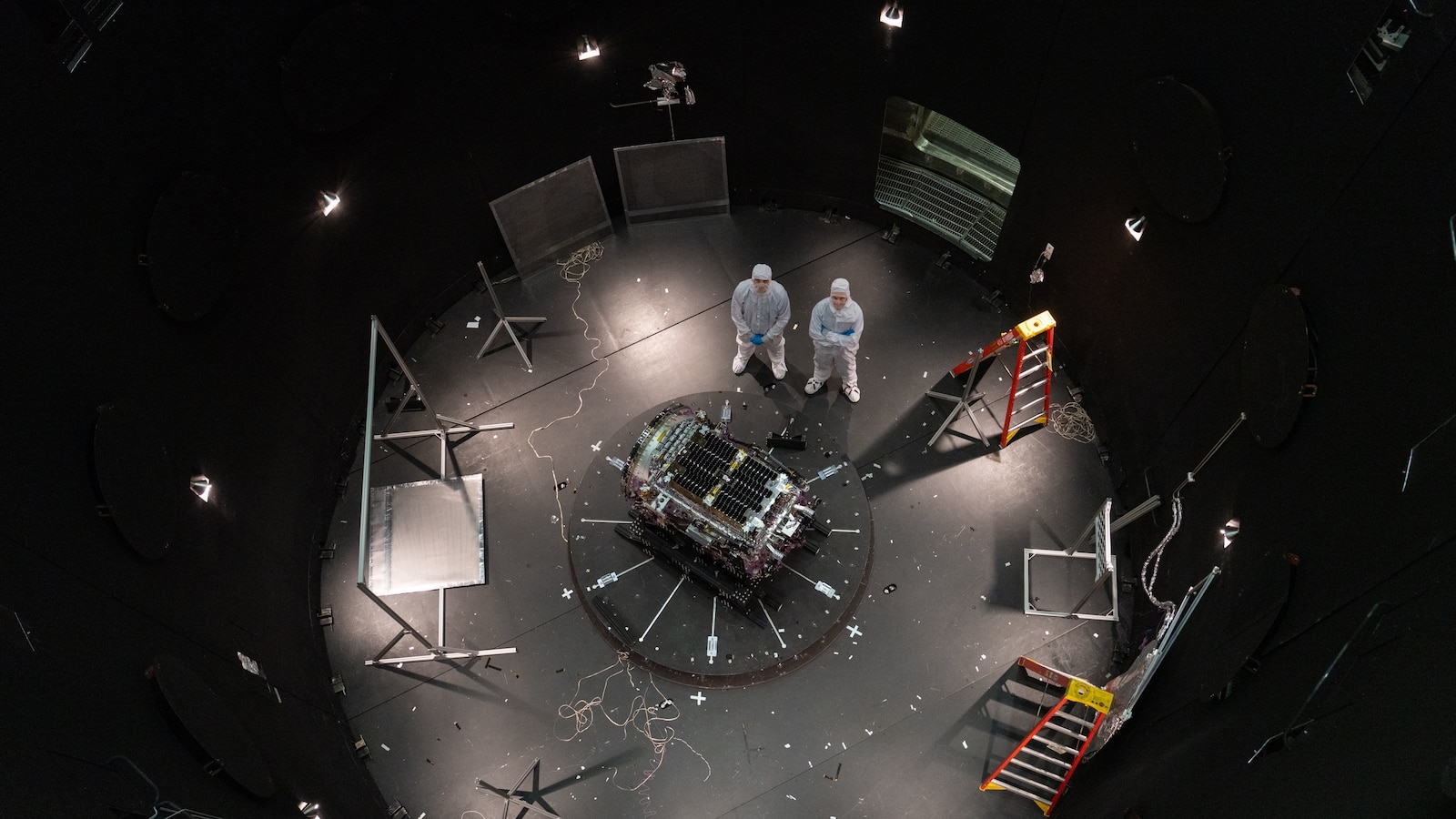
NASA is preparing a $30 million salvage mission to boost the 1.6-ton Swift Observatory from 224 miles to 373 miles, with liftoff possible as early as Tuesday and the telescope expected to be back in service by September if successful. The contract with Katalyst Space Technologies could establish the first U.S. spacecraft to perform this kind of robotic orbital rescue, potentially creating a new in-space servicing market. While highly newsworthy for aerospace innovation, the direct market impact should be limited.
This is less a one-off rescue than a proof-of-concept for an underappreciated on-orbit servicing market. If the mission works, the value inflection is not in Swift itself but in the establishment of a repeatable commercial workflow for autonomous rendezvous, capture, and orbital reboost — a capability that should compress the perceived risk premium on aging government assets and expand the serviceable TAM for companies building in-space robotics.
The first-order beneficiary is LINK’s underlying commercial credibility, but the second-order winners are the broader ecosystem: avionics, navigation, propulsion, and mission software providers that can be pulled into a future pipeline of servicing contracts. The more interesting spillover is competitive: a successful U.S. mission would reset expectations versus foreign-led satellite servicing efforts and could accelerate procurement by defense and civil agencies that currently treat servicing as a science experiment rather than a budgetable maintenance line item.
The key risk is binary execution, with the market likely to misprice the path dependency. The first event window is days to weeks, but the real catalyst sequence runs over months: rendezvous success, capture success, orbit-raise success, then follow-on contract announcements. A partial success still matters commercially, but a miss could freeze capital access for the category and relegate the space-robotics story back to “promising but unproven” for 12-24 months.
Contrarian angle: consensus may be focusing too much on the headline rescue and too little on the implied policy signal. If NASA can justify spending to extend life on legacy assets instead of replacing them, future budgets may increasingly favor servicing over new builds, which is bearish for replacement-cycle assumptions but bullish for platform operators that can monetize maintenance, refuel, and life-extension. The trade is therefore not just a long on the mission — it is a long on the formation of a recurring in-space services market.
AI-powered research, real-time alerts, and portfolio analytics for institutional investors.
Request DemoOverall Sentiment
mildly positive
Sentiment Score
0.18
Ticker Sentiment
