



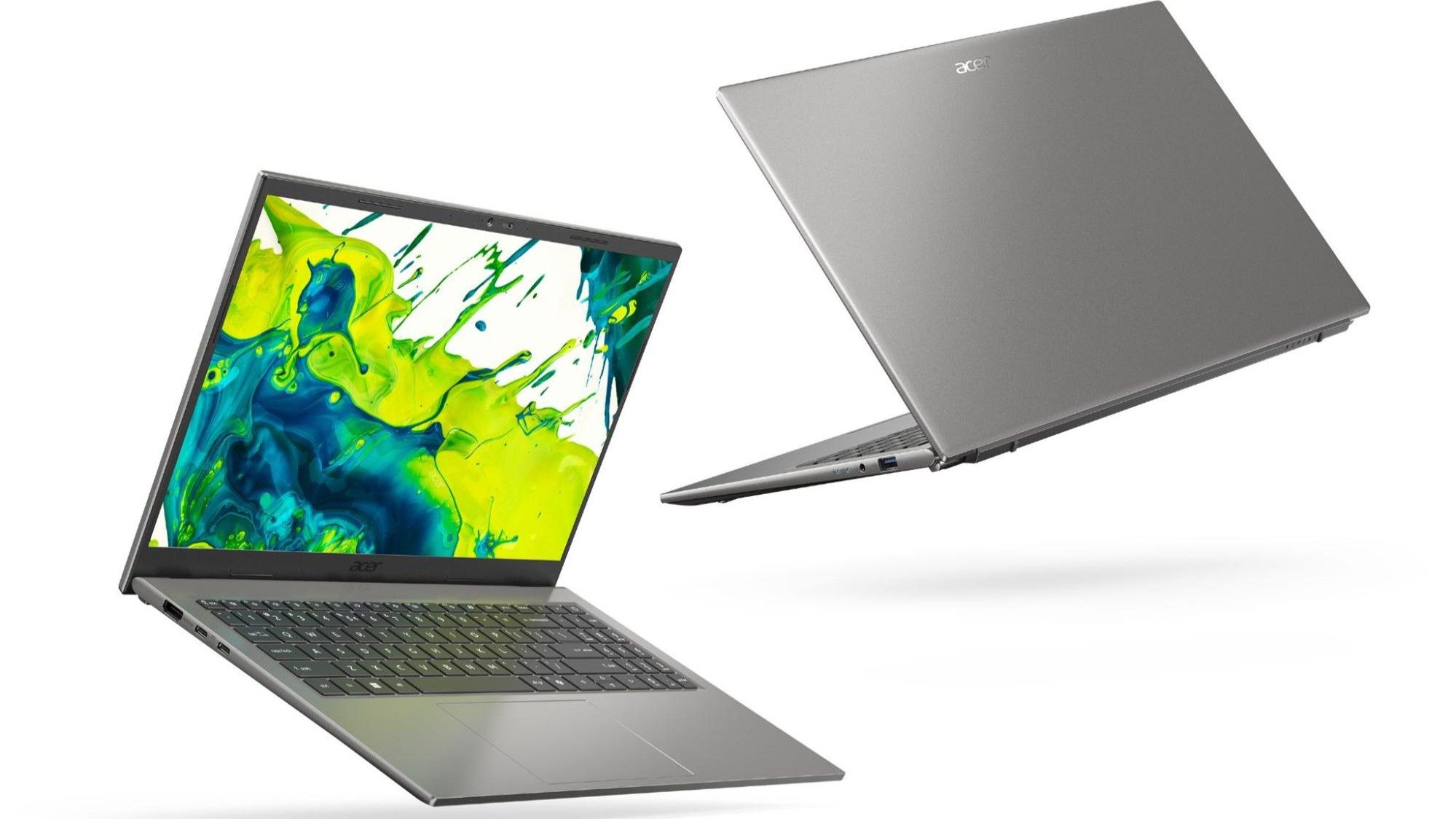
Acer announced two new Qualcomm-based laptops at Computex, led by the Aspire Go 15 with a Snapdragon C processor, 512GB SSD, 8GB RAM, Windows 11 Home, and Qualcomm pricing starting at $300. Acer also unveiled the Swift Spin 14 AI with Snapdragon X2 Elite or X2 Plus, up to 80 TOPS, 32GB RAM, 1TB SSD, and up to 23 hours of battery life. The article is mostly a product comparison and launch update, with limited near-term market impact.
The strategic signal is less about the individual laptop and more about pricing pressure moving down the Windows PC stack. Qualcomm is effectively using a low-end entry platform to seed design wins where Apple’s weakest relative moat is not performance but value perception, which can help normalize Snapdragon in mass-market systems before AI requirements meaningfully matter. That is constructive for QCOM's ecosystem monetization over a 12-24 month horizon, but near-term the unit mix is likely dilutive to ASPs and could keep investors focused on attach rates rather than headline chip volumes.
For Apple, the risk is not direct share loss in premium notebooks so much as a sharper comparison set at the sub-$700 tier, where the Neo-style value proposition is most vulnerable. If Windows OEMs can pair acceptable battery life with more storage and standard connectivity, Apple may need to defend via promotions or education pricing, which would pressure gross margin less than hardware share but still matter in the back half of the cycle. The bigger second-order effect is that low-cost Snapdragon and Intel offerings can expand the Windows addressable market at the expense of older AMD/Intel designs that win on price alone; that could accelerate platform refreshes and squeeze legacy inventory over the next 1-2 quarters.
The AI angle is a useful tell: Qualcomm is bifurcating its portfolio into true AI-capable premium parts and stripped-down commodity parts, which should reduce confusion but also highlights that not every Copilot-branded PC will be a genuine AI machine. That matters for Microsoft because consumer disappointment around 'AI PCs' may slow upgrade urgency, while the broader push toward 16GB+ memory standards increases bill of materials across the industry and can delay adoption at the very low end. In other words, the immediate winner may be the silicon vendor with the best platform breadth, while the losers are OEMs that depended on 8GB/256GB configurations to preserve margin.
Contrarian take: the market may be underestimating how little this helps QCOM’s earnings in the near term. A $300+ Snapdragon C device is more about share placement than profit pool expansion, and entry-tier PCs are brutally margin-thin; if demand is weak, OEMs may not scale these designs fast enough to move the needle. The cleaner trade is not to chase a big re-rating in QCOM, but to look for relative underperformance in legacy PC silicon names if Snapdragon C or Wildcat Lake start taking the lowest-end shelf space.
AI-powered research, real-time alerts, and portfolio analytics for institutional investors.
Request TrialOverall Sentiment
neutral
Sentiment Score
0.05
Ticker Sentiment
