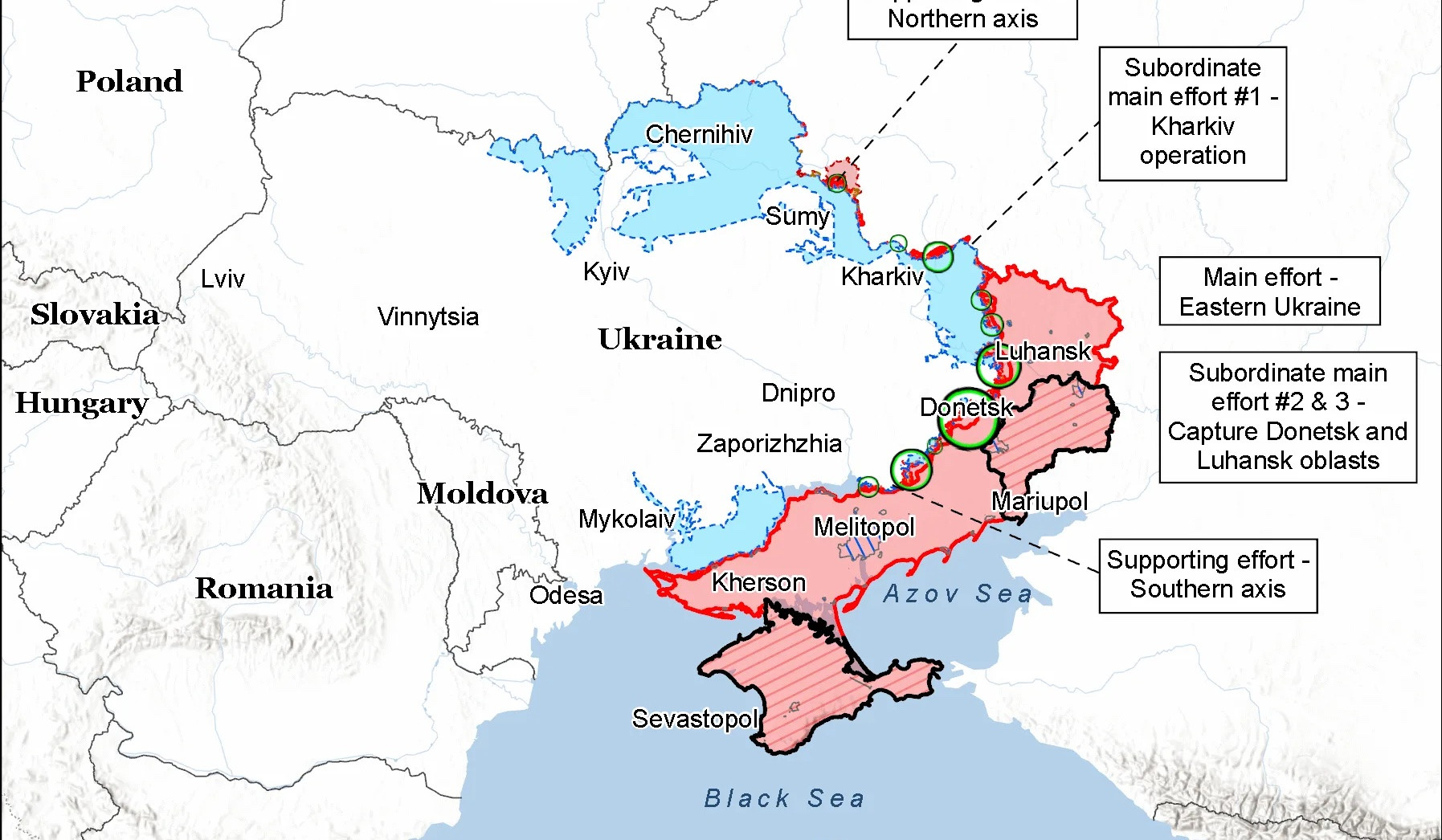
Russia launched 1 ballistic missile, 5 cruise missiles, and 290 drones toward Ukraine overnight, while Ukrainian forces struck Russian military assets in Rostov Oblast and advanced in the Kostyantynivka direction. The article also highlights continued Kremlin escalation risks, including preparations for another massive strike and efforts to harden Russian air defenses against deep strikes. The situation remains highly volatile and geopolitically significant, with potential spillovers for regional security and defense assets.
The immediate market read-through is not about the battlefield headline itself; it is about the acceleration of dispersion in European security risk premia. A sustained increase in deep-strike frequency raises the probability of infrastructure disruption, higher defense procurement urgency, and wider spreads for businesses with physical logistics exposure in Eastern Europe, while beneficiaries are the air-defense, drones, EW, and hardened communications stacks that can monetize replenishment cycles over multiple quarters.
Second-order effects matter more than the strike count: every successful Ukrainian hit on Russian rear-area systems forces a more expensive defensive architecture, with Russia likely shifting scarce interceptors and sensors away from the front. That creates an asymmetric degradation loop where marginal offensive capacity gets more expensive to defend than to attack, which is positive for Western defense primes with missile-defense content and negative for any Europe-exposed industrials reliant on uninterrupted rail, ports, or cross-border trucking.
The Moldovan/Romanian ambiguity is a separate tail risk because it raises the odds of a misattribution event or staged incident being used to justify escalation in air-defense posture around the Black Sea corridor. That can tighten shipping insurance, airspace routing, and regional risk premia over the next 1-3 months even without a direct NATO spillover. The contrarian point: this may be less about immediate territorial gains and more about signaling capacity limits, so if Ukraine’s deep-strike tempo stays high while Russian interception quality degrades, the market could underprice the durability of Russia’s rear-area vulnerability.
AI-powered research, real-time alerts, and portfolio analytics for institutional investors.
Request TrialOverall Sentiment
moderately negative
Sentiment Score
-0.45
