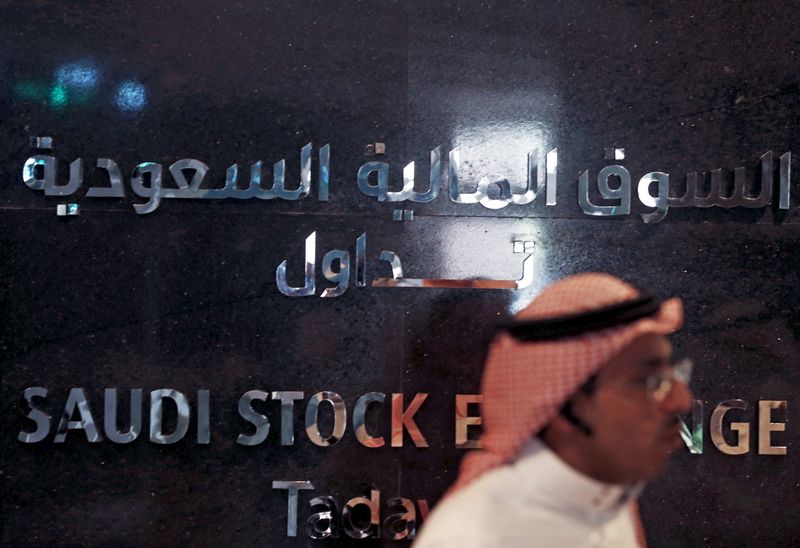
Saudi Arabia's Tadawul All Share rose 0.42%, with 219 advancers versus 107 decliners, led by sharp gains in Saudi Kayan Petrochemical (+9.96%), Rabigh Refining & Petrochemical (+9.96%) and Yanbu National Petrochemical (+7.65%). Crude oil for June delivery increased 1.89% to $96.18 a barrel and Brent July rose 1.92% to $101.03, while June gold fell 0.47% to $4,718.76. FX was largely steady, with USD/SAR unchanged at 3.75 and EUR/SAR up 0.28% to 4.41.
The move looks less like a broad risk-on signal and more like a tactical squeeze in the parts of the Saudi market most levered to global growth and the commodity complex. Petrochemical strength alongside firmer crude and weaker dollar conditions suggests investors are front-running a better feedstock/revenue mix, but that same setup can reverse quickly if oil’s rise is driven by supply shock rather than demand improvement. The key second-order effect is that higher energy can support state-linked spending optics in the near term while simultaneously tightening margins for domestic consumers and non-energy cyclicals over the next 1–3 months.
The 3-year and 52-week highs in select petrochemical names look technically important because they can force incremental benchmark flows and systematic chasing, but they also raise the odds of a short-term exhaustion move. If Brent fails to hold the $100 handle, these names are vulnerable to mean reversion because the market is already paying for a better spread story before any hard evidence of improved downstream demand. Conversely, if crude stays bid for several sessions, expect relative outperformance to broaden from beta-heavy names into higher-quality integrated or utility-linked beneficiaries.
The underappreciated risk is that this is a two-way macro trade, not an idiosyncratic Saudi equity story: USD/SAR stability removes FX translation noise, so the market is effectively trading pure commodity and global liquidity beta. That makes the setup fragile to any shift in dollar strength, risk-off sentiment, or policy headlines that cool oil. The next 2–6 weeks matter more than the next 12 months here; the initial move can persist, but the follow-through depends on whether energy retains leadership or simply acts as a temporary inflation hedge.
AI-powered research, real-time alerts, and portfolio analytics for institutional investors.
Request DemoOverall Sentiment
neutral
Sentiment Score
0.15
