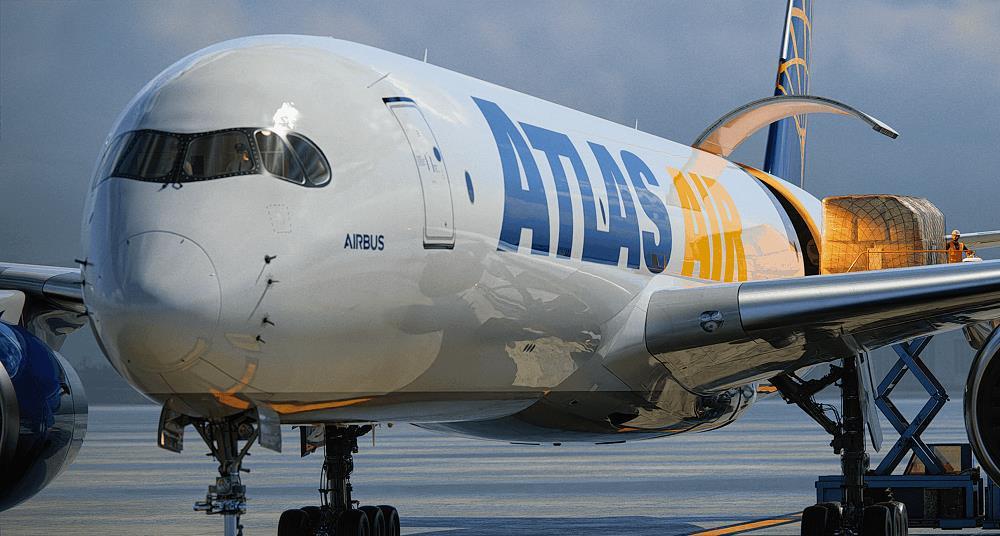
Atlas Air Worldwide ordered up to 40 Airbus A350 freighters (20 firm + 20 options), with deliveries scheduled across 2029-2034 and the A350F entering flight-testing this year ahead of initial deliveries in 2027. The deal, powered by Rolls-Royce Trent XWB-97 engines, complements Atlas’s 113-strong Boeing 747/777/767 fleet and pushes A350F firm orders from 81 into triple figures. Management frames the order as a strategic fleet-modernization to drive sustained earnings growth amid constrained large widebody freighter market capacity.
This deal is a structural vote of confidence in new-generation widebody twins over legacy four-engined and older twins — it accelerates a bifurcation in the freighter fleet where fuel-efficient twins capture growth lanes and older frames become scarcity-driven assets for short-term demand spikes. That creates a two-stage market: near-term tighter capacity and higher charter/lease rates as retirements accelerate, and multi-year normalization as new, lower-cost capacity arrives and displaces older, higher-cost utilization.
Second-order winners will be firms that operate or finance modern widebodies and engine/MRO ecosystems that scale with a new platform; second-order losers are manufacturers and aftermarket providers tied to older widebodies or to a single OEM whose large-cabin roadmap lags. A critical supply-chain hinge: availability of high-thrust Trent XWB engines and MRO capacity — any bottleneck or certification slip will cascade into delayed utilization, uplift lease rates and create arbitrage opportunities for lessors with available late-model frames.
Key catalysts to watch on a 3–24 month horizon are flight-test outcomes and early engine reliability datapoints (which decide ferry/ETOPS economics), public lessor orderbook revisions, and quarterly guidance from major integrators tied to cargo yields. Tail risks include certification problems, a sharp freight-demand retraction (trade volumes down >8–12% year-over-year), or a retaliatory OEM or supplier pricing response that compresses margins for operators who prematurely place large forward orders.
AI-powered research, real-time alerts, and portfolio analytics for institutional investors.
Overall Sentiment
strongly positive
Sentiment Score
0.60
Ticker Sentiment
