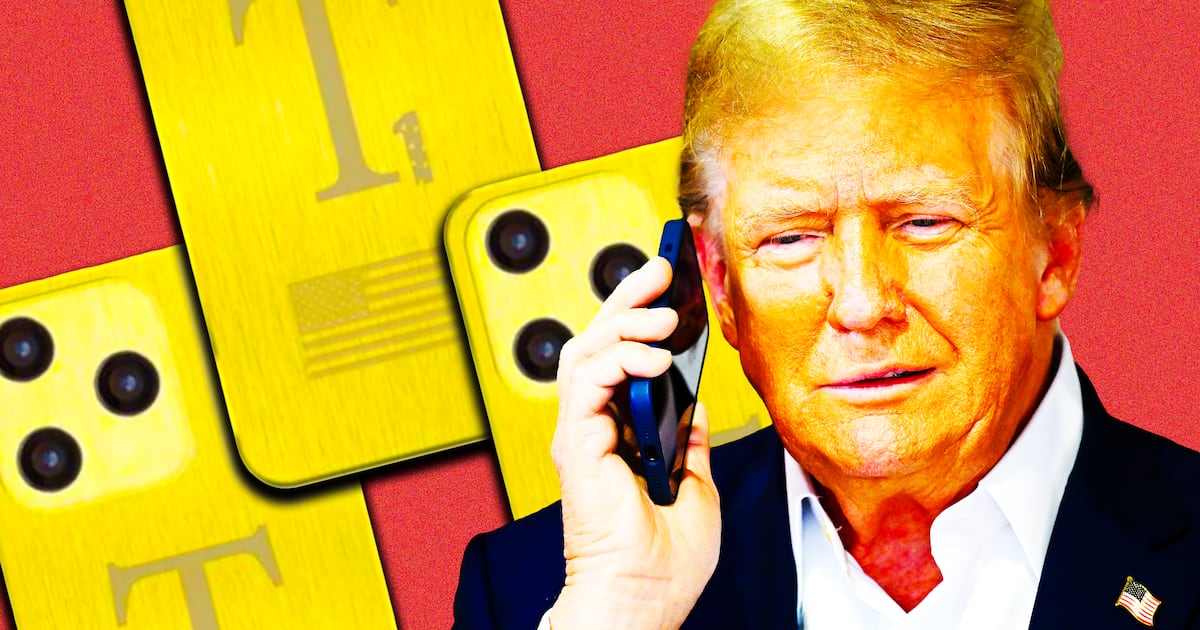
Trump Mobile showed a revised rendering of its T1 Phone, now featuring a gold finish and a straight-row rear camera layout, but still provided no release date nearly a year after launch. The service starts at $47.45 per month and includes telehealth, roadside assistance, and 100% US-based support, while requiring users to waive class-action and jury-trial rights. The venture remains under scrutiny from Democrats over conflict-of-interest concerns involving T-Mobile and the Trump Organization.
The important signal is not product design; it is the steady retreat from a hard manufacturing promise to a softer branding exercise. That is a classic tell that the economics, supply chain, or compliance burden of a domestic handset build are not penciling out, which makes the device look less like a consumer-electronics launch and more like a monetized affinity funnel. If the phone never ships, the recurring-service layer can still produce cash flow, but it also turns the venture into a distribution and political-risk business rather than a hardware story.
Second-order, the value capture likely accrues to the carrier and the MVNO infrastructure stack, not the brand licensor. The most exposed parties are any partners underwriting customer acquisition or device logistics, because the upside is limited while the reputational and legal overhang can outlast the campaign cycle. The class-action waiver and government scrutiny raise the probability of a slow-burn regulatory drag rather than an immediate knockout, which means the risk sits in months, not days.
The contrarian read is that the market may be underestimating how durable an audience-based subscription model can be even when the product is mediocre or delayed. A politically sticky customer base can support above-average churn tolerance for a period, especially if billing is low-friction and service claims are broad. But if the handset is repeatedly deferred, the enterprise shifts from aspirational hardware to commoditized wireless reselling, where customer acquisition costs and support intensity usually crush margin.
Catalyst-wise, the key checkpoints are a launch-date commitment, any carrier disclosure changes, and whether consumer complaints or Congressional follow-up escalate into a headline event. If the phone slips again over the next 1-2 quarters, that is confirmation the launch is mostly narrative, and the service economics become the real equity story. In that scenario, the trade is less about a single company shock and more about avoiding entities that could be dragged into the controversy through commercial association.
AI-powered research, real-time alerts, and portfolio analytics for institutional investors.
Request TrialOverall Sentiment
neutral
Sentiment Score
-0.10
