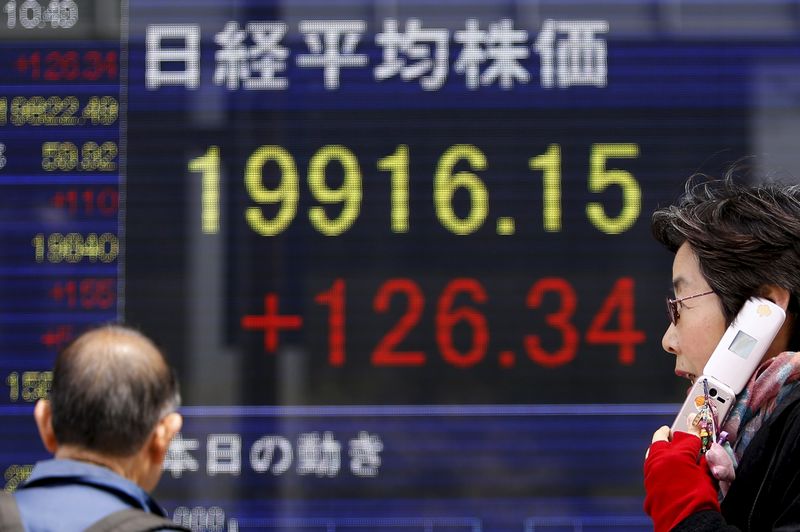
Tokyo stocks rose 0.61% as gains in Real Estate, Banking and Textile stocks outweighed declines, with 2,081 advancers versus 1,449 decliners. BayCurrent Consulting jumped 14.32%, Taiyo Yuden gained 10.76% to a 3-year high, while Kioxia fell 7.40%. Risk assets were mixed overall, with Nikkei volatility down 8.46% to 29.32, crude oil slightly lower at $90.94, and USD/JPY edging up 0.16% to 159.03.
The key read-through is not the headline equity move, but the divergence between calm front-end pricing and still-elevated geopolitical risk. A falling volatility index alongside softer crude suggests the market is treating the Hormuz situation as a short-lived negotiating scare, which creates a crowded “fade the spike” consensus that can unwind violently if shipping insurance, tanker routing, or actual flow disruptions persist another 3-7 trading sessions. That setup usually underprices the second-order effect: even without a physical supply shock, a higher risk premium can tighten prompt crude balances and widen regional refining and freight spreads.
Japan’s leadership looks cyclical rather than structural. Banks and real estate typically benefit when volatility compresses and FX is stable, but the stronger yen risk is the latent spoiler if peace-talk optimism hardens into a risk-off unwind in USD/JPY. The more interesting move is in semis/materials: sharp weakness in capital-intensive names suggests the market is already discounting a slower capex cycle and weaker global electronics demand, which can create a better entry point only if the macro scare fades quickly.
The contrarian view is that the market is likely underestimating how fragile the current risk-on tone is. If crude stays elevated for another 2-4 weeks, the inflation impulse will bleed into rates expectations and Japanese bank equities lose support from lower implied volatility; if crude snaps back below the low-90s, the current rotation into defensives and financials should reverse just as fast. In other words, the cleanest edge is not in directionally owning the index, but in expressing the gap between complacent vol pricing and unresolved geopolitical tail risk.
AI-powered research, real-time alerts, and portfolio analytics for institutional investors.
Overall Sentiment
mildly positive
Sentiment Score
0.15
